Luxury Apartment Interior Design: The Complete Guide to a High-End Home on Any Budget
The principles that make any apartment read as luxury, from layout and lighting layers to materials and editing, plus room-by-room ideas and a splurge vs. save guide.
Key takeaways
- Luxury reads as intention: generous scale, clear walkways and fewer, better pieces matter more than price.
- Layer ambient, task and accent lighting at 2700K, with at least three to five light sources per living room.
- Spend on what you touch daily (sofa, mattress, main rug) and save on accessories, side tables and hardware.
- Hang curtains high and wide, size rugs up, and center art at 57 to 60 inches.
- Most luxury upgrades have renter-friendly versions that need no drilling or painting.
Luxury apartment interior design isn't really about price tags. You can walk into a 600-square-foot rental and feel that it's expensive, and you can walk into a penthouse stuffed with designer pieces that still feels cheap. The difference comes down to a short list of principles: a layout that lets the room breathe, furniture scaled to the architecture, honest materials, layered light, a restrained palette, generous textiles, real art, good hardware, and the discipline to edit. Get those right and a modern luxury apartment follows, whatever your budget.
This guide covers each principle in practical terms: measurements, materials, typical costs, and the mistakes that give a space away. After that it goes room by room, sets out where to splurge and where to save, and shows how to get the same effect in a rental without losing your deposit. If you only have time to read one article on luxury apartment design, read this one.
Before you start, it helps to know which direction suits you. Quiet, layered neutrals, warm Japandi wood, and glamorous Art Deco brass all read as high-end, but they get there in different ways. Our interior design style quiz takes about two minutes and gives you a style to aim for, so each decision below has a filter.
What Makes an Apartment Look Luxurious?
Luxury reads as intention. When every object looks chosen, when the room has space to rest the eye, and when surfaces feel solid to the touch, people assume the space was expensive. Cheapness reads as the opposite: furniture pushed against walls because it came in a set, overhead lighting only, too many small accessories, shiny synthetic finishes, and curtains that stop at the windowsill.
In practice, nine elements do almost all the work:
- Layout: clear walkways, furniture floated away from the walls, and a defined zone for each activity.
- Proportion: pieces sized to the room and to each other, not shrunk to fit.
- Materials: wood, stone, wool, linen, metal and glass, or very convincing versions of them.
- Lighting layers: ambient, task and accent light at different heights, all on warm bulbs.
- Color: a tight palette with tonal variation instead of many competing hues.
- Textiles: full-length curtains, a properly sized rug, and bedding and pillows with real weight.
- Art: fewer, larger pieces, hung at the right height.
- Hardware: knobs, pulls, switch plates and fixtures that feel heavy and match.
- Editing: taking things away until what's left looks deliberate.
The sections below go through them in order. Layout and lighting come first because they cost the least and change the most.
Layout and Proportion: The Invisible Foundation
Most apartments look smaller and cheaper than they are because furniture is lined up along the perimeter. Pulling the sofa even 6 to 12 inches (15–30 cm) off the wall creates a shadow line and makes the arrangement look planned. In larger living rooms, float the seating group around a rug and run a slim console behind the sofa.
Clearances that make a room feel generous
| Measurement | Comfortable target | Why it matters |
|---|---|---|
| Main walkway | 36 in. (91 cm) | Lets you move through without turning sideways |
| Secondary path | 24–30 in. (61–76 cm) | Acceptable between a chair and a wall |
| Sofa to coffee table | 14–18 in. (36–46 cm) | Close enough to reach, far enough for legs |
| Coffee table length | About 2/3 of sofa length | Keeps the grouping balanced |
| Dining chair pull-out | 36 in. behind the table edge | Room to sit and stand easily |
| Bed side clearance | 24–30 in. per side | Room to make the bed and walk past |
| TV viewing distance | About 1.5–2.5× the screen diagonal | Avoids a cramped, oversized screen |
Scale up, not down
A common small-space mistake is buying "apartment-sized" everything: a loveseat, a tiny rug, a 24-inch print, a skinny floor lamp. Lots of small pieces look busy and dollhouse-like. One full-size sofa, one large rug and one big piece of art make a room feel bigger and more expensive. Keep the scale generous and reduce the number of pieces instead. Low, leggy furniture that shows floor underneath also helps, because the eye reads visible floor as space.
To test a layout before you buy anything, sketch it to scale in our room layout planner, which flags walkways narrower than the targets above. If your space is very compact, our guide to small apartment ideas covers multi-use furniture and zoning in more detail.
Designer tip: Visual weight counts as much as size. A deep sofa on a plinth base looks heavier than the same sofa on 6-inch legs. In a tight room, mix one solid "anchor" piece with several open, leggy ones.
Materials and Finishes That Read as High-End
People judge material quality fast, by eye and by hand. You don't need everything to be solid walnut or marble, but the surfaces you touch most should feel substantial, and the rest should look honest rather than plasticky.
- Wood: solid wood or quality veneer with visible grain. Matte or satin finishes look richer than high gloss. Oak, walnut and ash are safe choices across styles.
- Stone: marble, travertine or limestone accents on a side table, tray, lamp base or bathroom shelf. A single real stone object does more than a whole faux-marble counter.
- Metal: unlacquered or brushed brass, blackened steel, or brushed nickel. Pick one main metal and at most one secondary.
- Fabric: linen, wool, bouclé, cotton velvet and leather. Avoid shiny polyester that pills and catches the light.
- Glass and ceramics: handmade or heavy pieces, ribbed or smoked glass, glazes with some variation.
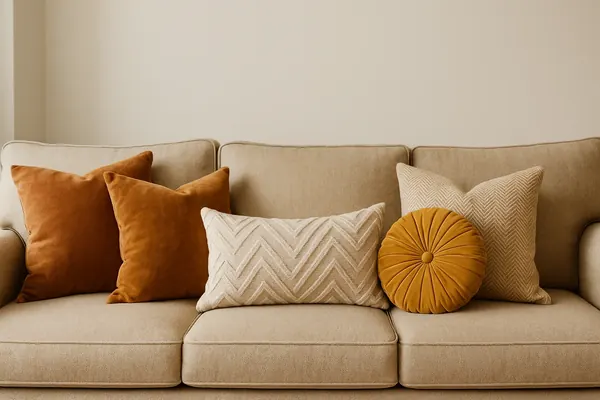
The rule that ties these together is texture over pattern. A room of creams and browns looks rich when it mixes nubby bouclé, smooth leather, grainy oak, cool stone and soft wool. A natural wool or jute rug is one of the easiest ways to add that depth. Our guide to the Japandi rug explains which fibers and weaves look the most expensive underfoot.
How to Layer Lighting Like a Luxury Hotel
Nothing cheapens an apartment faster than a single cool-white ceiling fixture. Hotels and high-end homes use three layers at different heights, all warm, and most of them on dimmers.
| Layer | Job | Apartment-friendly options | Typical cost range |
|---|---|---|---|
| Ambient | Even, overall glow | Fabric or paper pendant, flush mount with a diffuser, large floor lamps | $60–$400 per fixture |
| Task | Light for reading, cooking, grooming | Swing-arm sconces, desk lamps, under-cabinet LED strips | $30–$250 each |
| Accent | Mood and drama | Picture lights, LED strips in shelving, small table lamps, candles | $20–$200 each |
A few rules make the difference. Use bulbs at 2700K (warm white) in living spaces and bedrooms, and look for a CRI of 90 or higher so wood and skin look natural. Aim for at least three to five light sources in a living room, set at different heights: overhead, eye level, and low. Put as many as possible on dimmers or smart bulbs. A 30–40% dim at night changes the mood of the whole room.
Not sure how many lumens you need? The room lighting calculator builds a layered plan from your room's size and use.
Color: The Restrained Palette Behind Expensive Rooms
Luxury interiors tend to use fewer colors, chosen more carefully. The classic structure is the 60-30-10 rule: 60% a dominant base color (walls, large upholstery), 30% a secondary tone (rug, curtains, wood), and 10% accent (pillows, art, a vase).
Palettes that consistently read as high-end
- Warm neutrals: cream, oatmeal, camel, chocolate. The foundation of quiet luxury interior design.
- Greige and stone with black accents: crisp but soft, good with modern architecture.
- Deep and moody: ink blue, forest green or aubergine walls with brass and walnut.
- Tonal color: one hue across several shades, such as sage walls, olive velvet and moss linen.
Whatever palette you pick, vary the value (light to dark) and the texture rather than adding more hues. Paint finish matters too: matte or eggshell on walls looks richer than satin, and flat white ceilings keep the room feeling taller.
Textiles, Art, Hardware and Editing: The Details Guests Notice
Curtains
Hang curtain rods 4 to 6 inches (10–15 cm) below the ceiling, or at least halfway between the window frame and the ceiling, and extend them 8 to 12 inches past the frame on each side. Panels should graze the floor or break by half an inch. Combined panel width should be about 2 to 2.5 times the window width so they look full when closed. Lined linen or heavy cotton in a color close to the walls makes windows look taller and the room feel calmer.
Rugs
Size up. In a living room the front legs of every seat should sit on the rug, and in a bedroom the rug should extend 18 to 24 inches beyond the sides of the bed. Leave 12 to 18 inches of floor between the rug and the walls. A rug that floats in the middle of the room is one of the most common budget giveaways.
Art
Center art at 57 to 60 inches from the floor and hang it 8 to 10 inches above a sofa or headboard, with the piece about two-thirds the width of the furniture below it. One large canvas, a substantial framed print with a wide mat, or a pair of matching pieces looks more expensive than a scatter of small frames. Our step-by-step guide on how to hang wall art covers heights, spacing and gallery layouts.
Hardware and small fixtures
Builder-grade knobs, almond switch plates and wobbly towel bars quietly undo everything else. Swapping cabinet pulls ($4–$25 each), switch plates ($5–$30 each) and a bathroom faucet or shower head is a small project with a big payoff. Choose one finish and use it throughout, and keep the originals in a labeled bag if you rent.
The most expensive-looking thing in many apartments is empty space.
Editing: the step most people skip
Editing is free and makes the biggest difference. High-end rooms have breathing room on surfaces, on walls and on the floor. When you style, group objects in odd numbers (threes and fives), vary their heights, and leave about a third of any surface clear.
- Clear every surface completely, then add back only what you love or use daily.
- Hide cords, remotes, chargers and paperwork in lidded boxes or drawers.
- Swap mismatched storage bins for one matching set in a natural material.
- Decant soaps and cleaning products into plain bottles or tuck them out of sight.
- Limit open shelving to about 60% full, mixing books, objects and empty space.
- Take a phone photo of each room. The camera shows clutter your eye has stopped noticing.
If the clutter is deeper than surface level, work through our declutter checklist before you buy anything new.
Luxury Apartment Ideas, Room by Room
Entryway
Even a 3-foot stretch of wall can become an entry. Mount a slim console or floating shelf, hang a round or arched mirror above it, add a small lamp for warmth, and use a lidded bowl or tray for keys. A washable runner sized so that 6 inches of floor shows on each side finishes it.
Living room
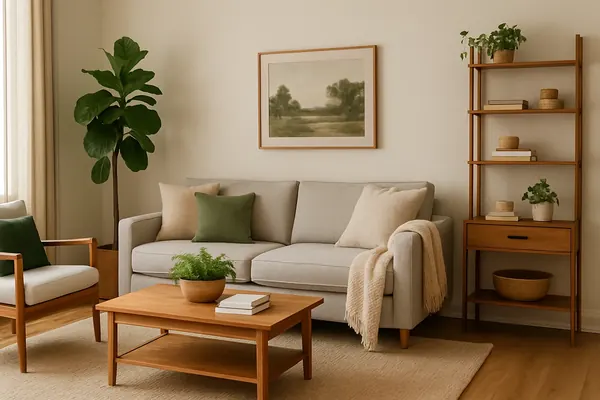
Anchor the room with the best sofa you can afford in a neutral performance fabric, then layer a large rug, two or three lamps, and one statement piece of art. Use pillows in pairs with mixed textures, not loud prints. Our dedicated guide to apartment living room ideas includes layouts for long, narrow and open-plan spaces.
Bedroom
Think boutique hotel: an upholstered or wood headboard (or a tall panel behind the bed), crisp percale or washed linen bedding in white or a soft neutral, a duvet a size larger than the mattress so it drapes, matching nightstands or sconces, and blackout-lined curtains hung high.
Kitchen
Clear the counters except for a few good-looking essentials on a tray or wooden board. Swap hardware, add a peel-and-stick or tiled backsplash if your lease allows, and light the work surfaces with under-cabinet LED strips. A runner, a vintage stool and a bowl of fruit add warmth.
Bathroom
Matching thick towels in white or one neutral, a fabric shower curtain hung from a rod mounted close to the ceiling, decanted soap, a small plant, and an upgraded shower head make the biggest difference. Replace the standard mirror with a framed or arched one if you can.
Studio and open-plan spaces
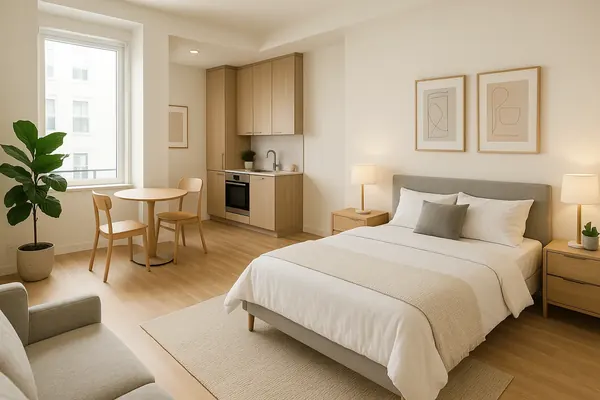
Use rugs, lighting and furniture backs to define zones for sleeping, living, eating and working. A bookcase or slatted divider can separate the bed without blocking light. Ideas for specific floor plans are in our guide to studio apartment ideas.
Where to Splurge and Where to Save
The trick is to spend on what you touch daily and what anchors a room, and save on things that are mostly decorative or likely to change.
| Item | Splurge or save? | Why | Typical range |
|---|---|---|---|
| Sofa | Splurge | Used daily; frame and cushions show wear fast | $1,200–$4,000 |
| Mattress and bedding | Splurge | Comfort you feel every night; quality fabric looks richer | $800–$2,500 |
| Main rug | Splurge (natural fiber) | Covers the most visual area; wool wears and looks better | $400–$2,000 |
| Lighting | Mid | Good shades and warm bulbs matter more than brand names | $50–$400 per lamp |
| Curtains | Mid | Lined, full-length panels; skip custom unless windows are unusual | $80–$400 per window |
| Art | Save or mid | Large prints, framed textiles and oversized mats look custom | $60–$500 |
| Side and coffee tables | Save | Vintage or secondhand solid wood beats new veneer | $50–$400 |
| Accessories and pillows | Save | Change often; buy covers, not whole pillows | $15–$80 each |
| Hardware | Save | Inexpensive solid metal pulls look the same as designer ones | $4–$25 each |
For an exact breakdown for your room and total budget, try our decorating budget planner.
Renter-Friendly Luxury Apartment Decor
Most of what makes a space look expensive doesn't require a drill. Here are renter-safe versions of the upgrades above:
- Lighting: plug-in sconces with cord covers painted to match the wall, rechargeable puck lights in shelves, and smart bulbs in existing fixtures.
- Walls: large mirrors leaned on the floor, art propped on a picture ledge, and removable wallpaper on one wall.
- Windows: tension rods or adhesive hooks for lightweight panels, and a ceiling-height rod with minimal anchors if your lease allows patching.
- Kitchen and bath: peel-and-stick backsplash, new cabinet pulls with the originals saved, a handheld shower head, and a fabric shower curtain on a curved rod.
- Floors: layer a large natural rug over dated carpet or vinyl to hide most of it.
- Paint: many landlords will approve neutral paint if you ask in writing; just budget to repaint before you move out.
Renter note: Check your lease and get written permission before painting, swapping fixtures or drilling into tile. Photograph everything you change and store original hardware and fixtures so you can put them back before move-out inspection.
For a longer list, see our roundup of renter friendly upgrades, and for quick wins under $100, read how to make your apartment look expensive.
Putting It All Together: A 30-Day Plan
You don't need to do everything at once. Here is an order that gets the biggest change for the least money first:
- Week 1, edit and plan: declutter every surface, measure each room, choose your style direction and a three-to-five-color palette.
- Week 2, light: change every bulb to 2700K, add at least two lamps per main room, and set up dimmers or smart bulbs.
- Week 3, textiles: hang curtains high and wide, size up the main rug, and upgrade bedding and towels.
- Week 4, finishing details: swap hardware, hang one or two large pieces of art, and style surfaces in odd-numbered groups with plenty of space between them.
Then live with it. Luxury apartment interior design is slow by nature. Add one considered piece at a time, and remove something whenever you bring something new in.
Free interactive tool
Interior Design Style Quiz: find your style in 8 questions
Frequently Asked Questions
How can I make my apartment look luxurious on a budget?
Start with free and cheap changes: declutter surfaces, switch every bulb to 2700K warm white, add two or three lamps, hang curtains near the ceiling, and size up your rug. Then swap cabinet hardware and hang one large piece of art. These steps usually cost a few hundred dollars and change how expensive a room feels more than any single furniture purchase.
What colors make an apartment look expensive?
Restrained palettes look the most expensive: warm neutrals like cream, camel and chocolate, greige with black accents, or deep tones like ink blue and forest green paired with brass and walnut. Follow the 60-30-10 rule and vary light and dark values and textures instead of adding more colors. Matte or eggshell wall paint also looks richer than satin.
What is the difference between modern and luxury apartment design?
Modern describes a style: clean lines, minimal ornament and an open feel. Luxury describes a level of quality and intention that can apply to any style. A modern luxury apartment combines modern lines with rich materials such as wood, stone and wool, layered warm lighting, generous scale and careful editing, so it feels calm and high-end rather than stark.
What furniture should I splurge on in an apartment?
Splurge on pieces you use every day and that anchor the room: the sofa, the mattress and bedding, and the main rug in a natural fiber like wool. Save on side tables, accessories, pillows and art prints, which you can buy secondhand or swap out cheaply. Solid vintage wood tables often look better than new veneered ones at a lower price.
How do renters make an apartment look high-end?
Renters can use plug-in sconces, smart bulbs, large leaned mirrors, picture ledges, peel-and-stick backsplash, removable wallpaper, and a large rug layered over dated flooring. Swap cabinet pulls and shower heads but keep the originals to reinstall. Always get written permission before painting or drilling, and photograph changes for your move-out inspection.

We research designer standards, measure real rooms and test every recommendation against apartment realities: tight footprints, lease rules and budgets. How we write our guides.