Design Inspiration
Luxury Apartment Interior Design: The Complete Guide
The principles that make any apartment read as luxury, from layout and lighting layers to materials and editing, plus room-by-room ideas and a splurge vs. save guide.
Free design tool
Answer eight quick questions about the colors, materials, shapes, and moods you love, and this interior design style quiz will match you with one of eight luxury-leaning styles. Each result comes with the palette, materials, and key pieces to recreate it in a rental.
Results are planning guidelines based on standard interior design rules of thumb. Always measure twice and check product dimensions before you buy.
Every interior design style is really a set of repeatable decisions: a color family, a handful of materials, a furniture silhouette, and a mood. The quiz asks eight questions that map to those decisions, covering color, materials, furniture shapes, the mood you want at home, how you spend a weekend, the art you gravitate toward, and where you would rather spend your budget. Each answer adds points to one or more styles, and the style with the highest score becomes your result.
Because many styles share traits (Japandi and Organic Modern both love natural wood, for example), it is normal for your top two results to be close. Treat a near-tie as permission to blend, letting one style lead and the other supply accents.
Use this table as a quick reference once you have your result, or to compare it with the runner-up.
| Style | Signature colors | Materials | Key pieces | Easiest rental move |
|---|---|---|---|---|
| Quiet Luxury | Ivory, oatmeal, taupe, soft greige | Bouclé, cashmere-feel wool, travertine, linen | Low-slung sofa, stone side table, sculptural lamp | Swap bedding and throws for tonal, textured layers |
| Japandi | Warm white, sand, charcoal, muted sage | Light oak, ash, paper, linen, ceramic | Low platform bed, slatted bench, paper pendant | Plug-in paper lantern and a low wood console |
| Modern Minimalist | White, black, cool gray | Lacquer, steel, glass, smooth plaster | Clean-lined sofa, hidden storage, arc floor lamp | Declutter surfaces and add closed storage |
| Warm Contemporary | Cream, camel, cognac, warm gray | Walnut, leather, wool, brushed brass | Curved sofa, leather lounge chair, layered rug | Add a cognac leather accent and warm 2700K bulbs |
| Art Deco Glam | Emerald, navy, black, gold | Velvet, marble, mirrored glass, polished brass | Channel-tufted chair, fluted console, globe sconces | Velvet pillows, a brass mirror, plug-in sconces |
| Organic Modern | Bone, clay, olive, soft terracotta | Jute, raw wood, rattan, stoneware, plaster | Rounded sofa, live-edge table, large potted tree | Jute rug plus one statement plant |
| Classic Parisian | Chalk white, pale gray, black accents | Herringbone wood, marble, aged brass, linen | Antique mirror, bistro chairs, slipcovered sofa | Peel-and-stick wall molding and an oversized mirror |
| Mid-Century Modern | Teak, mustard, olive, burnt orange | Teak, walnut, molded plywood, wool tweed | Tapered-leg credenza, lounge chair, sunburst clock | A teak credenza and a vintage-style floor lamp |
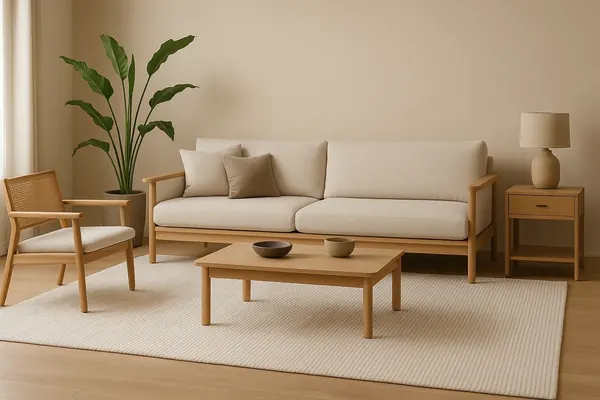
Quiet Luxury is about restraint and touch. Think a tonal palette of ivory, oatmeal, and taupe, with interest coming from texture: bouclé, heavy linen, honed stone, and wool. It looks expensive because nothing shouts. Our quiet luxury interior design guide breaks down how to build it piece by piece.
Japandi blends Japanese calm with Scandinavian warmth: light oak, paper lanterns, low furniture, and a muted palette with charcoal accents. Natural, flat-weave rugs anchor it; see our guide to choosing a Japandi rug.
Modern Minimalist favors crisp white walls, black accents, and clean lines with everything tucked away. If you scored here, our breakdown of the types of minimalism will help you decide how stark or soft to go.
Warm Contemporary keeps modern lines but softens them with curves, walnut, cognac leather, and creamy neutrals. It is the most forgiving style for mixing what you already own.
Art Deco Glam leans into saturated jewel tones, velvet, marble, and polished brass, with geometric patterns such as fluting, fans, and chevrons. Keep it in balance by limiting metallics to one finish and grounding bold colors with black.
Organic Modern pairs simple modern forms with raw, earthy materials: jute, rattan, limewash-look walls, stoneware, and lots of greenery. Rounded shapes and clay tones keep it warm rather than rustic.
Classic Parisian is the look of a Haussmann apartment: tall mirrors, wall paneling, herringbone floors, marble mantels, and a mix of antique and modern pieces. In a rental, you can fake the architecture with peel-and-stick molding painted the wall color and a large leaning mirror.
Mid-Century Modern draws on 1950s and 1960s design: tapered legs, teak and walnut, organic curves, and pops of mustard, olive, or orange. One iconic-shaped lounge chair or credenza sets the tone; avoid filling the room with reproductions, which can feel like a showroom.
Designer tip: Whatever your result, start with the largest, most-used piece in the style (usually the sofa or bed) and the lighting. Those two decisions define the room more than any accessory, and getting them right makes smaller additions look intentional.
Once you know your style, write down its three signature colors and two signature materials, and check every purchase against that list. This keeps the room cohesive even when you buy pieces slowly over months.
For a broader look at how these styles translate into polished apartments, explore our guide to luxury apartment interior design, then use the room color palette generator to turn your style colors into hex codes.
Your interior design style is the consistent pattern behind the rooms you are drawn to: the colors, materials, furniture shapes, and overall mood. The quickest way to name it is to notice what you repeatedly save or admire, then compare it with established styles such as Japandi, Quiet Luxury, or Mid-Century Modern. This quiz does that comparison for you in eight questions.
A style quiz is a starting point, not a verdict. It scores your answers against the defining traits of each style, so the result reflects the preferences you chose that day. If two styles come out close, you probably like a blend, which is common. Use the result to guide your next purchases, then trust what feels right in your own space.
Yes, and most well-designed homes do. The trick is to let one style lead, roughly 70 to 80 percent of the room, and borrow accents from the second. Keep a shared color palette and repeat materials, such as warm wood or brass, so the two styles feel intentional. Japandi with Organic Modern, or Quiet Luxury with Classic Parisian, pair especially well.
Quiet Luxury, Classic Parisian, and Art Deco Glam tend to read as the most expensive because they rely on rich materials, careful tailoring, and restraint. That said, any style looks high-end when it is edited well: fewer, better pieces, consistent finishes, layered lighting, and correctly sized rugs and curtains matter more than the style label itself.
Japandi, Modern Minimalist, Quiet Luxury, and Warm Contemporary are especially rental-friendly because they depend on furniture, textiles, and lighting rather than permanent architecture. Classic Parisian and Art Deco Glam also work if you use removable details such as peel-and-stick molding, plug-in sconces, and statement mirrors. Every style in this quiz can be achieved without renovating.
The principles that make any apartment read as luxury, from layout and lighting layers to materials and editing, plus room-by-room ideas and a splurge vs. save guide.
How to create the quiet luxury aesthetic at home: warm tonal neutrals, natural materials, substantial furniture and soft lighting, with a room-by-room plan for apartments.
Eight minimalist interior design styles compared, from modern and warm minimalism to Japandi and Scandinavian, plus lifestyle types and how to choose yours.