Renter Friendly Upgrades: Removable Ways to Make Your Apartment Look High-End
Lighting, hardware, removable wallpaper and smarter ways to hang art: renter friendly upgrades rated by cost, difficulty and how easily you can undo them.
Key takeaways
- Check your lease and get written landlord approval before painting, drilling or swapping fixtures.
- Keep every original part in labeled bags and photograph the apartment before you start.
- Bulbs, lamps, curtains, rugs and cabinet hardware deliver the biggest change for the least risk.
- Test peel-and-stick products on a hidden spot first; they can lift paint, especially on flat finishes.
- Leaning art and picture ledges let you decorate walls with few or no holes.
Renter friendly upgrades are changes that make an apartment look and work better without permanent alterations, so you can enjoy a space that feels like yours and still get your full security deposit back. The best ones target the builder-grade details every rental shares: harsh lighting, plastic hardware, bare walls, tired kitchens and small, dim bathrooms.
Below you will find the upgrades worth doing, grouped by room, with typical costs, difficulty and how easy each one is to undo. You will also learn how to decorate a rental without damaging walls, which "removable" products actually come off cleanly, and what to keep so you can put everything back the day you move out.
Renter note: Before you change anything, reread your lease. Many leases set rules on painting, nail holes, fixture swaps and adhesives, and some require written landlord approval for any alteration. When in doubt, email your landlord or property manager a short description of what you want to do, and keep their reply. Approval in writing protects your deposit.
The Ground Rules for Renter-Friendly Upgrades
Three habits will keep every project on this list deposit-safe:
- Photograph everything on move-in day, and again before you start each project. Date-stamped photos settle disputes about what was already there.
- Keep every original part. Put removed knobs, showerheads, light fixtures, cabinet doors and screws in labeled zip bags, and store them somewhere you will not lose them.
- Test before you commit. Try any adhesive, peel-and-stick product or removable paint on a hidden spot first and leave it for a week, then remove it to make sure it comes off cleanly.
Also be realistic about "removable." Peel-and-stick wallpaper and adhesive hooks can lift paint on poorly prepped or flat-finish walls, and they get harder to remove the longer they stay up. A small nail hole is often easier and cheaper to patch than a torn patch of paint, so check what your lease actually allows before assuming adhesive is the safer option.
Renter-Friendly Upgrades at a Glance
Use this table to plan where to start. Costs are typical ranges for an average apartment and vary by region, size and retailer.
| Upgrade | Cost range | Difficulty | Reversible? |
|---|---|---|---|
| Warm, high-CRI light bulbs | $20–$60 | Easy | Yes, fully |
| Floor-length curtains and new rod | $80–$300 per window | Easy | Yes; patch rod screw holes or use tension rods |
| Plug-in wall sconces | $50–$250 each | Easy | Yes; two small screw holes |
| Swap ceiling light fixture | $60–$400 plus installation | Moderate (hire an electrician if unsure) | Yes, if you reinstall the original |
| Cabinet knobs and pulls | $40–$200 | Easy | Yes, if hole spacing matches |
| Peel-and-stick wallpaper (accent wall) | $80–$300 | Moderate | Mostly; test on your wall paint first |
| Peel-and-stick backsplash tiles | $50–$250 | Moderate | Mostly; best over tile or semi-gloss paint |
| Contact paper on counters or shelves | $30–$120 | Moderate | Yes, if removed carefully with gentle heat |
| Showerhead upgrade | $30–$150 | Easy | Yes, fully |
| Area rugs over existing floors | $150–$800 | Easy | Yes, fully |
| Picture ledges or rail systems for art | $30–$150 | Easy | Yes; a few small holes |
| Freestanding storage and shelving | $100–$600 | Easy | Yes, fully |
| Painting walls (with approval) | $60–$250 per room DIY | Moderate | Only by repainting the original color |
Lighting Upgrades That Change Everything
Lighting delivers more visual change per dollar than anything else in a rental. Most apartments rely on one overhead fixture with cool, flat light, which makes even good furniture look tired.
Change the bulbs
Swap every bulb for warm white, about 2700K in living areas and bedrooms and 2700K to 3000K in kitchens and bathrooms, with a CRI of 90 or above. Smart bulbs add dimming with no wiring at all.
Add plug-in sconces and lamps
Plug-in wall sconces mount with a couple of screws and run off an outlet. Paint a cord cover the same color as the wall, or choose a fabric-wrapped cord that looks intentional. Pair them with one floor lamp and one or two table lamps per room so light comes from several heights.
Swap the ceiling fixture (with permission)
Replacing a dated flush-mount with a pendant or semi-flush fixture is one of the most transformative rental upgrades, but it involves wiring. Get landlord approval, turn off the breaker, and hire a licensed electrician if you are not completely confident. Store the original fixture, its canopy and its screws together, and reinstall it before you move out.
How to Decorate a Rental Without Damaging Walls
Walls are where most deposits are lost. You have more options than adhesive strips, and choosing the right one depends on weight.
| Method | Best for | Typical weight range | Wall impact |
|---|---|---|---|
| Leaning on a ledge, console or floor | Large art, mirrors | Any (secure tall pieces against tipping) | None |
| Adhesive picture-hanging strips | Light frames, posters | Follow the package rating; typically a few pounds per set | Low if removed correctly; can lift paint |
| Small picture hooks with thin nails | Most framed art | Follow package rating; often 10–50 lb | Tiny holes, easily filled |
| Picture rail and hanging wires | Gallery walls, frequently changed art | Depends on rail and fixings | A few screw holes at ceiling height |
| Tension rods | Curtains in window recesses, closet curtains | Light fabric | None |
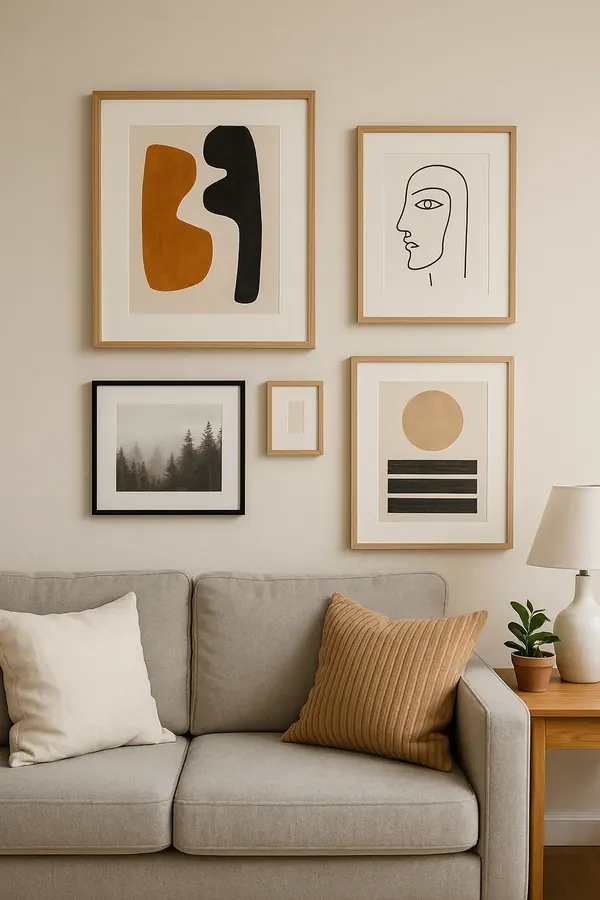
Leaning art is underrated. A deep picture ledge lets you layer frames of different sizes and swap them without new holes, and a large canvas propped on a dresser looks relaxed and expensive. Anything tall that leans on the floor, such as an oversized mirror, should still be anchored to the wall or furniture so it cannot tip.
If your lease allows small nail holes, a few well-placed hooks are often the cleanest option. Plan your layout first with the art hanging calculator so you drill once, in the right place, and read our guide on how to hang wall art for height and spacing rules.
Designer tip: To remove adhesive strips without lifting paint, pull the tab straight down, parallel to the wall and slowly, rather than out toward you. A hair dryer on low for 20 to 30 seconds softens stubborn adhesive.
Kitchen Upgrades for Renters
Rental kitchens tend to share the same weak points: laminate counters, plastic hardware and bare walls behind the sink. All of these can be disguised or upgraded reversibly.
Hardware
New knobs and pulls are the fastest kitchen facelift. Measure the center-to-center distance between existing pull screw holes so your replacements fit without new drilling. Unlacquered brass, matte black and brushed nickel all look more expensive than shiny chrome or plastic.
Backsplash
Peel-and-stick tiles or panels can cover a dated backsplash or bare wall. They adhere best to smooth, glossy surfaces like existing tile or semi-gloss paint and are least reliable on flat paint or textured walls. Keep them well away from the cooktop unless the product is rated for heat, and clean the surface thoroughly before applying.
Counters and shelves
Marble-look contact paper can hide stained laminate, but quality varies widely and seams show. Apply carefully with a squeegee, avoid placing hot pans on it, and peel slowly with gentle heat when you move out. A large wood cutting board, a stone tray by the stove and a matching set of canisters can make counters look upgraded with no application at all.
For more layout and storage ideas, see our full guide to apartment kitchen ideas.
Bathroom Upgrades That Feel Like a Hotel
Small rental bathrooms respond well to a handful of inexpensive swaps:
- Showerhead: a rain or handheld showerhead screws onto the existing arm in minutes. Wrap the threads with plumber's tape and keep the original.
- Shower curtain: mount an extra-long curtain (often 84 or 96 inches) on a tension rod placed higher than the standard height to make the ceiling feel taller.
- Towels and bath mat: choose one color, ideally white or a warm neutral, and fold towels in thirds on the bar.
- Mirror: leave the medicine cabinet in place but add a framed mirror on a removable hook, or ask to temporarily swap a plain frameless mirror.
- Storage: an over-the-toilet unit or a slim rolling cart adds storage without any drilling.
Our guide to small bathroom design has more layout and storage solutions for tight spaces.
Removable Apartment Upgrades for Walls and Floors
Peel-and-stick wallpaper
An accent wall behind a bed or in an entry is the most popular removable apartment upgrade. Choose a quality product with a low-tack adhesive, apply it to clean, cured paint, and test a sample panel first. Small-scale patterns and textured grasscloth-look papers hide seams better than bold geometrics.
Paint, if allowed
Some landlords allow painting if you return the walls to the original color, and some even provide the paint. If you get permission, take a photo of the original paint can label or have a chip color-matched, and budget for repainting when you leave.
Window treatments
Most rentals come with vertical blinds or thin vinyl minis that make windows look like an afterthought. You can usually leave them in place and layer floor-length curtains in front, which hides them when open and softens the whole room. Mount the rod 4 to 6 inches above the frame, or higher, and extend it 8 to 12 inches past the frame on each side so the panels stack beside the glass rather than over it. If you cannot drill, use a tension rod inside a window recess, or ask whether the existing rod brackets can be reused for a better rod.
If your landlord allows it, swap the blinds for simple cordless roller or woven shades and store the originals in the closet, labeled with the window they came from. Either way, choose panels in linen, a linen blend or a heavyweight cotton, lined for privacy, and hem or buy them long enough to just touch the floor.
Rugs over dated floors
Area rugs cover worn carpet, cold tile and scratched laminate instantly. Size up: in a living room the front legs of the sofa and chairs should sit on the rug, usually an 8 x 10 ft in a typical apartment. A rug pad keeps it from sliding and protects the floor beneath.
Storage and Layout Upgrades That Move With You
Freestanding furniture is the ultimate renter-friendly upgrade because it comes with you. Bookcases, wardrobes, open shelving units and a good console table add function and style without touching the walls.
- Remove closet doors (store them safely) and hang a ceiling-track or tension-rod curtain for a softer, hotel-like look.
- Add a freestanding pantry cabinet or bar cart in a kitchen short on storage.
- Use a tall bookcase or open shelving unit as a room divider in a studio, anchored to prevent tipping.
- Choose furniture with legs to show more floor, which makes small rooms feel bigger.
Anchoring tall furniture to the wall is a safety step worth discussing with your landlord, since it usually involves a couple of small screws. Most landlords would rather have two small holes than an unsecured bookcase. For more space-saving layouts, browse our small apartment ideas.
What to Do Before You Move Out
Reversing your upgrades carefully is what turns them from a risk into a smart investment. Work through this list a week or two before your final walkthrough:
- Reinstall original fixtures, showerheads, knobs and pulls, and closet doors.
- Remove adhesive products slowly, using low heat for stubborn spots, and wipe away residue with a gentle adhesive remover tested on a hidden area.
- Fill nail holes with lightweight spackle, let it dry, sand lightly and touch up with matching paint if your lease permits.
- Repaint any walls you changed back to the original color, unless your landlord agreed otherwise in writing.
- Compare the apartment against your move-in photos, room by room.
If you uncover more serious wall damage, our guide to repairing drywall after removing wallpaper walks through patching and skim-coating.
Where to Start: The First Weekend Plan
If you are new to renter friendly upgrades, start with the projects that cost the least and change the most. On day one, swap the bulbs, add one or two lamps, and lay down a properly sized rug. On day two, hang curtains high and wide, and replace the kitchen hardware. Those five changes alone can make a standard rental feel considerably more expensive.
From there, add a removable accent wall, a showerhead and a few pieces of art, one room at a time. If you want the bigger picture on making a rental feel high-end, read our guide to making your apartment look expensive next. And whatever you plan, check your lease and confirm with your landlord first: a quick email today is the easiest way to protect your deposit tomorrow.
Free interactive tool
Art Hanging Calculator: exact nail height and spacing
Frequently Asked Questions
What upgrades can renters do without landlord permission?
It depends on your lease, but changes that involve no alteration at all are generally safe: bulbs, lamps, rugs, freestanding furniture, tension rods, leaning art and textiles. Anything involving paint, drilling, adhesives, wiring or plumbing may be restricted, so read your lease and ask your landlord in writing before starting.
How do you decorate a rental without damaging walls?
Lean large art and mirrors on ledges, consoles or the floor, use tension rods for curtains in window recesses, and use adhesive strips only for light frames within their weight rating. If your lease allows small nail holes, picture hooks with thin nails are often cleaner than adhesives, and the holes are easy to fill with spackle.
Does peel-and-stick wallpaper damage walls?
It can. Peel-and-stick wallpaper usually removes cleanly from well-cured satin or eggshell paint, but it may lift flat or freshly applied paint, and it gets harder to remove over time. Test a sample on a hidden spot for a week, apply to clean walls, and peel slowly at a low angle when removing.
Can I change the light fixtures in my apartment?
Often yes, with landlord approval. Keep the original fixture and all its hardware, turn off the breaker before working, and hire a licensed electrician if you are not confident with wiring. Reinstall the original fixture before you move out unless your landlord agrees in writing to keep the new one.
What renter friendly upgrades add the most value?
Warm, high-CRI bulbs, extra lamps or plug-in sconces, floor-length curtains hung high, a properly sized area rug and new cabinet hardware give the biggest visual change for the cost. All of them are inexpensive, easy to reverse, and most can come with you to your next apartment.

We research designer standards, measure real rooms and test every recommendation against apartment realities: tight footprints, lease rules and budgets. How we write our guides.