How to Make Your Apartment Look Expensive: Designer Moves That Work in Any Rental
Curtains hung high, warm layered light, bigger rugs and fewer, better objects: the designer moves that make any apartment look luxurious without a big budget.
Key takeaways
- Declutter and edit first: clear surfaces and grouped decor make a room look expensive for free.
- Hang curtain rods 4–6 in. above the window frame (or higher), 8–12 in. wider on each side, with floor-length panels.
- Use warm 2700K bulbs with a CRI of 90+ and light every room from at least three sources.
- Size up: an 8 x 10 ft rug in most living rooms and art about two-thirds the width of the furniture below it.
- Spend on curtains, rugs and lighting; save on decor accessories, hardware and art prints.
If you want to know how to make your apartment look expensive, the honest answer is that it has very little to do with how much you spend. Rooms read as high-end when they look intentional: the curtains are hung high and wide, the rug is big enough, the lighting glows instead of glares, and every surface has room to breathe. Those are decisions, not price tags, and almost all of them work in a rental.
This guide walks through the moves designers use to make an ordinary apartment look luxurious, in the order that gives you the biggest visual return for the least money. You will find exact measurements for curtains, rugs and art, a budget breakdown, the finishes that photograph as "custom," and the common habits that quietly make a space look cheap. Start with the free fixes, then spend where it shows.
None of this requires a renovation. Most of the upgrades below can be undone when you move out, and the pieces you buy along the way will travel with you to your next place.
What Actually Makes a Room Look Expensive?
Walk into a hotel suite or a well-designed showroom and try to name what you are reacting to. It is rarely one statement piece. It is a handful of qualities working together:
- Scale: fewer, larger pieces instead of many small ones. A big rug, a generous mirror, a substantial lamp.
- Restraint: clear surfaces, a tight color palette, and negative space around important objects.
- Texture: linen, wool, boucle, wood grain, stone and brushed metal give depth even in a neutral room.
- Light: warm, layered, dimmable light at several heights, not one overhead fixture.
- Finish and fit: things that look tailored to the room, such as floor-length curtains, framed art and matching hardware.
Cheap-looking rooms usually fail on the same points in reverse: furniture shoved against the walls, a rug that floats in the middle of the floor, curtains that stop at the windowsill, bare bulbs, and lots of small decor scattered everywhere. Fix those and you are most of the way there.
Luxury is mostly editing. The most expensive-looking rooms are the ones where nothing is there by accident.
Start Free: Declutter, Edit and Rearrange
Before you buy anything, take things away. Clutter is the single fastest way to make a nice apartment look cheap, and removing it costs nothing.
Clear the surfaces
Kitchen counters, coffee tables, nightstands and dressers should be mostly empty. On each surface, keep a maximum of one functional item and one to three decorative ones. Store the toaster, the mail, the chargers and the product bottles out of sight. Our room-by-room declutter checklist makes this a two-afternoon job instead of an overwhelming one.
Pull furniture off the walls
Sofas pushed flat against the wall make a room feel like a waiting area. If you have the space, float the sofa at least a few inches off the wall, or anchor a seating group on a rug so the pieces face each other. Leave about 16 to 18 inches between the sofa and the coffee table and keep main walkways around 30 to 36 inches wide.
Group decor in odd numbers
Objects look curated when they are grouped. Arrange in threes or fives with varied heights: a stack of two or three hardcover books, a small bowl on top, and a taller vase or sculptural object beside them. One well-styled vignette beats ten objects spread evenly across a shelf.
Designer tip: Take a photo of the room on your phone and look at it in black and white. Clutter, awkward gaps and unbalanced furniture jump out immediately when color is removed.
Hang Curtains High and Wide
If you make only one purchase, make it floor-length curtains hung correctly. It is the most reliable trick for making ceilings look taller and windows look bigger, and it is the detail people most often get wrong in apartments.
| Measurement | Cheap-looking | Expensive-looking |
|---|---|---|
| Rod height | Right at the top of the window frame | 4–6 in. above the frame, or about halfway to the ceiling; up to just below the ceiling or crown molding |
| Rod width | Same width as the window | Extends 8–12 in. past the frame on each side so open panels clear the glass |
| Panel fullness | Panels add up to the window width | Combined panel width 2 to 2.5 times the window width |
| Length | Hovering above the floor or stopping at the sill | Just kissing the floor, or a slight 1 in. break |
| Fabric | Thin, shiny polyester | Linen, linen blends, heavyweight cotton or velvet, ideally lined |
Use the curtain size calculator to get the exact rod length, panel width and drop for your windows. If store-bought panels are too short for a high rod, buy the next length up and hem them, or use iron-on hemming tape for a no-sew finish.
Swap the rental's plastic rings and flimsy rods for a slim metal rod in black, brushed brass or bronze, and use pinch-pleat or ring-clip hanging rather than grommets. Pleated folds read as custom drapery.
Use Lighting to Create a Luxury Glow
Overhead "boob lights" and cool white bulbs are the hallmark of a builder-grade apartment. Luxurious rooms are lit in layers, with light coming from three or more sources at different heights.
Change the bulbs first
Choose bulbs rated around 2700K for living rooms and bedrooms (2700K to 3000K in kitchens and bathrooms) and look for a CRI of 90 or higher so wood, fabric and skin look natural. Keep color temperature consistent within a room; mixing warm and cool bulbs looks accidental.
Add layers
- Ambient: the overhead fixture, ideally on a dimmer, or a large floor lamp that bounces light off the ceiling.
- Task: reading lamps beside seating, under-cabinet light strips in the kitchen, a desk lamp.
- Accent: picture lights, a small lamp on a bookshelf, LED strips behind a headboard or TV.
Plug-in wall sconces with a cord cover are a renter's best friend: they look hard-wired from a distance and install with two screws. Smart bulbs or plug-in dimmers let you lower everything in the evening, which is when rooms look their most expensive. If you are not sure how much light a room needs, the room lighting calculator gives you a lumen target and a layered plan.
Renter note: Many landlords allow you to swap a ceiling fixture as long as you keep the original and reinstall it before you move out. Ask first, have the work done safely by someone qualified, and store the old fixture with its hardware in a labeled bag.
Choose a Tight, Tonal Color Palette
Expensive rooms rarely use many colors. They tend to stick to three or four related shades and repeat them. The classic 60-30-10 split works well: about 60 percent dominant color (walls, large rug), 30 percent secondary (sofa, curtains, big furniture), and 10 percent accent (pillows, art, a vase).
Warm neutrals such as ivory, oatmeal, greige, taupe and camel are the easiest route to a calm, high-end look, especially when paired with black accents and natural wood. If you prefer color, go deep and tonal rather than bright: olive, ink blue, burgundy or chocolate, layered in a few shades of the same family. This is the foundation of quiet luxury interior design, where the richness comes from material and tone rather than pattern.
Not sure where to start? The room color palette generator builds a 60-30-10 palette from one base color so you can test combinations before buying textiles or paint.
Go Big on Rugs, Art and Mirrors
Undersized decor is one of the clearest signals of a budget room. When in doubt, size up.
Rugs
In a living room, the rug should be large enough that at least the front legs of the sofa and chairs sit on it. Aim to leave roughly 12 to 18 inches of bare floor between the rug's edges and the walls in a typical room. For most apartment living rooms that means an 8 x 10 ft rug, not a 5 x 7. Under a queen bed, an 8 x 10 placed horizontally gives you a soft landing on both sides. Wool, jute, and wool blends look and wear better than shiny synthetics, and a thick rug pad adds a plush, expensive feel underfoot.
Art
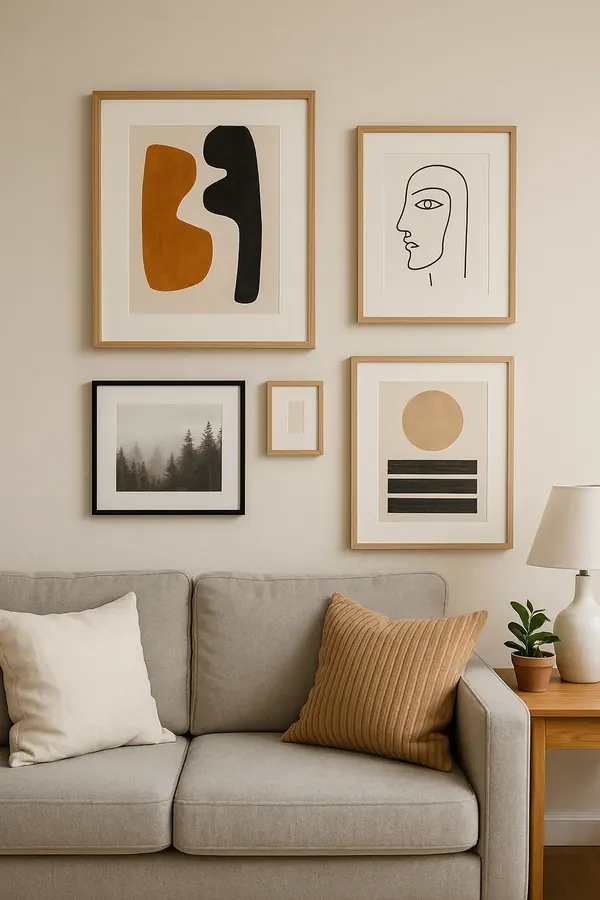
Choose art that spans about two-thirds of the width of the furniture beneath it, and center it around 57 to 60 inches from the floor, or 8 to 10 inches above a sofa back. A single large piece in a wide mat looks far more considered than a cluster of small frames. Our guide to hanging wall art at the right height covers the measurements in detail.
Mirrors
An oversized floor mirror leaned against a wall, or a large round mirror above a console, bounces light and makes a small apartment feel bigger. Choose a substantial frame in wood, black metal or aged brass. A mirror that is too small for its wall looks like an afterthought.
Layer Textiles and Texture
Texture is what keeps a neutral room from looking flat or cheap. Aim for a mix of at least three textures in every room: something soft (boucle, wool, velvet), something natural and matte (linen, jute, raw wood, rattan), and something with a little sheen (brass, glass, polished stone, ceramic glaze).
Pillows and throws
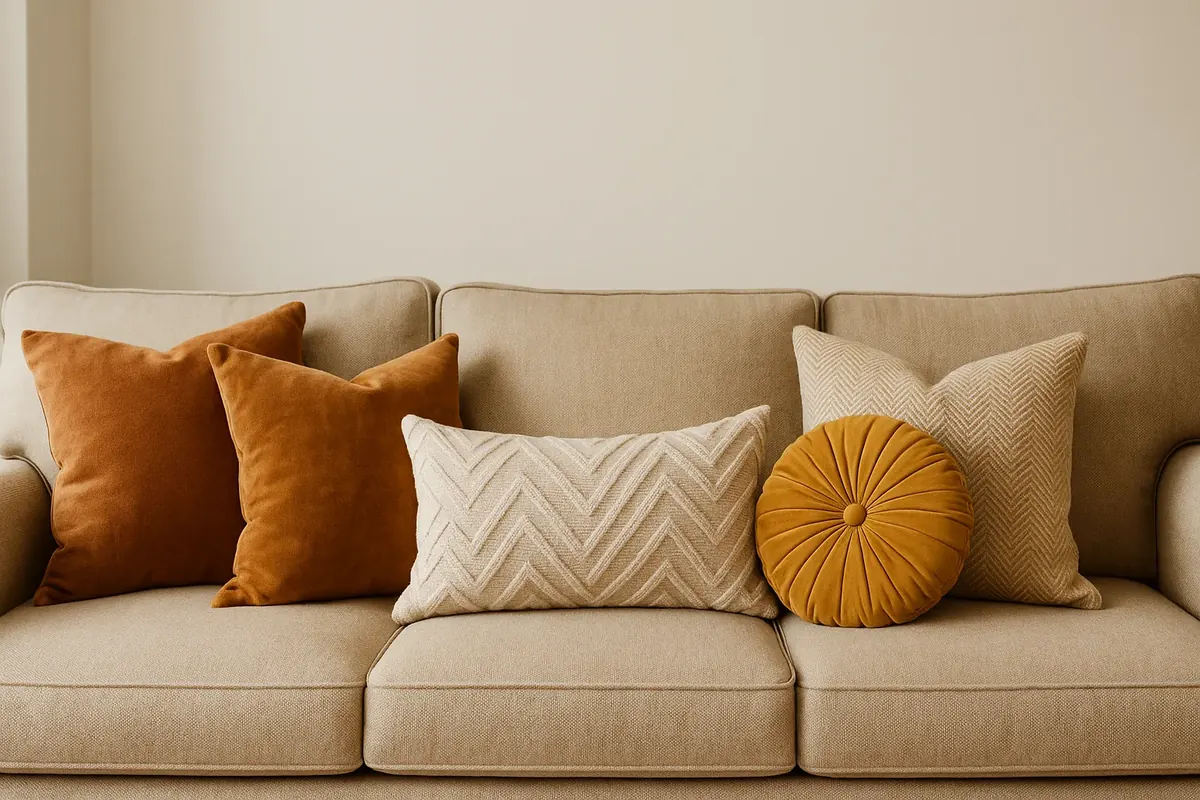
Swap thin polyester-filled pillows for covers in linen, wool or velvet with feather or down-alternative inserts sized 2 inches larger than the cover, so they look full. A sofa usually looks best with two to five pillows in a considered mix of sizes; see how to style pillows on a couch for arrangements that work on every sofa shape. Fold one chunky knit or linen throw over the arm rather than piling several.
Bedding
Hotel-style bedding is an easy win: crisp white or tonal sheets in percale or linen, a duvet with a little loft, two layers of pillows, and a textured coverlet or quilt folded at the foot. Steam or iron the visible parts. Wrinkled, pilled bedding drags a whole bedroom down.
Upgrade the Builder-Grade Details
Rentals are full of small, cheap finishes that you stop seeing after a week. Upgrading them is like tailoring a suit: no single change is dramatic, but together they make the space look custom.
- Replace plastic cabinet knobs and drawer pulls with metal or leather hardware in one consistent finish. Keep the originals in a labeled bag.
- Swap yellowed switch plates and outlet covers for screwless or metal versions.
- Change the shower curtain for a hotel-style extra-long curtain on a rod mounted higher than standard.
- Replace the showerhead with a larger rain or handheld model (save the original).
- Paint or replace flimsy closet doors, or remove them and hang a curtain on a ceiling track.
- Add a runner, a tray and a soap dispenser set in the kitchen and bath so counters look styled, not stocked.
Many of these changes are reversible and inexpensive; our guide to renter friendly upgrades rates each one by cost, difficulty and how easy it is to undo.
Apartment Luxury on a Budget: Spend, Save and Avoid
You do not need to buy everything at once. Put money into the pieces you touch every day and the ones that define the room's proportions, and save on items that are mainly decorative.
| Upgrade | Typical cost range | Visual impact | Spend or save? |
|---|---|---|---|
| Decluttering and rearranging | $0 | High | Free, do first |
| Warm, high-CRI bulbs | $20–$60 | High | Spend a little |
| Floor-length curtains and rod | $80–$300 per window | Very high | Spend |
| Large area rug (8 x 10 ft) | $200–$800+ | Very high | Spend on size and natural fiber |
| Plug-in sconces or floor lamps | $50–$250 each | High | Mid-range is fine |
| Cabinet hardware swap | $40–$200 | Medium | Save; buy simple metal pulls |
| Pillow covers and inserts | $60–$200 | Medium | Spend on inserts, save on covers |
| Large framed art or prints | $50–$400 | High | Save on the print, spend on the frame and mat |
| Oversized mirror | $100–$400 | High | Mid-range; look secondhand |
Costs are typical ranges and vary by region, size and retailer. To divide a fixed amount between categories, try the decorating budget planner.
Cheap ways to make your home look expensive
- Frame everything. Even free printable art or a vintage map looks gallery-worthy in a simple wood or black frame with a wide white mat.
- Shop secondhand for solid materials. Thrifted wood, marble, brass and real ceramics often cost less than new pieces made of veneer and plastic.
- Bring in fresh greenery. One large plant or a few branches in a heavy vase reads as more luxurious than many small pots.
- Decant products. Move dish soap, hand soap and pantry staples into matching glass or ceramic containers.
- Remove the tags and logos. Packaging and branded labels make a room look like a store shelf.
- Use books as decor. Hardcovers with the jackets removed, stacked horizontally, add height and a collected feel.
Mistakes that make an apartment look cheap
Sometimes the quickest improvement is stopping a habit. These are the issues that most often undermine an otherwise lovely apartment:
- Matching furniture sets. A sofa, loveseat and chair from the same collection look like a showroom package. Mix materials and silhouettes within one palette instead.
- Too many small accessories. Dozens of trinkets read as clutter. Edit to fewer, larger objects.
- Art hung too high. Pieces floating near the ceiling disconnect from the furniture and make the room feel off balance.
- Visible cords and cables. Use cord covers, adhesive clips and a cable box behind the TV console.
- Cool, harsh lighting. 5000K "daylight" bulbs in a living room make everything look clinical.
- Shiny synthetic fabrics. Polyester satin and glossy faux leather look cheap up close; choose matte, natural or natural-looking textures.
- Rugs that are too small. A small rug floating in front of the sofa shrinks the whole room.
Putting It All Together: A Room-by-Room Game Plan
Here is how to apply everything above without getting overwhelmed. Tackle one room at a time, starting with the space guests see first.
Living room
Edit and rearrange, then hang floor-length curtains high and wide, add a properly sized rug, and introduce at least one floor lamp and one table lamp with warm bulbs. Finish with one large art piece and a restrained pillow arrangement. For layout and styling inspiration, browse our apartment living room ideas.
Bedroom
Invest in good bedding first, then add matching or balanced bedside lamps, a rug that extends at least 18 to 24 inches beyond the sides of the bed, and art centered above the headboard. Keep nightstands nearly bare.
Kitchen and bath
Clear the counters, swap hardware, decant products, and add a runner and a tray. In the bathroom, upgrade the shower curtain and towels to one color, and add a plant or a small framed piece.
Give each room a week. By the time you have worked through the whole apartment, the space will look calmer, more cohesive and considerably more expensive than what you actually spent. If you want a broader foundation in finishes, materials and layouts, our guide to luxury apartment interior design is the natural next read.
Free interactive tool
Curtain Size Calculator: rod, panel width and length
Frequently Asked Questions
How can I make my apartment look expensive on a budget?
Start with free changes: declutter surfaces, pull furniture off the walls and group decor in odd numbers. Then put your money into the items with the biggest visual impact, namely floor-length curtains hung high and wide, warm high-CRI light bulbs, a properly sized rug and one large piece of framed art. Save on accessories and buy solid materials secondhand.
What makes a room look cheap?
The most common culprits are clutter, rugs that are too small, curtains that stop short of the floor, art hung too high, matching furniture sets, visible cords, shiny synthetic fabrics and cool, harsh overhead lighting. Fixing even three or four of these makes a noticeable difference in how expensive a room looks.
What colors make an apartment look luxurious?
Warm neutrals such as ivory, oatmeal, greige, taupe and camel, paired with black accents and natural wood, are the easiest route to a luxurious look. Deep tonal colors like olive, navy, burgundy and chocolate also read as high-end. Keep the palette tight, with three or four related shades repeated in a roughly 60-30-10 split.
How high should curtains be hung to make a room look bigger?
Mount the rod at least 4 to 6 inches above the window frame, or about halfway between the frame and the ceiling, and go higher if your windows are short. Extend the rod 8 to 12 inches past the frame on each side and use panels long enough to just touch the floor. This makes windows look larger and ceilings taller.
Can renters make an apartment look luxurious without damaging it?
Yes. Most of the biggest upgrades are reversible: curtains, rugs, lamps, plug-in sconces, bulbs, pillows, art, mirrors and swapped cabinet hardware or showerheads that you store and reinstall before moving out. Check your lease and ask your landlord before changing fixtures, painting or drilling into walls.

We research designer standards, measure real rooms and test every recommendation against apartment realities: tight footprints, lease rules and budgets. How we write our guides.