Quiet Luxury Interior Design: How to Create an Understated, High-End Home
How to create the quiet luxury aesthetic at home: warm tonal neutrals, natural materials, substantial furniture and soft lighting, with a room-by-room plan for apartments.
Key takeaways
- Quiet luxury means quality you notice up close: no logos, no trends, just good materials and proportion.
- Build a tonal palette of warm neutrals from cream to chocolate and vary value and texture.
- Aim for at least five textures per room, such as linen, wool, leather, wood and stone.
- Use 2700K bulbs and diffused fabric shades; avoid overhead-only light.
- Most of the look comes from lighting, textiles and editing, so it works well in rentals.
Quiet luxury interior design is the art of looking expensive without trying to. There are no logos, no trend-driven statement pieces and no gold-everything. Instead you get a calm, neutral palette, beautiful natural materials, impeccable proportion and a few pieces of real quality that age well. The quiet luxury aesthetic says "this was chosen with care" instead of "this cost a lot," which is exactly why it reads as high-end.
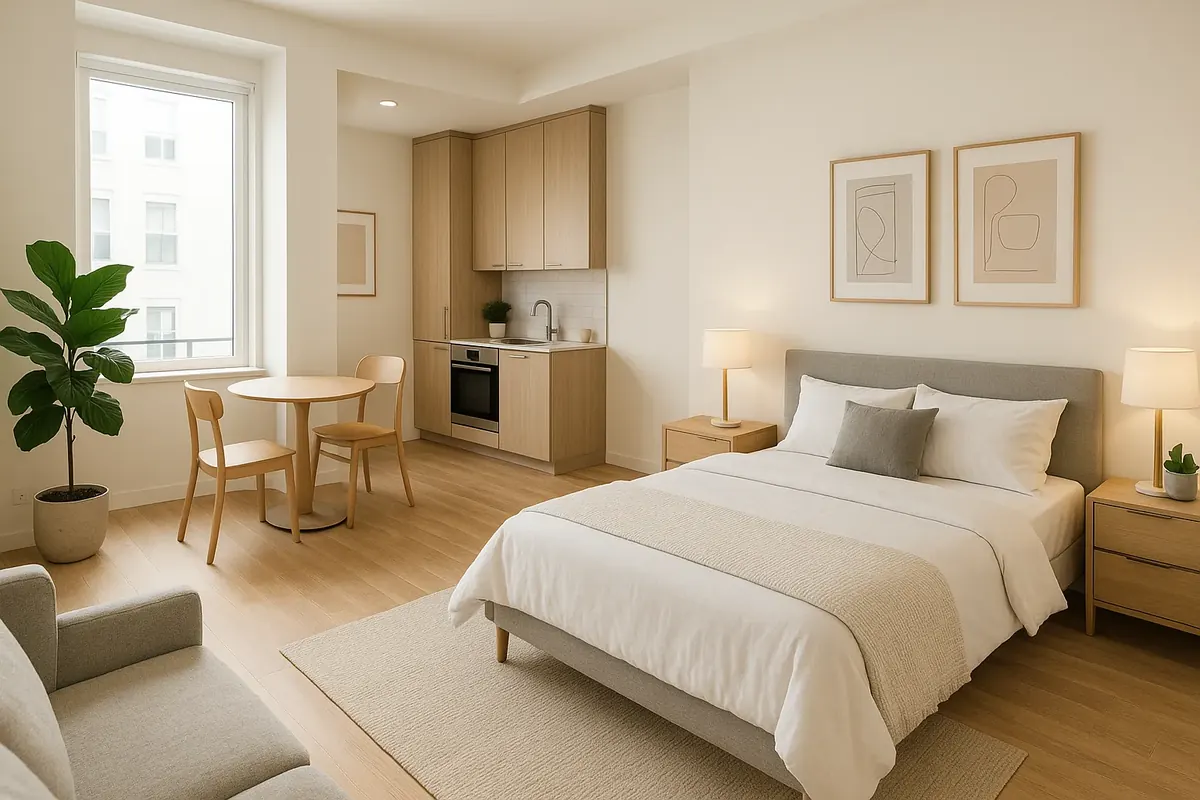
It overlaps with what's often called old money interior design: inherited-looking furniture, well-worn leather, linen and wool, art collected over time, and rooms that feel lived in rather than staged. The good news for apartment dwellers is that quiet luxury home decor depends far more on restraint and texture than on square footage. A studio can do it as convincingly as a townhouse.
This guide covers the core principles, the palette, the materials, a room-by-room plan, what to buy first, and how to get the look on a renter's budget.
What Is Quiet Luxury Interior Design?
The term grew out of fashion, where "quiet luxury" described understated, logo-free clothing made from exceptional fabrics. In interiors, it means the same thing: quality you notice when you get close, not from across the room. It isn't a strict style with rules about furniture shapes. You can have quiet luxury that leans modern, traditional or Japandi. What unites them is a set of values:
- Quality over quantity: fewer things, each well made.
- Material honesty: real wood, stone, wool, linen, leather and metal, or very convincing versions.
- Tonal color: warm neutrals layered in many shades rather than contrasting hues.
- Timelessness: classic shapes that won't look dated in five years.
- Comfort: rooms that invite you to sit down, not museum displays.
- Patina: objects that look better with age, like leather, brass, wood and stone.
Quiet luxury is what's left when you remove everything that's trying too hard.
Quiet Luxury vs. Old Money vs. Minimalism
These three get confused often, and they overlap. Here's how they differ in practice:
| Element | Quiet luxury | Old money | Minimalism |
|---|---|---|---|
| Mood | Calm, refined, tactile | Heritage, collected, layered | Spare, clean, functional |
| Palette | Cream, oatmeal, camel, taupe, chocolate | Warm neutrals plus deep green, navy, oxblood | White, gray, black, pale wood |
| Furniture | Simple, substantial, often contemporary | Antiques, traditional silhouettes, mixed eras | Low, sleek, minimal ornament |
| Pattern | Very little; texture instead | Stripes, checks, florals, oriental rugs | Almost none |
| Accessories | Few, sculptural, handmade | Books, oil paintings, silver, framed prints | Minimal, often none |
| Feeling of age | Timeless, could be new or old | Looks inherited | Looks new |
Quiet luxury sits in the middle: warmer and softer than strict minimalism, cleaner and less patterned than old money. Many homes blend the two, adding a few antiques and a vintage rug to a quiet luxury base. If you want to understand the minimalist end of the spectrum, our guide to the types of minimalism breaks down warm minimalism, Japandi and more.
The Quiet Luxury Color Palette
The palette is almost entirely warm neutrals, used tonally. Instead of a white room with a pop of color, you layer five or six shades of the same warm family, from pale cream to deep espresso.
Core colors
- Base (60%): warm white, ivory, soft cream, pale greige. Avoid stark, blue-toned whites.
- Secondary (30%): oatmeal, sand, mushroom, taupe, light camel, often from upholstery, rugs and wood.
- Depth (10%): chocolate brown, cognac leather, espresso wood, charcoal, or a muted olive.
Optional accent colors
If you want color, keep it muted and earthy: sage, moss, slate blue, dusty terracotta or deep burgundy, used in one or two places such as a velvet chair or a stack of books. Black works in small doses as a grounding line, on a picture frame, lamp base or iron curtain rod.
To build a balanced tonal scheme with exact hex codes, try our room color palette generator and choose a warm neutral as your base color.
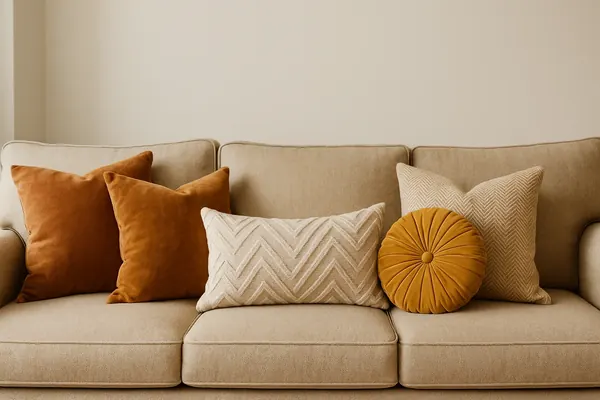
Designer tip: A tonal palette only works if you vary value and texture. Put a dark chocolate throw on an oatmeal sofa, or a pale linen pillow against cognac leather. Without that contrast, a neutral room looks flat rather than rich.
Materials and Textures That Define the Look
Because the palette is restrained, materials carry the whole design. Aim to have at least five distinct textures visible in any room.
| Material | Where to use it | Budget-friendly version |
|---|---|---|
| Bouclé or wool | Accent chair, throw, pillows | Bouclé pillow covers, wool-blend throw |
| Linen | Curtains, bedding, slipcovers, lampshades | Linen-cotton blends, washed cotton |
| Leather | Lounge chair, ottoman, dining chairs, trays | Vintage leather pieces, leather-wrapped hardware |
| Natural stone | Side table, lamp base, bowl, bathroom accessories | A single travertine or marble tray or bookend |
| Solid wood | Dining table, coffee table, frames | Secondhand solid oak or walnut pieces |
| Brushed or unlacquered brass | Lamps, hardware, picture lights | Solid brass pulls, a single brass lamp |
| Plaster and limewash | Walls, vases, lamp bases | Plaster-look ceramic vases, textured paint where allowed |
Skip anything shiny and synthetic: high-gloss lacquer, polyester velvet with a plastic sheen, faux-chrome, mirrored furniture. These shout rather than whisper. A natural wool or jute rug is one of the easiest ways to bring in texture underfoot, and our guide to the Japandi rug covers which weaves look most refined.
Furniture: Fewer, Better, Substantial
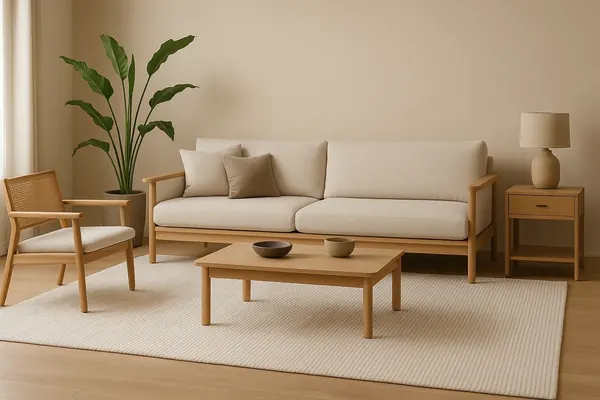
Quiet luxury furniture tends to be simple in shape and generous in scale. Think a deep, low sofa with tight or loose-back cushions in a neutral weave; a solid wood or stone coffee table with rounded edges; one or two upholstered lounge chairs; and a dining table you could keep for decades.
- Sofa: neutral performance linen, bouclé or wool blend. Clean track or slightly rounded arms. Seat depth of 22 to 25 inches feels lounge-worthy without swallowing a small room.
- Coffee table: wood, travertine or plaster-look, about two-thirds the length of the sofa, placed 14 to 18 inches from it.
- Accent chair: leather sling, wood-framed lounge chair, or a curved bouclé chair.
- Storage: closed cabinets in wood or with linen-wrapped fronts. Clutter breaks the calm, so hide it.
Mixing in one or two vintage pieces, such as a worn leather chair or an old wooden chest, adds the patina that keeps quiet luxury from looking like a showroom.
Art, books and accessories
Accessories are where quiet luxury is most often lost, because it's tempting to fill every surface. Keep the count low and the quality high. One large abstract canvas in muted tones, a charcoal or line drawing in a wide-matted frame, or a vintage landscape in an aged gilt or wood frame all suit the look. Hang it at 57 to 60 inches to center, or 8 to 10 inches above a sofa or console.
Books are the most natural old money accessory. Stack hardbacks horizontally on a coffee table, with dust jackets removed if the cloth covers are attractive, and mix them with a few objects on shelves rather than filling every inch. For objects, choose a handful of pieces with weight and craft: a stone bowl, a hand-thrown ceramic vase, a wooden box, a brass candlestick. Group them in odd numbers, vary the heights, and leave space between groups.
Fresh greenery finishes the room. A single large olive tree or fiddle leaf fig, or a few cut branches in a heavy vase, looks more refined than many small potted plants.
Lighting for a Quiet Luxury Home
Soft, warm, layered light is essential. Avoid overhead-only lighting and cool bulbs completely.
- Use 2700K bulbs everywhere, and consider 2200–2400K in table lamps for evening.
- Choose lamps with fabric or paper shades that diffuse the bulb, like pleated linen shades or alabaster-look bases.
- Add a picture light above your main artwork and a lamp in at least three corners of the living room.
- Put everything you can on dimmers or smart bulbs.
- Choose fixtures in materials that match the rest of the room, such as brushed brass, wood, ceramic or stone, rather than chrome or bright plastic.
The goal is pools of soft light around the room rather than one bright, even wash. In the evening, turn the overhead light off entirely and let lamps do the work. That alone makes a neutral room feel richer.
For a lumen-by-lumen plan, use the room lighting calculator.
Quiet Luxury Home Decor, Room by Room
Entryway
Set the tone at the door with a slim wooden console or floating shelf, a framed or vintage mirror above it, a small lamp with a linen shade, and a stone or ceramic dish for keys. A wool or hemp runner and a single branch in a vase complete it. Keep shoes and bags out of sight in a closed cabinet or closet.
Living room
Start with a neutral sofa and a large wool or wool-blend rug in a tonal pattern or flat texture. Add a leather or bouclé chair, a stone or wood coffee table, two or three diffused lamps, and full-length linen curtains hung near the ceiling. Style the coffee table with a stack of two or three hardback books, a sculptural bowl, and a single stem or branch in a heavy vase. For layout help, see our guide to apartment living room ideas.
Bedroom
Layer white or ivory percale sheets with a washed-linen duvet in oatmeal, a wool or cashmere-blend throw, and two Euro shams behind standard pillows. An upholstered headboard in linen or bouclé, matching nightstands in wood, and pleated-shade lamps complete it. Keep nightstands mostly clear: a lamp, a book, a small dish.
Kitchen and dining
Clear the counters, swap hardware for brushed brass or bronze, and display a few good-looking essentials, like a wooden cutting board, a stone mortar or a ceramic crock. A solid wood dining table with upholstered or leather chairs and a linen table runner looks timeless.
Bathroom
Thick white or oatmeal towels, a marble or travertine soap dish, decanted products in amber or stone-colored bottles, a linen shower curtain hung high, and a framed mirror. Add a small vase of eucalyptus or olive branches.
How to Get the Quiet Luxury Aesthetic in a Rental
You don't need to paint walls or replace floors to get this look. Most of it comes from textiles, lighting and editing.
- Swap all bulbs to warm white and add diffused-shade lamps.
- Hang lined linen curtains high and wide with a simple iron or brass rod.
- Layer a large natural rug over dated carpet or flooring.
- Replace mismatched bedding and towels with one neutral set.
- Swap cabinet pulls for solid brass and save the originals.
- Edit decor down to a few sculptural or handmade objects.
- Lean one large piece of art or a vintage mirror instead of drilling a gallery wall.
Renter note: If you want limewash or warm white paint, ask your landlord in writing first. Many will agree to neutral colors, but you may need to repaint before you leave, so budget for it.
For more ideas that can be undone at move-out, browse our renter friendly upgrades.
What to Buy First: A Quiet Luxury Priority List
| Priority | Item | Typical range |
|---|---|---|
| 1 | Warm bulbs and two diffused lamps | $80–$300 |
| 2 | Lined linen curtains, hung high | $100–$400 per window |
| 3 | Neutral linen or percale bedding | $150–$500 |
| 4 | Large wool or natural-fiber rug | $300–$1,500 |
| 5 | A quality neutral sofa | $1,200–$4,000 |
| 6 | One stone, leather or vintage wood statement piece | $100–$800 |
| 7 | Large art or vintage mirror | $100–$600 |
Avoid buying everything from one store or in one weekend. Old money interior design in particular looks collected over time, so mix new basics with secondhand finds as you come across them.
Common quiet luxury mistakes
- Too cool and gray: cold whites and flat grays read as sterile. Warm the palette with cream and camel.
- No contrast: an all-beige room with no dark accents looks washed out. Add chocolate, black or espresso wood.
- Trend-buying: filling a room with the season's popular bouclé and squiggle-shaped mirrors undercuts the timeless idea.
- Visible logos and branding: designer boxes on display contradict the whole point.
- Over-styling: too many trays, candles and decorative objects. Keep about a third of each surface empty.
- Small, skimpy textiles: short curtains and undersized rugs undo the effect fast.
Bringing It Together
Quiet luxury rewards patience. Start with light and textiles, choose a warm, tonal palette, buy fewer and better pieces, and leave room for things to accumulate over time. When every object in the room is there because it's beautiful, useful or meaningful, the space looks expensive on its own.
For the broader principles behind high-end apartment design, including layout, proportion and a full splurge-versus-save guide, read our complete guide to luxury apartment interior design.
Free interactive tool
Room Color Palette Generator: 60-30-10 palettes with hex codes
Frequently Asked Questions
What is quiet luxury in interior design?
Quiet luxury is an understated, high-end approach to interiors that prioritizes quality materials, warm neutral colors, timeless shapes and restraint over trends, logos and flashy statement pieces. Rooms feel calm and tactile, with linen, wool, leather, wood and stone layered in tonal shades. The luxury is in the craftsmanship and comfort rather than in obvious displays of cost.
What colors are used in quiet luxury decor?
Quiet luxury decor uses warm neutrals layered tonally: ivory, cream, oatmeal, sand, taupe, camel, cognac and chocolate brown. Small amounts of black, charcoal or espresso add grounding contrast. If you want color, choose muted earthy tones like sage, moss, slate blue or deep burgundy and use them sparingly on a single chair, pillow or stack of books.
What is the difference between quiet luxury and old money interior design?
Both are understated, but old money interior design looks inherited, with antiques, traditional silhouettes, oil paintings, patterned rugs, stripes and deeper colors like navy and forest green. Quiet luxury is cleaner and more pared back, with very little pattern, simple substantial furniture and a tonal neutral palette. Many homes blend the two.
How do I make my apartment look like quiet luxury on a budget?
Focus on light, textiles and editing. Switch to warm bulbs, add diffused-shade lamps, hang lined linen curtains near the ceiling, use one set of neutral bedding and towels, and layer a natural-fiber rug. Buy secondhand solid wood and leather pieces, swap hardware for solid brass, and remove clutter so a few good objects can stand out.
Is quiet luxury the same as minimalism?
No. Minimalism focuses on owning and displaying as little as possible, often with cool whites and sleek surfaces. Quiet luxury is warmer and more layered: it allows comfortable furniture, rich textures, books, art and vintage pieces, as long as everything is high quality and the overall look stays calm and restrained.

We research designer standards, measure real rooms and test every recommendation against apartment realities: tight footprints, lease rules and budgets. How we write our guides.