Japandi Rug Guide: How to Choose the Perfect Rug for Minimalism and Warmth
How to choose a Japandi rug: the best natural fibers, calm colors and textures, the right size for every room, and how to care for wool and jute.
Key takeaways
- A Japandi rug uses natural fibers, an earthy neutral palette, texture over pattern and a low profile.
- Wool or a wool-jute blend is the best all-round choice for Japandi living rooms and bedrooms.
- Keep jute and sisal out of wet areas; use cotton or washable flatweaves there.
- Size up: an 8x10 suits most living rooms, with 12 to 18 inches of floor left around the edges.
- Layer a small wool rug over a large flat jute rug for size, texture and comfort on a budget.
A Japandi rug is the piece that warms a Japandi room. It's usually made from natural fibers like wool, jute, cotton or hemp, in an earthy neutral color, with texture where other rugs would have pattern, and it sits low so it doesn't interrupt the room's clean lines. Japandi style blends Japanese restraint with Scandinavian comfort, and the rug is where those two meet: it gives you softness underfoot without adding visual noise.
Choosing the right one comes down to four decisions: material, color, texture and size. This guide covers each, compares the best rug materials for Japandi spaces in a single table, gives you exact sizes and placement for a Japandi living room rug, bedroom and dining room, and explains how to care for natural fibers so they last.
What Makes a Rug "Japandi"?
There's no official definition, but a Japandi style rug almost always has these traits:
- Natural fibers: wool, jute, sisal, seagrass, cotton, hemp or linen, or blends of them. Japandi favors materials that look and feel organic.
- A muted, earthy palette: ivory, oatmeal, sand, warm gray, mushroom, clay, olive, charcoal and occasionally indigo.
- Texture over pattern: ribbed, looped, chunky, slubby or hand-woven surfaces instead of busy prints. If there is a pattern, it's tone-on-tone, simple lines or a subtle grid.
- A low profile: flatweave or low pile, typically under about half an inch (13 mm), so furniture sits level and the floor plane stays calm.
- Simple shapes: rectangles and runners most often, with round or soft-edged organic shapes for small spaces and dining nooks.
- A handmade quality: slight irregularities and visible weave reflect the Japanese idea of wabi-sabi, finding beauty in imperfection.
Think of it as the opposite of a rug that demands attention. A good Japandi rug looks almost like part of the floor until you notice the texture.
Best Rug Materials for Japandi Style
The material decides how a rug feels, how it wears and where you can put it. Here's how the main natural options compare.
| Material | Feel | Durability | Best rooms | Typical 8×10 price range |
|---|---|---|---|---|
| Wool | Soft, springy, warm | Excellent; resists crushing and soil | Living room, bedroom | $400–$2,500+ |
| Wool and jute blend | Textured but softer than jute | Very good | Living room, dining | $300–$1,200 |
| Jute | Coarse, chunky, rustic | Good in dry areas; can shed | Living room, dining, entry | $150–$700 |
| Sisal and seagrass | Firm, smooth, tight weave | Very durable; stains easily (sisal) | Hallway, entry, office | $200–$800 |
| Cotton | Soft, thin, casual | Moderate; often washable in small sizes | Bedroom, kids' rooms, kitchen runners | $100–$500 |
| Hemp | Similar to jute but stronger and smoother | Good; resists mildew better than jute | Living room, entry | $250–$900 |
| Wool-viscose blend | Very soft with a slight sheen | Lower; viscose water-marks and crushes | Low-traffic bedrooms | $300–$1,200 |
Price ranges are typical retail ranges and vary widely with construction. Hand-knotted rugs cost much more than machine-made or hand-loomed ones.
Which material should you choose?
For most apartments, wool or a wool-jute blend is the best all-rounder: soft enough for bare feet, naturally stain-resistant, and textured enough to look Japandi. Pure jute gives the most authentic, earthy texture at the lowest price, but it's scratchy underfoot and doesn't love moisture, so keep it out of kitchens and bathrooms. Choose sisal or seagrass for high-traffic halls, and cotton flatweaves where you want something light and washable.
Designer tip: Layering is very Japandi. Put a smaller wool rug with a soft pile on top of a large, flat jute rug. You get the size and texture of jute with comfort underfoot where you actually sit, often for less than one large wool rug.
Japandi Rug Colors and Patterns
The palette should echo the rest of the room: light woods, linen, stone and greenery. Most Japandi rooms use one of three approaches.
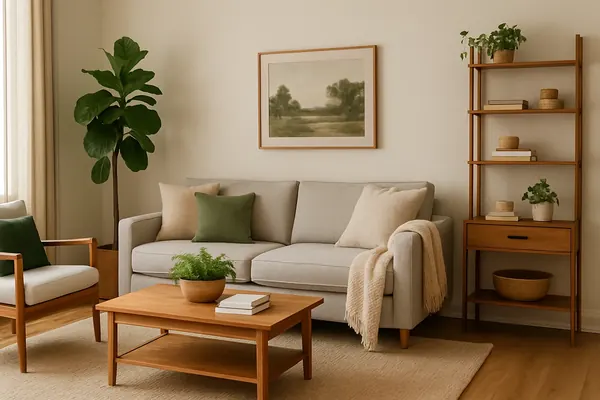
- Light and airy: ivory, oatmeal or pale sand. Best in small or darker apartments, with light oak or ash furniture. This is the look in many Japandi living room photos.
- Warm mid-tone: natural jute, camel, clay or mushroom. Hides dirt well and bridges light floors and darker furniture.
- Grounded and dark: charcoal, deep olive, indigo or espresso. Adds contrast in a pale room and anchors walnut or black-stained wood.
For pattern, choose quietly: a tonal ribbed stripe, a subtle grid, a hand-drawn line, a soft border, or an abstract pattern in two close neutrals. Skip high-contrast geometrics, florals and traditional medallions. They pull the eye away from the calm the style depends on.
Want a full room palette built around your rug color? Our room color palette generator gives you a 60-30-10 scheme with hex codes.
Japandi Rug Weaves and Textures
Flatweave
Woven on a loom with no pile, as with kilims and dhurries. Flatweaves are thin, reversible, easy to vacuum and great under dining tables and doors. Many jute and cotton Japandi rugs are flatweaves.
Low pile and loop pile
Short, dense pile (around 1/4 to 1/2 inch) in wool or wool blends. Loop pile and Berber-style textures add depth without bulk and suit living rooms and bedrooms.
Chunky braided or knotted
Thick braided jute or chunky wool weaves give strong texture. They look wonderful in living rooms but can be uneven under chair legs, so avoid them in dining areas.
Hand-tufted and hand-knotted
Hand-tufted rugs offer a plush feel at moderate prices. Hand-knotted rugs are the most durable and expensive, often with the subtle irregularity that suits Japandi's appreciation of craft.
What Size Rug for a Japandi Living Room?
Japandi rooms rely on balance, and an undersized rug is the most common mistake. Leave 12 to 18 inches (30–46 cm) of floor between the rug and the walls in most rooms, and at least 8 inches in very tight spaces.
| Room | Common room size | Recommended rug size | Placement |
|---|---|---|---|
| Small living room | 10×12 ft | 5×8 or 6×9 ft | Front legs of sofa and chairs on the rug |
| Standard living room | 12×15 ft | 8×10 ft | Front legs on, or all legs if space allows |
| Large living room | 14×18 ft+ | 9×12 ft | All furniture legs on the rug |
| Bedroom, queen bed | 11×12 ft | 8×10 ft | Under the lower two-thirds of the bed, 18–24 in. on each side |
| Bedroom, king bed | 12×14 ft | 9×12 ft | Under the lower two-thirds, 18–24 in. on each side |
| Dining area | Table 36×72 in. | 8×10 ft | 24–30 in. beyond the table on all sides |
| Hallway | 3–4 ft wide | 2.5×8 to 2.5×12 ft runner | 4–6 in. of floor on each side |
For a recommendation based on your exact room and furniture, use our rug size calculator.
Placement tips for a Japandi look
- Center the rug on the seating group, not the room, if the two don't align.
- Low Japandi sofas and floor cushions look best with the whole seating group on the rug.
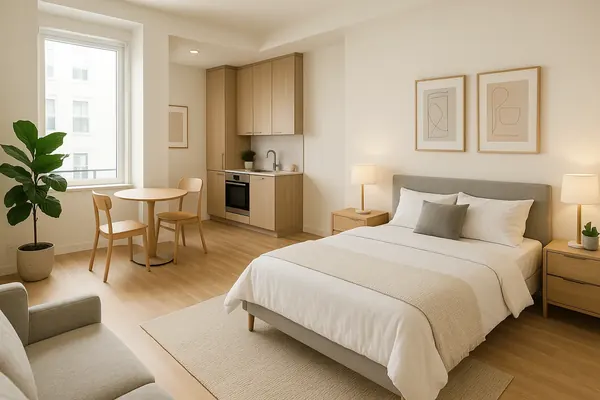
- In studios, use separate rugs to zone sleeping and living. Our guide to studio apartment ideas covers zoning layouts.
- A round rug softens the right angles in a small dining nook or reading corner.
How to Style a Japandi Rug in Each Room
Living room
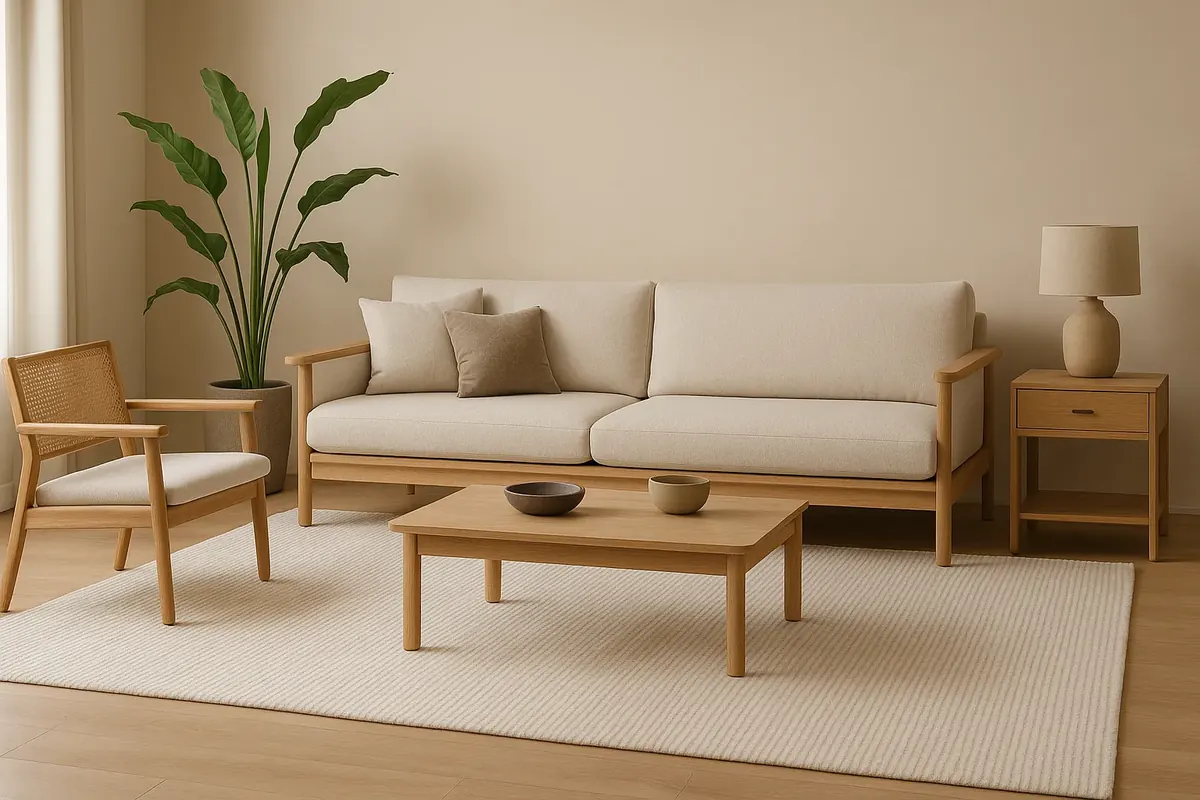
Pair an ivory or oatmeal wool rug with a low linen sofa on wooden legs, an oak or ash coffee table with rounded corners, and a rattan or wood-frame accent chair. Add one large plant and a paper or linen-shade floor lamp. Keep the coffee table mostly bare: a ceramic bowl and one stem is plenty.
Bedroom
A soft, low-pile wool or cotton rug under a low platform bed is the classic Japandi bedroom. Choose a shade slightly darker than your bedding so the bed doesn't disappear, and add a bench or floor cushion at the foot.
Dining area
Use a flatweave or tight-weave rug so chairs slide easily, sized so chair legs stay on the rug when pulled out. Jute and wool-jute blends hide crumbs well, but a washable cotton flatweave is the most practical choice if you have kids.
Entry and hallway
A sisal, seagrass or hemp runner handles shoes and grit well and adds texture to a narrow space. Add a non-slip rug pad underneath.
Renter note: A large natural rug is one of the best ways to hide dated carpet or worn vinyl in a rental. On carpet, use a carpet-to-rug pad so the rug doesn't creep or ripple. On hard floors, use a felt-and-rubber pad to protect the floor and prevent slipping.
How to Care for a Natural-Fiber Japandi Rug
- Vacuum weekly without the beater bar on wool and jute, or use suction only. Shedding is normal for the first few months with new wool and jute.
- Rotate the rug 180 degrees every 3 to 6 months so it wears and fades evenly.
- Blot spills immediately with a dry white cloth. Don't rub.
- Keep jute, sisal and seagrass dry: use minimal water and dry the area quickly with a fan, or water marks and browning can appear.
- Wool tolerates gentle spot-cleaning with cool water and wool-safe detergent.
- Have wool and hand-knotted rugs professionally cleaned every 12 to 24 months, depending on traffic.
- Always use a rug pad to reduce wear, add cushioning and stop slipping.
Japandi Rug Mistakes to Avoid
- Too small: a rug that only fits under the coffee table makes the room feel disjointed.
- Too much pattern: bold prints fight Japandi's calm. Choose texture first.
- Synthetic shine: glossy polyester looks out of place next to matte wood and linen.
- Jute in wet areas: it stains and can mildew in kitchens and bathrooms. Choose cotton or a washable flatweave instead.
- Thick shag: high pile breaks up the low, grounded look and makes furniture sit unevenly.
Choosing Your Japandi Rug: Quick Recap
Start with size, using the table above or the calculator. Then choose the material for the room: wool or a wool blend for living rooms and bedrooms, jute or hemp for earthy texture in dry areas, and sisal for halls. Keep the color within your room's palette, pick texture over pattern, and add a good pad. A well-chosen Japandi rug will make your furniture look more considered and your floors more finished.
Not sure Japandi is your style? Compare it with other pared-back approaches in our guide to the types of minimalism, or see how natural rugs fit into a broader high-end look in our guide to luxury apartment interior design.
Free interactive tool
Rug Size Calculator: the right rug size for any room
Frequently Asked Questions
What kind of rug goes with Japandi style?
Japandi style pairs best with natural-fiber rugs such as wool, jute, hemp, sisal or cotton in muted earthy colors like ivory, oatmeal, sand, warm gray or charcoal. Look for flatweave or low-pile construction and texture rather than bold pattern, such as ribbed, looped or hand-woven surfaces. Simple rectangles, runners and soft round shapes all work.
Is jute or wool better for a Japandi living room?
Wool is softer, more stain-resistant and better for lounging on, which makes it the more comfortable choice for most living rooms. Jute is cheaper and has a more rustic, earthy texture but feels coarse and sheds at first. A wool-jute blend or a small wool rug layered over a large jute rug gives you the benefits of both.
What color rug is best for Japandi?
Ivory, oatmeal and pale sand are the most popular Japandi rug colors because they keep rooms light and calm. Natural jute, camel and clay add warmth and hide dirt. Charcoal, deep olive or indigo work well when you want contrast with pale floors or to anchor darker walnut furniture. Choose a shade from your room's existing palette.
What size rug do I need for a Japandi living room?
Most apartment living rooms need an 8x10 rug, while small rooms around 10x12 feet usually suit a 5x8 or 6x9. Leave 12 to 18 inches of bare floor around the edges and make sure at least the front legs of the sofa and chairs sit on the rug. With low Japandi seating, placing all legs on the rug looks most cohesive.
Can you use a patterned rug in a Japandi room?
Yes, as long as the pattern is subtle. Tone-on-tone stripes, simple grids, thin borders, hand-drawn lines or soft abstracts in two close neutrals fit Japandi well. Avoid high-contrast geometrics, bright colors, florals and traditional medallion designs, which compete with the calm, uncluttered look the style is built on.

We research designer standards, measure real rooms and test every recommendation against apartment realities: tight footprints, lease rules and budgets. How we write our guides.