Renovations & Makeovers
Repair Drywall After Removing Wallpaper: Step-by-Step
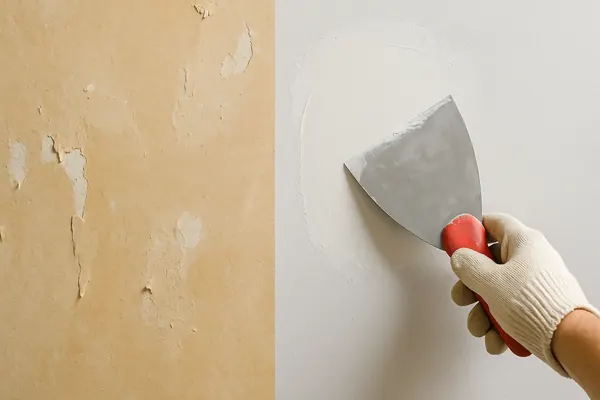
Torn drywall paper after stripping wallpaper? Clean off paste, seal with the right primer, skim coat and prime so paint goes on smooth with no bubbles.
Free design tool
Enter your room dimensions, doors, windows, and number of coats, and this paint calculator estimates how many gallons and quarts of paint and primer you need, plus the total cost. It uses a conservative 350 square feet per gallon so you are not caught short mid-wall.
Results are planning guidelines based on standard interior design rules of thumb. Always measure twice and check product dimensions before you buy.
The calculator finds your total wall area by multiplying the room's perimeter (length + width, times 2) by the ceiling height. It then subtracts the areas you will not paint: 20 square feet per door and 15 square feet per window, which are reliable averages for standard openings. If you include the ceiling, it adds length × width.
That paintable area is multiplied by the number of coats (two by default) and divided by coverage. Paint cans usually promise 350 to 400 square feet per gallon, but real-world coverage depends on texture, color, and how heavily you roll. The calculator uses 350 square feet per gallon so the estimate stays on the safe side.
| Input | Value used | Why |
|---|---|---|
| Wall area | Perimeter × height | Covers all four walls |
| Each door | −20 sq ft | Standard interior door plus casing |
| Each window | −15 sq ft | Average apartment window |
| Ceiling (optional) | Length × width | Flat ceiling area |
| Coverage | 350 sq ft per gallon | Conservative end of 350–400 |
| Coats | 2 (default) | Even color and sheen |
| Primer | 1 coat when needed | Seals and evens the surface |
| Quart | 1/4 gallon | For top-ups and trim |
Say your bedroom is 12 by 14 feet with 8-foot ceilings, one door, and two windows.
In practice, you would buy 2 gallons plus a quart. Adding the 168-square-foot ceiling at two coats needs another 336 square feet, or roughly 1 more gallon of ceiling paint.
Primer is not always necessary, especially with good-quality paint over a clean wall in a similar color. The calculator adds one coat of primer when you tell it any of these apply:
Primer coverage is similar to paint, so the calculator uses the same 350 square feet per gallon. Ask the store to tint it toward your topcoat for deep colors.
Enter your price per gallon and the calculator multiplies it by the gallons needed, adding primer at its own price if you included it. Premium paint costs more per gallon but often covers better and stands up to cleaning, which can make it cheaper per square foot over time.
Finish matters for both looks and practicality. Matte and flat finishes hide wall imperfections and read as rich and chalky, ideal for bedrooms and ceilings. Eggshell has a soft glow and wipes clean, a good default for living rooms and hallways. Satin handles kitchens and bathrooms, and semi-gloss is the classic choice for trim and doors. Need help picking the color itself? Browse our warm pastel bedroom paint colors and pastel colors for home, or build a full scheme with the room color palette generator.
Renter note: Get written permission from your landlord before painting, and ask whether you must repaint before you move out. Note the original color name and keep a labeled quart of each color you use so you can do clean touch-ups when it is time to leave.
Designer tip: Paint your ceiling with a flat white that shares the wall color's undertone, or tint it 25 to 50 percent of the wall color. It softens the line where wall meets ceiling and makes rooms feel taller and more finished.
Painting is one of the highest-impact changes you can make. For more ways to get a high-end look, see our list of renter friendly upgrades.
A 12x12 room with 8 foot ceilings has about 384 square feet of wall. Subtract 20 square feet for one door and 30 for two windows to get 334 square feet. At two coats and 350 square feet per gallon, you need roughly 1.9 gallons, so buy 2 gallons. Add about 1 gallon if you also paint the ceiling.
One gallon of interior paint typically covers 350 to 400 square feet with one coat on a smooth, primed wall. Textured, porous, or freshly patched surfaces absorb more, so coverage drops. This calculator uses 350 square feet per gallon to give a conservative estimate, which leaves a little extra for touch-ups rather than an emergency trip back to the store.
In most cases, yes. Two coats give even color, consistent sheen, and better durability, even with paint-and-primer products. One coat can be enough when you are refreshing the same color over a clean, sound wall. Plan on two coats by default and a third when making a big color change without primer, especially with deep reds and yellows.
Use one coat of primer when going from a dark color to a light one, when painting new drywall or patched areas, and when painting over glossy surfaces that paint will not grip well. Primer seals porous spots, blocks stains, and helps the topcoat look even. A tinted primer can also reduce the number of topcoats needed for deep colors.
Buy gallons for walls and ceilings, since a quart is only a quarter gallon and costs more per ounce. Quarts make sense for small top-ups, accent walls, doors, or trim. If your estimate lands just over a whole number, such as 2.2 gallons, buying 2 gallons plus a quart is usually cheaper than a third gallon.
Torn drywall paper after stripping wallpaper? Clean off paste, seal with the right primer, skim coat and prime so paint goes on smooth with no bubbles.
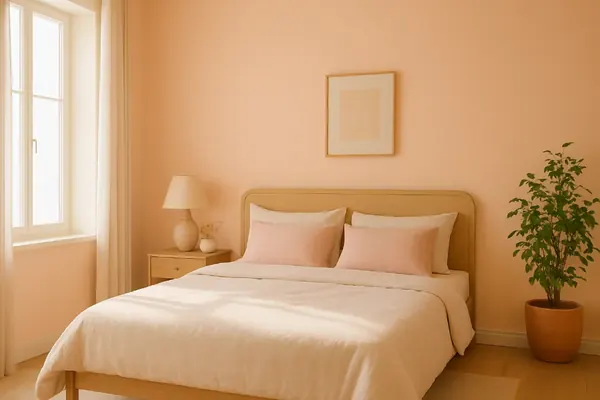
Peach, blush, buttermilk and warm lilac: 12 warm pastel bedroom colors with hex codes, LRV ranges, lighting advice and palettes that feel sophisticated.
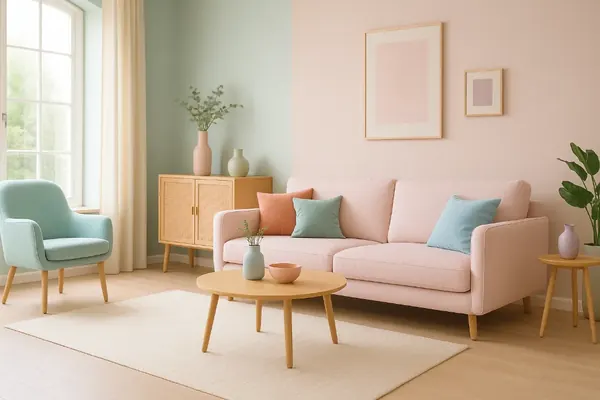
Muted pastels, smart pairings with hex codes and room-by-room ideas for using pastel colors at home so they look soft and sophisticated, never sugary.