Warm Pastel Bedroom Paint Colors: 12 Soft Shades, Palettes and Tips for a Grown-Up Look
Peach, blush, buttermilk and warm lilac: 12 warm pastel bedroom colors with hex codes, LRV ranges, lighting advice and palettes that feel sophisticated.
Key takeaways
- Warm pastels have a yellow, peach or red undertone and a typical LRV of about 60 to 80.
- Muted pastels with a touch of gray or brown look far more sophisticated than clean, bright ones.
- North-facing bedrooms suit peach, apricot and butter; south-facing rooms handle dusty rose and mushroom pink.
- Flat or matte finishes give pastels a soft, plaster-like depth and hide wall flaws.
- Ground a pastel room with one deep accent color, natural textures and warm metals like brass.
The best warm pastel bedroom paint colors are soft tints with a yellow, peach or red undertone and a light reflectance value (LRV) of roughly 60 to 80: think peach, apricot, blush, buttermilk, warm rose and pink-leaning lavender. They read restful rather than sugary because a touch of gray or brown keeps them grounded, and they flatter skin, wood and brass in the low, warm light you actually use in a bedroom at night.
This guide walks you through how to spot a truly warm pastel on a paint chip, a dozen shades described by hue, undertone and approximate hex code so you can match them at any paint counter, how light direction changes each one, and the finishes, trims and textiles that make a pastel bedroom look expensive instead of juvenile. Because every brand mixes its own formulas, we describe colors rather than naming specific products. Take the hex value or the description to your store and compare chips side by side.
If you rent, most of these colors are also the easiest to paint back over, since pale tints usually cover with one coat of primer and two of white. That makes a warm pastel one of the lowest-risk ways to change how a bedroom feels.
What Makes a Pastel "Warm"?
A pastel is any hue mixed with a lot of white so it lands in the light, soft range. Whether it reads warm or cool depends on its undertone, the hidden color that shows up next to pure white or in shadow.
- Warm pastels lean toward yellow, orange or red. Peach, apricot, blush, butter and warm sand all sit here, and so do lavenders and greens that have a pink or yellow cast.
- Cool pastels lean toward blue or green-blue: icy mint, baby blue, periwinkle, blue-lilac.
- Muted or "dirty" pastels add a little gray, brown or the color's complement. This is the secret to grown-up pastels. A clean, bright pink can look like a nursery; the same pink with a drop of brown reads like plaster.
To check a chip, hold it against a sheet of bright white printer paper. If it looks faintly orange, pink or golden at the edges, it is warm. Then compare it with the darkest chip on the same strip: that deep color exposes the undertone more clearly than the pale one does.
Designer tip: For a bedroom, choose pastels on the muted end of the strip, typically the second or third chip from the top. The very lightest chip often reads as off-white on four walls, while the third chip gives you real color without shouting.
The 12 Best Warm Pastel Bedroom Paint Colors
The hex codes below are approximations to help you compare chips and build a palette; paint on a wall always looks different from a screen. LRV ranges are typical for colors of this depth. Higher LRV means more light bounced back into the room.
| Color | Approx. hex | Undertone | Typical LRV | Mood |
|---|---|---|---|---|
| Soft peach | #F6D5BE | Orange-pink | 68–75 | Glowing, sunny |
| Apricot cream | #F5CBA7 | Yellow-orange | 62–70 | Cozy, Mediterranean |
| Shell blush | #F4DCD6 | Pink with beige | 72–78 | Romantic, calm |
| Dusty rose | #E6C3BE | Red-brown | 58–64 | Enveloping, mature |
| Buttermilk | #F7EBD3 | Soft yellow | 78–84 | Airy, fresh |
| Butter yellow | #F6E7B8 | Golden | 74–80 | Cheerful, vintage |
| Soft coral | #F2C1AE | Red-orange | 58–65 | Lively, warm |
| Pink sand | #E8CFC3 | Pink-taupe | 62–68 | Quiet, earthy |
| Pale terracotta | #E9C2AE | Brown-orange | 56–62 | Grounded, sun-baked |
| Warm lilac | #E3D3E4 | Pink-violet | 66–72 | Dreamy, soft |
| Pistachio cream | #DDE5C8 | Yellow-green | 70–76 | Restful, natural |
| Mushroom pink | #DCC6BD | Gray-pink | 55–62 | Sophisticated, hotel-like |
Peach and apricot
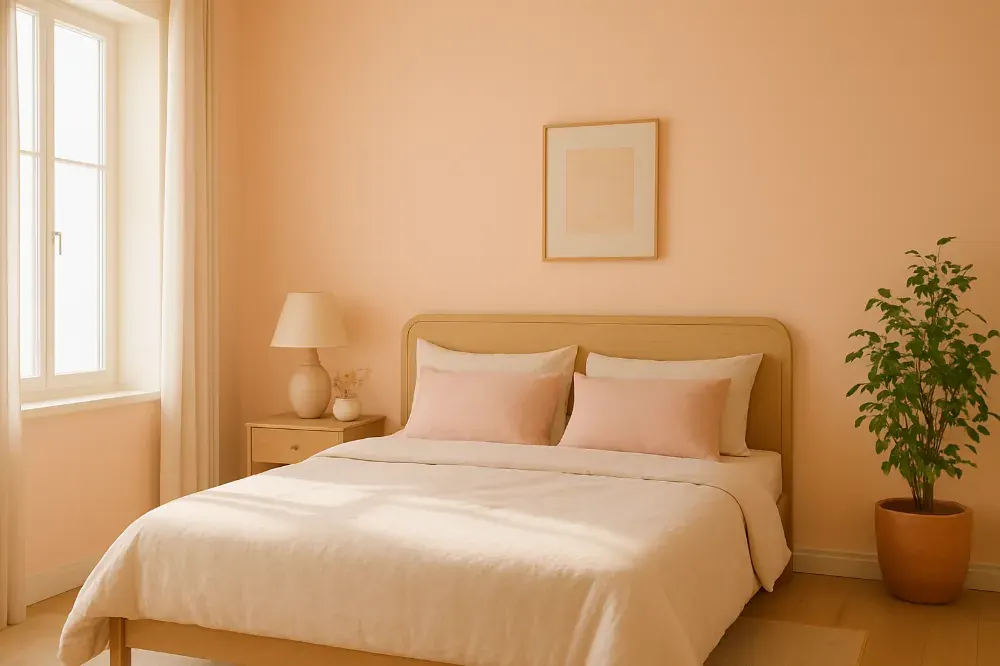
Peach is the most forgiving warm pastel bedroom color. It warms north light, softens bright south light and makes white bedding look creamy. Apricot is a step deeper and more golden; it suits bedrooms with warm wood floors and rattan or cane furniture. If either starts to feel too orange in testing, move one chip toward pink or choose a version with a little gray in it.
Blush, dusty rose and mushroom pink
These pinks are the reason "pink bedroom" no longer means "child's room." Shell blush is barely there, almost a warm white with a flush. Dusty rose and mushroom pink contain enough brown or gray to look like lime plaster, and they pair beautifully with charcoal, olive and aged brass. They are the safest pinks for a shared bedroom because they read as neutral in daylight and rosy at night.
Butter and buttermilk
Soft yellows have the highest LRV of the group, so they are your best choice for a dim bedroom with one small window. Keep them creamy rather than lemony: if the chip looks greenish next to white paper, skip it. Butter yellow is lovely with blue-and-white textiles, which balance its warmth.
Coral and pale terracotta
These are the boldest options here, closer to a "colored" wall than a whisper. Use them on an accent wall behind the bed, or on all four walls in a room with strong daylight. They shine with natural linen, jute and dark wood.
Warm lilac and pistachio
Lavender and green are usually cool, but versions with a pink or yellow cast feel surprisingly cozy. Warm lilac is romantic without being pink; our guide to what color goes with lavender covers pairings in depth. Pistachio cream suits anyone who wants a nature-inspired pastel that still feels warm.
How Does Light Direction Change Warm Pastels?
The same paint can look entirely different from room to room. Before you commit, figure out which way your bedroom window faces.
| Window faces | Light quality | Best warm pastels | Use with care |
|---|---|---|---|
| North | Cool, even, slightly gray | Peach, apricot, butter, pink sand | Warm lilac (can turn gray), mushroom pink |
| South | Bright, warm most of the day | Dusty rose, mushroom pink, pistachio | Coral and apricot (can intensify) |
| East | Warm morning, cooler afternoon | Shell blush, buttermilk, peach | Very gray pinks (flat after noon) |
| West | Cool morning, golden evening | Pink sand, warm lilac, pistachio | Terracotta and coral (glow orange at sunset) |
Artificial light matters just as much in a bedroom because that is when you are usually there. Bulbs at 2700K, labelled "warm white," make every warm pastel richer. Bulbs at 4000K and above can turn peach chalky and pink a little gray. Our room lighting calculator helps you plan enough lamps so the walls glow instead of looking muddy in the corners.
How to Test Pastel Paint Before You Commit
Pastels shift more than almost any other color family, so testing is not optional.
- Narrow the list to three candidates, all with the same undertone family.
- Paint two coats on large sample boards, at least 12 x 12 in. (30 x 30 cm), or buy peel-and-stick samples.
- Tape one board beside the window and one on the darkest wall, ideally behind the bed.
- Look at them in the morning, mid-afternoon and at night with your lamps on.
- Hold your bedding, a pillowcase and a piece of trim against each board.
- Live with them for at least 48 hours before choosing.
Most people discover that the color they loved on the chip is too strong on a wall. Pale colors intensify when they surround you. If you are torn between two shades, choose the lighter or more muted one.
Which Paint Finish Is Best for a Pastel Bedroom?
Finish changes how luxurious a pastel looks. Flat and matte finishes absorb light and give that soft, chalky, plaster-like depth that makes muted pinks and peaches look high-end. Shinier finishes reflect light and reveal every wall flaw, which is common in older apartments.
| Finish | Look | Washability | Best for |
|---|---|---|---|
| Flat / matte | Velvety, hides flaws | Low to moderate | Walls in adult bedrooms, ceilings |
| Eggshell | Soft sheen | Good | Walls in kids' rooms or high-touch areas |
| Satin | Noticeable sheen | Very good | Trim and doors in a tone-on-tone scheme |
| Semi-gloss | Shiny | Excellent | Trim, window frames, radiators |
For a standard 12 x 12 ft bedroom with 8 ft ceilings, you will typically need about 2 gallons for two coats on the walls. Run your own room through the paint calculator to get an exact figure, including primer if you are covering a darker color.
How to Make a Pastel Bedroom Look Sophisticated
The difference between grown-up and sweet comes down to contrast, texture and restraint. Here is what designers do.
Add one deep anchor color
A pastel room with only other pastels can feel weightless. Ground it with one darker tone used in small doses: a charcoal headboard, a chocolate velvet cushion, an olive throw, ink-blue lamp bases or a dark-framed mirror.
Layer natural texture
Washed linen bedding, a wool or jute rug, a boucle chair and an oak or walnut nightstand give pastel walls a tactile richness. Stick to two or three materials and repeat them.
Choose warm metals
Brushed brass, antique bronze and unlacquered brass belong with warm pastels. Chrome and polished nickel lean cool and can clash, especially with peach and apricot.
Color-drench for a boutique-hotel look
Painting walls, trim and even the ceiling in the same pastel, or a shade 10 to 20 percent lighter on the ceiling, makes a small bedroom feel wrapped and intentional. It is one of the cheapest ways to make a bedroom feel custom, and it hides awkward trim and odd angles.
A pastel bedroom looks expensive when the color is muted, the textures are natural and something in the room is dark.
For more ideas on furnishing around your new walls, see our guide to apartment bedroom ideas.
Warm Pastel Bedroom Color Palettes to Copy
Use the 60-30-10 rule: about 60 percent of the room in your wall color, 30 percent in a secondary color (bedding, curtains, rug), and 10 percent in an accent. Here are five combinations to start with.
| Palette | Walls (60%) | Secondary (30%) | Accent (10%) |
|---|---|---|---|
| Sunlit Mediterranean | Apricot cream #F5CBA7 | Natural linen #E8DFD0 | Olive #6B6B3A |
| Parisian blush | Shell blush #F4DCD6 | Warm white #F5F0E8 | Charcoal #3C3A38 |
| Earthy calm | Pink sand #E8CFC3 | Oatmeal #D8CBB5 | Terracotta #B5694A |
| Vintage cottage | Butter yellow #F6E7B8 | Soft white #F8F5EE | Cornflower blue #6F8FC7 |
| Dreamy modern | Warm lilac #E3D3E4 | Greige #CFC7BC | Aged brass #A8884F |
Want to see more combinations? Plug any of these hex codes into our room color palette generator to build a full 60-30-10 scheme and preview it in a room. For a broader look at soft colors throughout the home, read our guide to pastel colors for home.
What Trim and Ceiling Colors Go With Warm Pastels?
Bright, blue-white trim makes warm pastels look dingy by comparison. Choose a creamy or slightly warm white with a hint of yellow or beige so the trim and walls feel related. Alternatively, go tone-on-tone with the wall color in satin. For ceilings, flat warm white is the safe choice; a ceiling tinted at quarter or half strength of the wall color feels more custom and makes the room glow.
Renter note: Check your lease before painting, and ask your landlord in writing if it is unclear. Many will approve pale colors because they repaint easily. Keep the paint brand and formula on record, and if you only want a hint of color, try peel-and-stick wallpaper in a pastel linen texture behind the bed instead.
Putting It All Together
Start with the direction of your light, then pick a warm pastel with a muted, slightly earthy edge from the second or third chip on the strip. Test three large swatches, live with them for two days, and choose the softer one if in doubt. Paint in flat or matte for depth, use a creamy white or matching color on trim, and anchor the room with one deep accent, natural textures and warm metals. Follow that sequence and you will end up with a bedroom that feels like a warm, quiet retreat every evening.
Free interactive tool
Room Color Palette Generator: 60-30-10 palettes with hex codes
Frequently Asked Questions
What is the most relaxing pastel color for a bedroom?
Muted, warm-leaning pastels such as soft peach, shell blush, pink sand and buttermilk tend to feel the most relaxing because they are low in saturation and flatter warm evening light. Choose a version with a little gray or brown in it, and pair it with natural linen and warm white trim so the room reads calm rather than sweet.
Is peach a good color for a bedroom?
Yes. Peach is one of the most versatile bedroom colors because it warms cool north light, softens bright south light and makes white bedding look creamy. Pick a muted peach rather than a bright orange-pink, test it with 2700K bulbs, and balance it with natural wood, linen and a deeper accent such as olive or charcoal.
How do I make a pastel bedroom look grown up?
Use muted pastels instead of clean candy shades, paint in a flat or matte finish, and add one deep anchor color like charcoal, chocolate or olive. Layer natural textures such as linen, wool and oak, and choose warm metals like brushed brass. Color-drenching walls and trim in the same pastel also looks intentional and high-end.
What color trim goes with warm pastel walls?
A creamy or slightly warm white works best because bright blue-whites make warm pastels look dull. You can also paint the trim the same color as the walls in a satin finish for a tone-on-tone, boutique-hotel effect. For ceilings, use flat warm white or a version of the wall color at a quarter to half strength.
Do pastel colors make a bedroom look bigger?
Light pastels with a high LRV, roughly 70 and above, reflect more light and can make a small bedroom feel more open, especially when walls, trim and ceiling share related tones. Deeper pastels like dusty rose or pale terracotta feel cozier and more enveloping, which can be just as appealing in a room you mainly use at night.

We research designer standards, measure real rooms and test every recommendation against apartment realities: tight footprints, lease rules and budgets. How we write our guides.