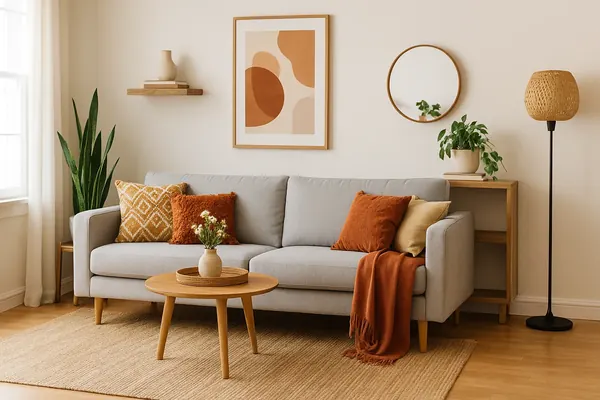
30 Apartment Decorating Ideas for Every Room (With Budget Tags)
Thirty renter-friendly apartment decorating ideas grouped by room, each tagged by budget, plus a step-by-step plan for decorating an apartment from scratch.
Key takeaways
- Warm 2700K bulbs and three lamps per room are the cheapest, highest-impact upgrade.
- Hang curtains 4 to 6 inches below the ceiling and size rugs so front furniture legs sit on them.
- One large piece of art looks more expensive than many small frames.
- Choose a three-to-five-color palette before you buy anything.
- Nearly every idea is renter-friendly; get written permission before painting or drilling.
The best apartment decorating ideas work with what you can't change, like beige carpet, a landlord-white kitchen or one small window, and focus on what you can. That means light, textiles, layout, art, storage and the small details that make a rental feel like home. Below are 30 ideas grouped by room and theme, each with a budget tag so you can see quickly what fits your wallet.
Budget tags use typical US price ranges: $ is under $50, $$ is $50 to $250, and $$$ is $250 and up. Nearly every idea is renter-friendly, and where one isn't, there's a note. If you're figuring out how to decorate an apartment from scratch, start with the first section. Those ideas make the biggest difference for the least money.
If you want to plan your spending before you shop, our decorating budget planner splits a total budget across categories for any room.
Foundation Ideas That Transform Any Apartment
1. Swap every bulb to warm white ($)
Builder-grade apartments often come with cool, bluish bulbs that make everything look flat. Replace them with 2700K LED bulbs with a CRI of 90 or higher. Wood looks richer, skin looks healthier, and the whole place feels warmer. It's the cheapest upgrade on this list and possibly the most effective.
2. Add at least three lamps per main room ($$)
Overhead light alone feels like an office. Put a floor lamp beside the sofa, a table lamp on a console or side table, and a small accent lamp on a shelf. Light at three different heights makes a room feel layered and calm at night.
3. Hang curtains high and wide ($$)
Mount the rod 4 to 6 inches below the ceiling and 8 to 12 inches beyond the window frame on each side, with panels that just touch the floor. Your windows will look bigger and your ceilings higher. Combined panel width should be about twice the window width so they look full.
4. Size up your rug ($$–$$$)
A small rug floating in the middle of the floor makes a room look smaller. In a living room, at least the front legs of every seat should rest on it, with 12 to 18 inches of bare floor left around the edges. In most apartment living rooms that means a 5×8 at minimum and usually an 8×10.
5. Edit before you buy (free)
Clear every surface, then put back only what you use or love. Cutting visual clutter by half often does more than a new piece of furniture. Work one room at a time and be honest about what you actually use.
Designer tip: Choose a palette of three to five colors before buying anything and stick to it. A tight palette is the fastest way to make mismatched hand-me-downs look like they belong together.
Living Room Decorating Ideas
6. Pull the sofa off the wall (free)
Even 6 inches of space behind the sofa makes the arrangement look intentional. In a larger room, float the seating around the rug and put a slim console behind the sofa for a lamp and a few books.
7. Hang one big piece of art instead of five small ones ($–$$)
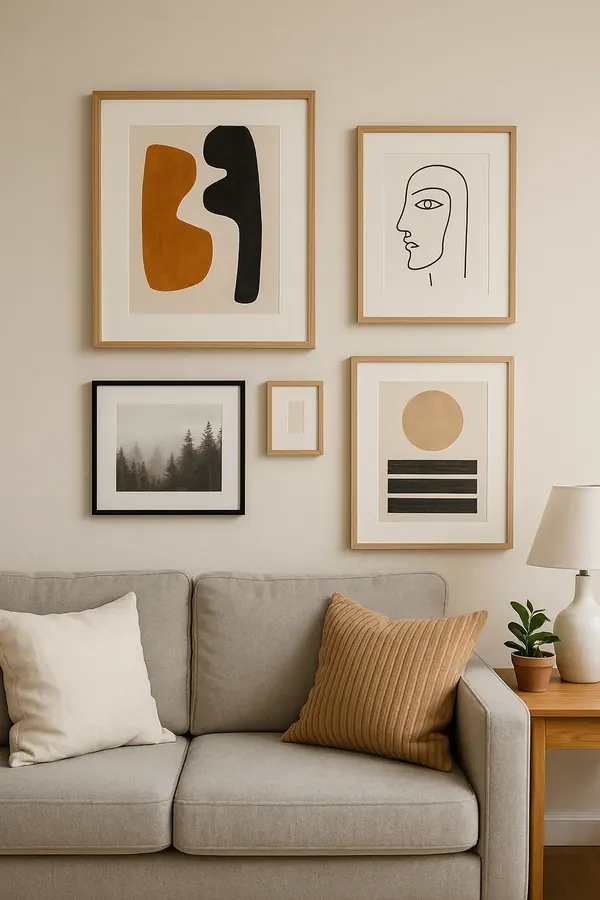
A large print or canvas about two-thirds the width of your sofa, hung 8 to 10 inches above it, looks more considered than a scatter of small frames. Oversized posters in simple frames with wide mats are an affordable way to do it. Center smaller pieces at 57 to 60 inches from the floor.
8. Style pillows in pairs ($)
Two matching pillows at each end of the sofa, in two sizes (for example 22-inch behind 20-inch), with mixed textures like linen and bouclé, look tailored. Buy covers rather than whole pillows and use feather-blend inserts one size larger than the cover for a full, plump look.
9. Add a throw blanket with some weight ($)
A chunky knit or washed linen throw draped casually over one arm adds texture and makes the sofa inviting. Pick a color from your rug or art to tie the room together.
10. Make a reading corner ($$)
An accent chair, a small side table and a floor lamp make an unused corner a destination. A plant nearby softens it further. For more layouts, see our full guide to apartment living room ideas.
Bedroom Decorating Ideas
11. Upgrade your bedding first ($$)
Crisp cotton percale or washed linen in white or a soft neutral makes even a basic bed frame look like a hotel bed. Size your duvet one size up so it drapes over the sides, and add a folded throw at the foot.
12. Create a headboard moment ($–$$)
No headboard? Hang a large textile, prop an oversized piece of art behind the bed, or use a freestanding upholstered headboard that bolts to the bed frame rather than the wall. Even a painted arch on the wall works if your landlord approves paint.
13. Use matching nightstands and lamps ($$)
Symmetry calms a bedroom. Two matching lamps, even inexpensive ones, instantly look more expensive than one lamp and a phone charger. Plug-in sconces free up nightstand space in small rooms.
14. Add blackout-lined curtains ($$)
Better sleep, and full-length lined panels look far richer than thin unlined ones. Hang them high and wide like everywhere else. For more ideas, browse our apartment bedroom ideas.
15. String soft lighting for cozy evenings ($)
Warm fairy lights along a headboard, in a glass jar or draped behind sheer curtains add a cute, low-glare glow that's perfect for winding down. Choose warm-white strands on a timer or remote. Battery or USB-powered strands with copper wire are the easiest to hide and avoid adding cords to a small room.
Kitchen and Dining Decorating Ideas
16. Swap cabinet hardware ($–$$)
New pulls in brushed brass, matte black or nickel cost about $4 to $25 each and transform a dated kitchen in an afternoon. Keep the original knobs in a labeled bag to reinstall before you move out.
17. Clear the counters (free)
Keep out only what you use every day and corral it on a tray or wooden board: oil, salt, a utensil crock, maybe a plant. Clear counters make a small kitchen feel twice as big.
18. Try a peel-and-stick backsplash ($$)
Modern vinyl tiles in subway, zellige-look or marble patterns cover a dull wall without grout or demolition. Test a small piece first to make sure it removes cleanly from your wall surface.
19. Add under-cabinet lighting ($)
Rechargeable or plug-in LED strips under upper cabinets make prep easier and add a warm glow at night. More ideas are in our guide to apartment kitchen ideas.
20. Define a dining spot with a pendant or rug ($$)
Even in an open-plan room, a round rug under a small table or a plug-in pendant swagged over it marks out a separate dining zone. Round tables work best in tight spaces because there are no corners to bump into. A 36- to 42-inch round table seats four comfortably and fits in many apartment dining nooks, as long as you leave about 36 inches behind each chair.
Bathroom and Entryway Decorating Ideas
21. Buy matching towels in one color ($$)
A stack of thick white or neutral towels looks like a spa. Mismatched faded towels look like a dorm. This is one of the cheapest bathroom upgrades there is.
22. Hang the shower curtain higher ($)
Mount a tension rod closer to the ceiling and use an extra-long fabric curtain (around 84 to 96 inches). It makes a small bathroom feel taller and hides a dated tub surround.
23. Decant soaps and products ($)
Plain glass or ceramic pump bottles and a small tray turn a cluttered vanity into something calm. Store the rest in lidded baskets under the sink. Add a small vase or a single plant, like a pothos, which tolerates low light and humidity, and the bathroom will look deliberate rather than purely functional.
24. Create a drop zone by the door ($$)
A slim console or wall shelf, a mirror above, a dish for keys and a hook or two for bags give even a tiny entry a purpose and stop clutter spreading through the apartment. A washable runner and a small tray for shoes protect the floor and finish the look. If you have no wall space, an over-the-door hook rail or a slim freestanding coat stand works too.
Small-Space and Storage Decorating Ideas
25. Choose furniture with legs ($$–$$$)
Sofas, beds and storage on raised legs show floor underneath, which makes a room feel bigger. Pair them with a few solid pieces so the room doesn't feel flimsy. Clear acrylic or glass side tables take this further, taking up almost no visual space in the tightest rooms.
26. Use mirrors to bounce light ($$)
Place a large mirror opposite or beside a window to double the daylight. A floor mirror leaned against the wall is renter-friendly and makes a room look deeper. Choose a substantial frame in wood, black metal or brass; a thin, flimsy frame cheapens the effect. Arched and oversized rectangular mirrors around 30 by 70 inches are the most versatile.
27. Make storage pretty ($–$$)
Matching baskets in rattan, seagrass or linen on open shelves look deliberate, unlike mismatched plastic bins. Under-bed drawers and a storage ottoman hide the rest. Our small apartment ideas guide has dozens more space-saving tricks.
28. Zone a studio with rugs and shelving ($$–$$$)
An open bookcase or slatted screen separates the bed from the living area without blocking light. A different rug under each zone does the same job without any furniture at all.
Personal Touches and Cute Apartment Ideas
29. Bring in real plants ($–$$)
A large floor plant, such as a fiddle leaf fig, olive tree or snake plant, adds height and life. Group smaller pots in odd numbers on a windowsill. Low-light options like pothos and ZZ plants suit darker apartments. Put plants in simple ceramic or terracotta pots that match your palette, and use saucers or cachepots to protect floors and sills from water damage.
30. Display what makes you you (free–$)
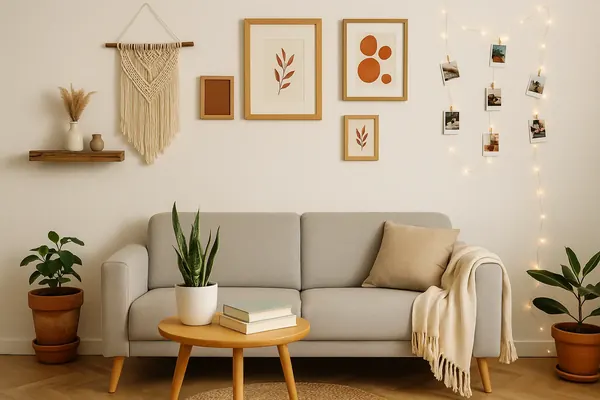
Frame a few favorite photos in matching frames, stack art and travel books on the coffee table, or display a collection on one shelf. Personal objects make a decorated apartment feel lived in. Keep it to one or two curated groupings so it reads as a collection, not clutter.
Renter note: Before painting, drilling or swapping fixtures, check your lease and get permission in writing. Removable hooks, tension rods, picture ledges and leaned art cover most needs without damaging walls.
Apartment Decorating on a Budget: Where to Spend
If money is tight, spend in this order. Each step builds on the last, and the first three are cheap.
| Priority | Idea | Typical cost | Impact |
|---|---|---|---|
| 1 | Declutter and rearrange | Free | High |
| 2 | Warm bulbs and two or three lamps | $50–$200 | Very high |
| 3 | Full-length curtains hung high | $60–$200 per window | High |
| 4 | Correctly sized rug | $150–$600 | High |
| 5 | One large piece of art | $50–$300 | Medium-high |
| 6 | Bedding and towels | $100–$350 | Medium-high |
| 7 | Hardware swap | $40–$200 | Medium |
| 8 | Plants and pillows | $50–$250 | Medium |
Ways to stretch your budget further
- Shop secondhand for solid wood side tables, dressers, mirrors and frames. Older pieces are often better built than new flat-pack furniture.
- Buy pillow covers and duvet covers instead of new inserts and comforters.
- Reframe thrifted or free art in new frames with wide mats.
- Paint thrifted furniture or swap its hardware for a custom look.
- Spend more on the one piece you use most, usually the sofa or mattress, and save everywhere else.
For more low-cost projects, try our easy home decor ideas.
How to Decorate an Apartment Step by Step
- Measure: record each room's dimensions, window sizes, ceiling height and outlet positions.
- Pick a direction: choose a style and a three-to-five-color palette. Save a handful of reference images.
- Plan the layout: place the largest pieces first, with 36-inch walkways where possible.
- Light it: warm bulbs, then lamps at three heights.
- Soften it: rug, curtains, bedding and pillows.
- Personalize it: art, plants, books and a few meaningful objects.
- Edit: take a photo, remove anything that looks like clutter, and leave about a third of each surface clear.
Work one room at a time, starting with the one you spend the most time in. It's more satisfying than half-finishing everything at once, and you'll make better decisions in the next room.
Next Steps: From Decorated to Designed
Once the basics are in place, the next level is about refinement: better materials, more considered lighting and a confident, edited style. When you're ready, our flagship guide to luxury apartment interior design explains the principles that make an apartment read as high-end, and our list of renter friendly upgrades covers bigger changes you can still undo at move-out.
Keep it fresh through the seasons
Decorating isn't a one-time job. Swapping a few textiles twice a year keeps an apartment feeling new without any new furniture. In fall and winter, bring out wool throws, velvet or bouclé pillow covers, heavier curtains and candles in deeper colors. In spring and summer, switch to linen and cotton covers, lighter bedding, sheer curtains and fresh flowers or branches. Store off-season covers flat in an under-bed box so the swap takes less than an hour.
Start with idea number one tonight. Change the bulbs, turn on a couple of lamps and switch off the overhead light. It's a small change, but you'll notice the difference straight away.
Free interactive tool
Decorating Budget Planner: split your budget like a designer
Frequently Asked Questions
How do I decorate my apartment with no money?
Start with free changes: declutter every surface, rearrange furniture so the sofa floats off the wall, group the objects you already own in odd numbers, and move lamps so light comes from several heights. Shop your own home for art, plants and textiles, and swap items between rooms. Clipping greenery from outside or framing free prints also costs almost nothing.
How can I make my apartment look cute?
Layer soft textures like a knit throw and textured pillows, add warm fairy lights or small lamps, bring in plants, and display a few personal objects in matching frames. A cohesive palette with one or two soft accent colors keeps cute from tipping into cluttered. Edit regularly so each piece has space to stand out.
What should I buy first when decorating an apartment?
Buy a comfortable mattress and sofa first, since you use them daily, then warm bulbs and lamps, full-length curtains and a correctly sized rug. Those basics set the look of every room. Art, pillows, plants and accessories come last because they are cheap to change and easier to choose once the larger pieces are in place.
How do you decorate a rental apartment without damaging walls?
Use removable adhesive hooks and strips, picture ledges, leaned floor mirrors and art, tension rods for curtains and shower curtains, and plug-in sconces with cord covers. Peel-and-stick backsplash and removable wallpaper work in many rentals, but test a small patch first. Always check your lease before making changes.
How much does it cost to decorate an apartment?
It varies widely. A refresh using bulbs, lamps, curtains, a rug and art typically runs a few hundred to about $1,500 for a one-bedroom. Furnishing from scratch with new mid-range pieces often costs several thousand dollars or more. Buying secondhand furniture and spending most on the sofa and mattress stretches any budget.

We research designer standards, measure real rooms and test every recommendation against apartment realities: tight footprints, lease rules and budgets. How we write our guides.