Accent Wall Ideas: 15 High-End Looks for Any Apartment (Including Rentals)
How to pick the right wall, 15 accent wall looks from paint to peel-and-stick, renter-friendly options and the colors that make one wall look expensive.

Key takeaways
- Choose the wall your eye lands on first, usually behind the bed, the sofa or the TV, and avoid walls broken up by doors or windows.
- Renters can create an accent wall without paint using peel-and-stick wallpaper, oversized art, a floating-shelf display or plug-in sconces.
- Ask for written permission before painting a rental, and test any removable product on a small area first.
- Deep, muted colors with the same undertone as your other walls look more expensive than bright, saturated ones.
- Repeat the accent color at least twice elsewhere in the room so the wall looks planned.
The best accent wall ideas for an apartment share one trait: they make a single wall look intentional rather than random. Choose the wall your eye lands on first (usually behind the bed, the sofa or the TV), pick one treatment, such as a deeper paint color, a color-drenched panel, peel-and-stick wallpaper, picture-frame molding or a lit shelf display, and keep the rest of the room calm so that wall can do the talking.
This guide walks you through how to choose the right wall, 15 accent wall ideas grouped by budget and commitment level, which ones are renter-friendly, how to pick a color that looks expensive, and the tools that make the job cleaner. Every idea is sized for real apartments, where the lease often has the final word.
How to Choose the Right Accent Wall
Before you think about paint chips or wallpaper patterns, decide which wall deserves the attention. A beautiful treatment on the wrong wall makes a room feel lopsided, while a simple treatment on the right wall can make a rental look custom.
Start with the natural focal point
Stand in the doorway and notice where your eye goes first. In most apartments, the answer is one of these:
- Bedroom: the wall behind the headboard. You see it when you walk in, and it frames the bed, which is already the largest piece in the room.
- Living room: the wall behind the sofa or the wall with the TV. Pick the one people face most when they enter, not the one they face when they sit.
- Dining nook: the wall beside or behind the table, especially if a pendant or chandelier hangs there.
- Entry or hallway: the short end wall at the end of a corridor, which turns a dead end into a destination.
Walls to avoid
Skip walls broken up by several doors, a wall that is mostly window, or a wall you only see from the side. Treating a wall full of interruptions spreads the effect thin. Also avoid choosing a wall just because it is the only blank one.
Designer tip: If two walls compete, choose the one with the strongest architecture, such as a chimney breast, an alcove or a wall framed by built-ins. Architecture gives the color or pattern edges to stop against, which always looks more deliberate.
15 Accent Wall Ideas, From Easy to Bold
The accent wall ideas below are grouped from lowest commitment to highest. Renters can usually do the first group without asking anyone; the later groups may need landlord approval or are better suited to owners.
Paint ideas
1. One deeper shade. The simplest version: paint one wall two or three steps darker on the same paint strip as the other walls. It adds depth without introducing a new color, and it is the safest choice for small rooms.
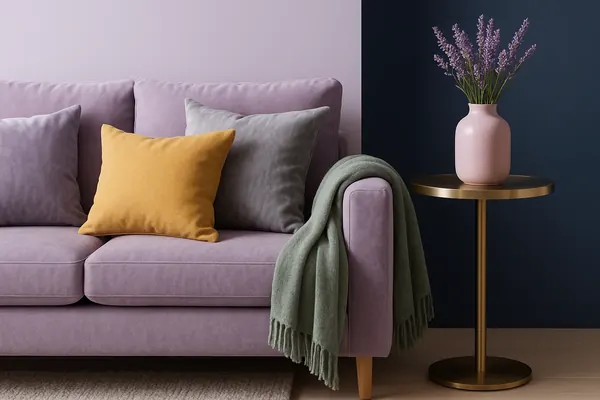
2. A true contrast color. Navy beside soft lavender, forest green beside warm white, or charcoal beside greige. A contrast wall works best when the color reappears somewhere else in the room, in a pillow, a throw or a piece of art, so it looks planned. Our guide to what color goes with lavender shows how pairings like lavender and navy balance each other.
3. Color drenching on one wall. Paint the wall, the baseboard and any trim on that wall the same color. Removing the contrast between wall and trim makes the color feel richer and more enveloping, which is the effect you see in many quiet-luxury interiors.
4. A painted arch or headboard shape. Mark an arch or rounded rectangle behind the bed or a desk and paint only inside the shape. It reads as architecture, uses very little paint and is easy to paint over later.
5. Two-tone or half wall. Paint the lower third or lower half a deeper color and leave the top light. A crisp horizontal line at about chair-rail height (roughly a third of the wall) grounds furniture and hides scuffs in busy rooms.
6. Color block or geometric shapes. Overlapping rectangles, a single bold stripe or a simple diagonal can work in a home office or kid's room. Keep it to two or three colors, and use painter's tape for crisp edges.
Peel-and-stick and removable ideas
Affiliate disclosure: Some links in this guide go to Amazon. As an Amazon Associate, Luxury Apartment Design earns from qualifying purchases, at no extra cost to you. Prices and availability are shown on Amazon and can change.
7. Peel-and-stick wallpaper. This is the most popular renter-friendly accent wall. A soft, textured or small-scale pattern looks more expensive than a loud, high-contrast print, especially in small rooms. A neutral textured design such as NuWallpaper Breezy Grey Peel & Stick Wallpaper adds pattern without overwhelming a bedroom.
A smoothing tool makes a visible difference in how flat the finished wall looks. A small kit like the Art3d Smoothing Tool Kit for Peel and Stick Wallpaper helps push out bubbles as you go.
8. Removable wall molding. Pre-cut molding panels create a picture-frame or wainscoting look. Some kits are peel-and-stick; others are designed to be glued or nailed, so read the installation method carefully before you buy for a rental. A pre-cut option like the Art3d Pre-Cut Wall Molding Set saves you from measuring and mitering every corner. Paint the molding the same color as the wall for a tailored, tone-on-tone finish.
9. Fabric or tapestry wall. A large textile hung from a slim rod, or fabric applied with liquid starch, softens echoes and adds warmth. Starch-applied fabric can usually be peeled off and the wall wiped down, but always test a small corner first.
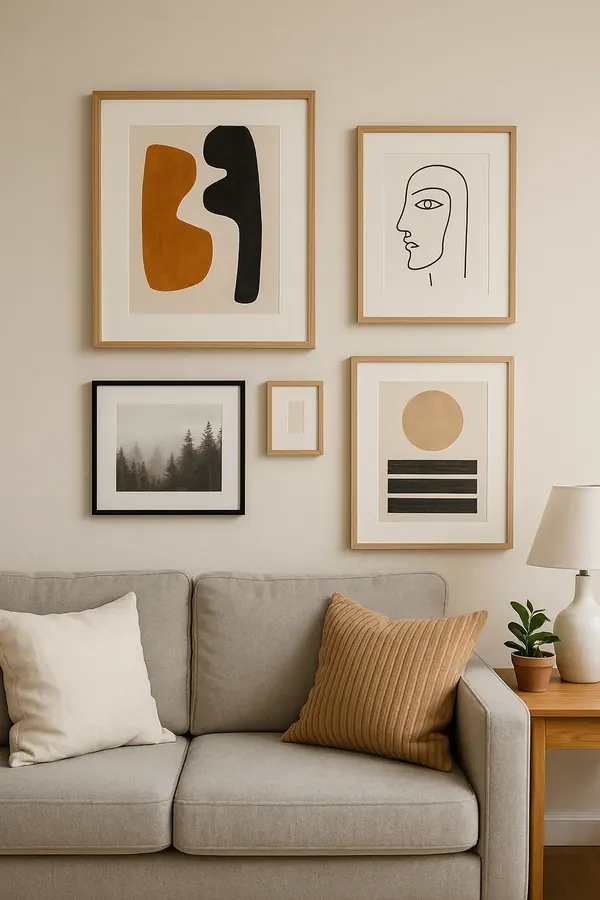
10. Oversized art or a gallery wall. A large canvas or a tight grid of frames can act as an accent wall without changing the wall at all. Use the 57-inch center rule from our guide on how to hang wall art so the grouping looks anchored, not floating.
Shelving and lighting ideas
11. A styled floating-shelf wall. Three or more matching shelves, evenly spaced and styled with books, ceramics and a plant, turn a plain wall into a display. A matched set such as Amada 15.7-inch Floating Shelves (Set of 3) keeps spacing consistent. Paint the wall behind them a deeper color and the objects will stand out even more.
12. Wall sconces as the accent. A pair of sconces flanking a bed, sofa or mirror creates a focal point after dark. Plug-in sconces need no electrician; a dimmable pair like the TRLIFE Plug-in Wall Sconces (Set of 2) adds warm, layered light. Run the cords in a paintable cord cover, painted the wall color, so they disappear. The room lighting calculator helps you check whether the room needs more light overall.
Bigger projects (owners or landlord-approved)
13. Board and batten. Vertical battens over a flat panel create a classic, tailored look. It suits bedrooms and dining nooks, but it involves nails, caulk and paint, so it is a permanent change.
14. Wood slat panels. Vertical slats in oak or walnut tones add warmth and a modern, hotel-like feel behind a TV or bed. Panels come in screw-on and adhesive versions; both are hard to remove cleanly.
15. Limewash or plaster-look finish. A soft, cloudy finish adds subtle movement that flat paint cannot. It is beautiful in quiet-luxury rooms but takes practice, so try a sample board first.
Accent Wall Ideas Compared
Use this table to match the idea to your budget, your skill level and your lease.
| Idea | Relative cost | Skill level | Renter-friendly? | Best rooms |
|---|---|---|---|---|
| Deeper shade of paint | Low | Beginner | With approval; repaint at move-out | Any room |
| Contrast or drenched color | Low | Beginner | With approval | Bedroom, living room |
| Painted arch or shape | Low | Intermediate | With approval | Bedroom, office, entry |
| Peel-and-stick wallpaper | Medium | Beginner | Usually; test removal first | Bedroom, bathroom, entry |
| Removable molding | Medium | Intermediate | Only adhesive versions | Bedroom, dining nook |
| Gallery wall or oversized art | Low to medium | Beginner | Yes (small nail holes) | Living room, hallway |
| Floating-shelf wall | Medium | Intermediate | Yes (anchor holes to patch) | Living room, office |
| Plug-in sconces | Medium | Beginner | Yes | Bedroom, living room |
| Board and batten or slats | Medium to high | Advanced | Rarely | Bedroom, dining, TV wall |
Renter-Friendly Accent Wall Ideas
Many leases allow painting if you ask first and return the walls to the original color when you move out. Others prohibit it entirely. Read your lease, and if painting is not mentioned, send your landlord or property manager a short written request describing the color and the wall. A written yes protects your security deposit.
Renter note: Peel-and-stick products are designed to be removable, but results depend on the wall paint underneath. Flat or freshly painted walls can peel when the paper comes off. Wait several weeks after any fresh paint, test a small piece in an inconspicuous spot for a few days, and peel slowly at a low angle when you remove it. If any paint does lift, our guide to repairing drywall after removing wallpaper walks through the fix.
If painting and wallpaper are both off the table, you still have strong options: oversized art, a gallery wall, a shelf display, plug-in sconces, a large leaning mirror or a textile hung from a rod. You will find more ideas in our list of renter-friendly upgrades.
How to Pick an Accent Wall Color That Looks Expensive
Color is where most accent walls succeed or fail. A few rules keep the result looking designed rather than accidental.
Use the 60-30-10 rule
Let your main wall color cover about 60 percent of the room, a secondary color (furniture, rug, curtains) about 30 percent, and an accent about 10 percent. An accent wall is often part of that 30 or 10 percent, which is why it should connect to something else in the room. The room color palette generator builds 60-30-10 palettes with hex codes you can take to the paint store.
Match the undertone
Warm whites (with a yellow or red undertone) pair best with warm accents like terracotta, olive or caramel. Cool whites pair with navy, slate and cool greens. Hold paint samples against your trim, flooring and largest furniture piece in daylight and at night before committing.
Go deeper, not brighter
Muted, deep colors such as ink blue, mossy green, chocolate brown and aubergine tend to look more expensive than bright, saturated ones. If you love a bright color, try a grayer version of it on the wall and save the bright version for pillows or art.
Consider the finish
- Matte or flat: the richest look for deep colors and hides wall imperfections, but scuffs more easily.
- Eggshell: a good middle ground for living rooms and bedrooms.
- Satin or semi-gloss: durable and wipeable, best for trim, kitchens and bathrooms, but it shows every bump in the wall.
| Room mood | Main walls | Accent wall colors |
|---|---|---|
| Calm and airy | Soft warm white | Sage, mushroom, dusty blue |
| Cozy and moody | Warm greige | Deep olive, chocolate, oxblood |
| Crisp and tailored | Cool white | Navy, charcoal, slate blue |
| Soft and romantic | Pale blush or lavender | Navy, plum, deep teal |
Accent Wall Ideas by Room
Living room
Treat the wall behind the sofa or the TV. Behind a TV, a dark color helps the black screen blend in when it is off. Behind a sofa, wallpaper or molding gives the seating area a backdrop, and art centered above the sofa ties it together.
Bedroom
The wall behind the bed is the classic choice. A painted headboard shape, textured wallpaper or a drenched deep color all work. Add sconces on either side and the wall becomes the room's best feature day and night.
Studio apartment
In a studio, an accent wall can define a zone. Paint or paper only the wall behind the bed to separate sleeping from living, or behind a desk to mark an office corner. Our studio apartment ideas cover more ways to divide one room into several.
Bathroom and entry
Small spaces are where bold patterns shine, because you only spend a few minutes there and there is less wall to cover. Check that any wallpaper you use is rated for humidity before putting it in a bathroom.
Tools and Step-by-Step: Painting a Clean Accent Wall
Painting a single wall is one of the best weekend projects for the money. Here is the process designers and painters commonly recommend:
- Measure the wall's width and height and use the paint calculator to estimate how much paint you need. Deep colors often need two coats, sometimes over a tinted primer.
- Clean the wall with a damp cloth and let it dry; patch nail holes and sand them smooth.
- Tape the ceiling line, adjacent walls and trim with a quality painter's tape such as FrogTape Multi-Surface Painter's Tape, pressing the edge down firmly.
- Cut in along the edges with an angled brush, then roll the middle in overlapping W shapes, keeping a wet edge.
- Let the first coat dry fully, as directed on the can, then apply the second coat.
- Pull the tape slowly at an angle while the final coat is still slightly tacky for the cleanest line.
Where your accent wall meets a white wall at an inside corner, paint the accent color right into the corner and stop there. The corner becomes the dividing line, which is much easier to keep straight than a line in the middle of a wall.
Common Accent Wall Mistakes to Avoid
- Choosing the wrong wall. The wall with the door or the one you see side-on rarely works.
- A color with no echo. If the accent color appears nowhere else, it looks like a leftover from the last tenant.
- Too many accents. One accent wall per room is usually enough. Two treated walls compete.
- Busy patterns in small rooms. Large, high-contrast prints can close in a tiny room; small-scale or textured patterns feel calmer.
- Ignoring the lighting. Deep colors absorb light. Add a lamp or sconces so the wall glows instead of looking like a dark hole at night.
An accent wall should look like the room was designed around it, not like someone ran out of paint.
Putting It All Together
Start with the right wall, choose one treatment that fits your lease and budget, and connect its color to at least two other things in the room. For a renter, peel-and-stick wallpaper, a shelf display or a pair of plug-in sconces can deliver most of the impact of paint with far less risk. For an owner, color drenching, molding and slats are all on the table. Whichever accent wall ideas you choose, keep the surrounding walls quiet and the result will look intentional, polished and high-end. For more ways to elevate a rental, see how to make your apartment look expensive.
Free interactive tool
Paint Calculator: gallons, primer and cost
Frequently Asked Questions
Which wall should be the accent wall?
Choose the wall your eye lands on first when you walk into the room. In a bedroom that is usually the wall behind the headboard; in a living room it is the wall behind the sofa or the TV. Avoid walls with several doors, walls that are mostly windows, and walls you only see from the side.
Are accent walls still in style?
Accent walls are still widely used, but the look has shifted away from a single random bright wall toward more intentional treatments: deep muted colors, color drenching where trim matches the wall, textured or small-scale wallpaper, molding and lighting. The key is that the wall connects to the rest of the room.
Can I make an accent wall in a rental apartment?
Usually, yes. Many renters use peel-and-stick wallpaper, oversized art, a gallery wall, floating shelves or plug-in sconces, which do not require painting. If you want to paint, read your lease and ask your landlord in writing first. Test any removable wallpaper on a small hidden spot before covering the whole wall.
Should an accent wall be darker or lighter than the other walls?
In most rooms, an accent wall is darker or more saturated than the surrounding walls, because a deeper color draws the eye and adds depth. A lighter accent wall can work in a room that is already dark, but it is less common and has a much subtler effect.
Do accent walls make a small room look smaller?
Not necessarily. A deep color on the wall farthest from the door can make that wall appear to recede, which some people find makes a small room feel deeper. Busy, large-scale patterns are more likely to make a small room feel closed in, so choose a small or textured pattern if you use wallpaper.
What is the cheapest accent wall idea?
Paint is usually the least expensive way to create an accent wall, since one wall often needs only a gallon or less. If you cannot paint, rearranging art you already own into a gallery wall or styling a shelf with books and objects costs little or nothing.

We research designer standards, measure real rooms and test every recommendation against apartment realities: tight footprints, lease rules and budgets. How we write our guides.