Spare Bedroom Ideas: Smart Ways to Use an Extra Bedroom, From Guest Room Office Combos to Home Gyms
Turn an underused second bedroom into a guest room office combo, home gym, dressing room or studio, with sizes, layouts and budgets.
Key takeaways
- Design the spare room for how you use it most weeks, then build in the occasional use.
- A daybed, sleeper sofa, or Murphy bed makes a guest room office combo work without crowding the desk.
- Keep at least 30 inches of clearance between the desk chair and the bed, including with a sleeper opened.
- Closed storage lets the room switch between uses in minutes.
- Give the spare room its own palette, lighting, and textiles so it feels intentional, not leftover.
The best spare bedroom ideas start with one honest question: how will you actually use this room most weeks of the year? If guests stay four nights a year but you work from home five days a week, the room should be an office first and a guest room second. Design for the everyday use, then build in the occasional one, and the room stops being a storage overflow and starts earning its square footage.
Below you will find the most useful ways to use a spare room, from a guest room office combo to a dressing room, home gym, or hobby studio, with furniture dimensions, layout tips, and typical budgets. Each idea is written with apartments in mind, where the second bedroom is often 9 by 10 or 10 by 11 feet and every inch counts.
Before you plan, clear the room completely. It is almost impossible to imagine a new use for a space that is still holding boxes from your last move.
What to Do With a Spare Room: Choosing the Right Use
Match the room to your routine, not to what a spare room is "supposed" to be. Use this table to compare the most common options.
| Use | Best if you... | Minimum room size | Typical budget |
|---|---|---|---|
| Guest room | Host overnight guests at least monthly | 9 x 10 ft for a full bed | $800–$3,000 |
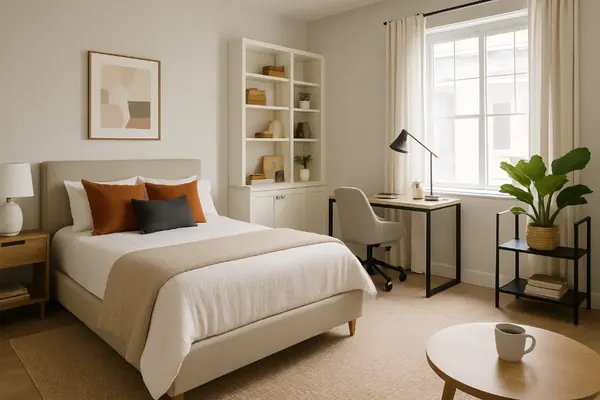
| Guest room office combo | Work from home and host occasionally | 9 x 10 ft with a sleeper or daybed | $1,000–$3,500 |
| Home office | Work from home most days | 7 x 8 ft | $600–$2,500 |
| Home gym | Train at home three or more times a week | 8 x 10 ft for strength and mat work | $500–$3,000 |
| Dressing room or closet | Have little closet space elsewhere | 7 x 9 ft | $400–$2,500 |
| Hobby or craft studio | Have a creative practice with lots of supplies | 8 x 9 ft | $400–$2,000 |
| Kids' room or nursery | Have or expect a child | 8 x 9 ft | $800–$3,000 |
Budgets are typical ranges for furniture, lighting, and decor, assuming no construction.
Guest Room Office Combo: The Most Popular Spare Room Idea
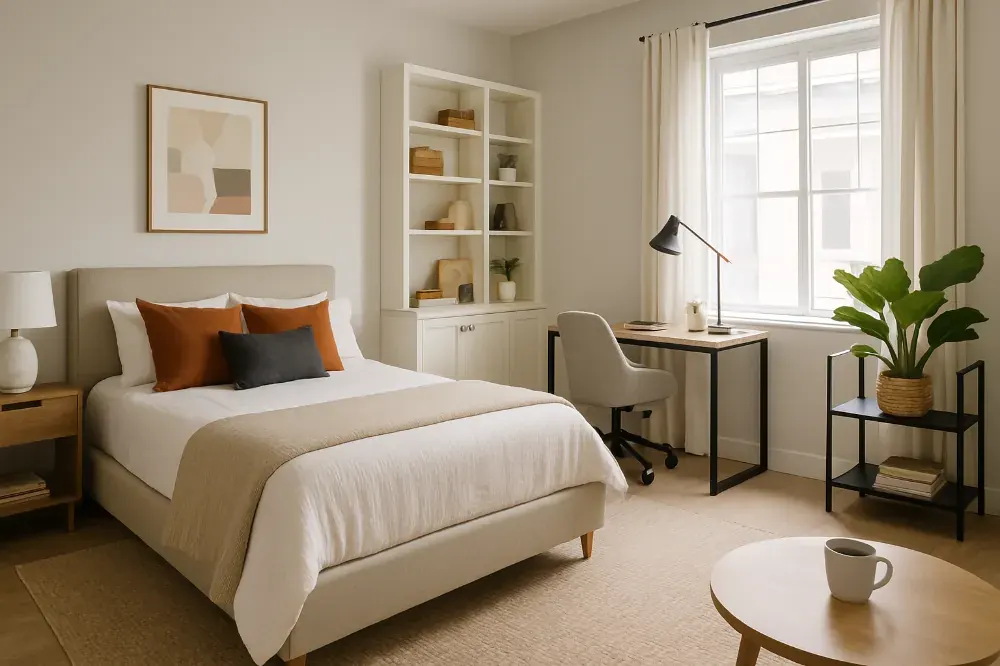
A guest room office combo works because the two uses rarely overlap. The trick is choosing a sleeping surface that does not dominate the room on the 360 days you are working in it.
Choose the right bed
- Daybed (twin, 39 x 75 in.): reads as a sofa during the day, sleeps one guest. Add a trundle to sleep two.
- Sleeper sofa (full or queen): best seating for reading or calls, but the mattress quality varies widely. Test it before you buy.
- Murphy bed: folds into the wall, leaving the floor free. Some models include a fold-down desk. Requires wall anchoring.
- Futon or quality floor mattress: the budget choice. A tri-fold foam mattress stored in a closet keeps the room fully office.
Layout that works for both uses
Put the desk facing or beside the window for daylight on video calls, and place the bed or daybed on the longest uninterrupted wall. Keep at least 30 inches between the pulled-out desk chair and the bed. A 40- to 48-inch desk is plenty for a laptop and a monitor. Try both arrangements in the room layout planner, including the sleeper sofa fully opened, which typically needs 85 to 90 inches of depth.
Make it feel like a guest room when needed
Clear one desk drawer and two closet hangers for guests, keep a basket with fresh towels and a phone charger, and make sure the desk lamp can serve as a reading light. A closed cabinet or a desk with a lid hides your work in seconds.
Designer tip: Choose an office chair that looks residential, in leather, wood, or upholstered fabric, rather than a mesh task chair. It keeps the room feeling like a bedroom rather than a cubicle with a bed in it.
Ideas for a Second Bedroom as a Dedicated Guest Room
If you host often, give guests a room that feels like a good boutique hotel. Hotel rooms work because they are simple, comfortable, and thought through.
- Invest in the mattress and bedding. A medium-firm mattress suits most sleepers. Layer a fitted sheet, flat sheet, duvet, and a throw at the foot so guests can adjust warmth.
- Two nightstands and two lamps, even if small, so couples each have a surface and a light.
- Space to unpack. A luggage rack, a few empty hangers, and an empty drawer or shelf.
- Blackout curtains or a lined Roman shade, since guests may want to sleep later than you.
- A mirror, ideally full length, on the back of the door or leaning on a wall.
- Small comforts: a carafe and glass, a written Wi-Fi password, spare toothbrushes, and an outlet within reach of the bed.
Keep decor calm and neutral so it suits any guest. For bedroom styling details like headboards and bedding layers, see our apartment bedroom ideas.
Ideas for Extra Bedrooms Beyond the Guest Room
Home office
A dedicated office lets you close the door on work at the end of the day. Prioritize a supportive chair, a desk at 28 to 30 inches high, and a monitor at eye level. Add closed storage for paperwork, a rug to soften acoustics on calls, and layered light: overhead ambient light, a desk lamp, and a soft lamp for the evening. The room lighting calculator estimates how many lumens a small office needs.
Home gym
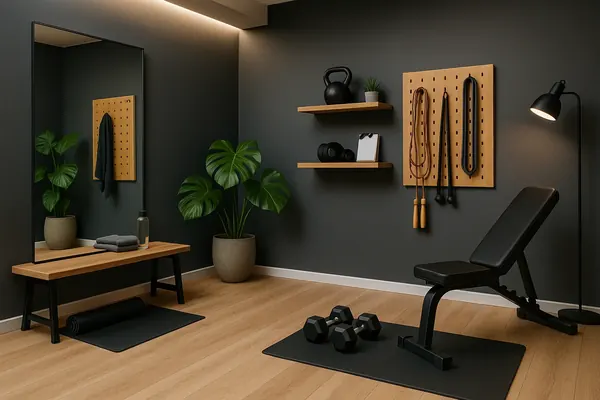
A spare room is ideal for a home gym because you can leave equipment set up. Put down rubber flooring, add a large mirror, and choose compact gear like adjustable dumbbells and a folding bench. In an apartment, consider noise for neighbors below. Our home gym decor guide covers flooring, weight limits, and style.
Dressing room
If your apartment is short on closet space, turn the spare room into a walk-in. Freestanding clothing rails or a modular closet system, an upholstered bench, a full-length mirror, and good lighting create a dressing room feel. Double-hang rods (around 40 and 80 inches high) for shirts and trousers, and one single rod around 66 inches for dresses and coats.
Hobby or craft studio
Sewing, painting, music, and model-building all benefit from a room where projects can stay out. Use a large worktable, pegboard or rail systems on the walls, and labeled bins. Wipeable surfaces and bright task lighting around 4000K help with detail work.
Reading room or library
Line one wall with bookcases, add a deep armchair and ottoman, a floor lamp, and a side table. It is one of the simplest and most restful uses for a small spare room.
Media or lounge room
A comfortable sofa, a wall-mounted screen, and blackout curtains create a den that keeps the TV out of your main living room. A sleeper sofa makes it a guest room too.
Renter note: Murphy beds, heavy wall-mounted shelving, and closet systems usually need screws into studs. Get your landlord's approval in writing, and favor freestanding rails, leaning shelves, and tension-mounted systems if drilling is off the table.
How to Make a Small Spare Bedroom Work Harder
Many apartment spare rooms are under 100 square feet. A few principles keep them functional:
- Go vertical. Wall shelves above the desk and tall bookcases free floor space.
- Use the bed as storage. A daybed with drawers or a lift-up storage bed holds linens and off-season clothing.
- Choose wall-mounted lighting. Plug-in sconces free up nightstand and desk space.
- Keep the palette light and consistent so the room feels larger and calmer.
- Use furniture on legs to show more floor.
Our guide to small apartment ideas has more space-saving techniques that apply to any compact room.
Spare Bedroom Decorating Ideas That Feel Intentional
A spare room usually gets whatever furniture was left over, which is why it often feels unfinished. Give it the same attention as your main bedroom:
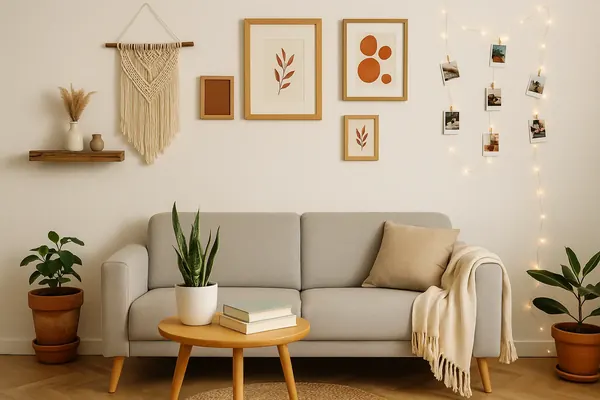
- Pick a palette. Choose two or three colors that relate to the rest of your home. Soft greens, warm whites, and muted blues all work well for rooms that serve as both workspace and bedroom.
- Add one statement. An upholstered headboard, a wallpapered accent wall (peel-and-stick for renters), or one large piece of art.
- Match the wood tones and metals so mismatched hand-me-downs look curated.
- Layer textiles. A rug, lined curtains, and a throw make the room feel finished and quieter.
- Replace the overhead fixture or add a plug-in pendant for an instant upgrade.
A spare room only feels like a leftover space if you furnish it with leftovers.
Spare Room Ideas on a Budget
You can transform a spare room in stages. If you are working with a fixed amount, the decorating budget planner helps you divide it by category. Typical priorities:
- Clear and declutter (free). Work through our declutter checklist to empty the room first.
- Paint ($60–$150 in materials, with landlord permission).
- The main piece: a daybed, desk, or storage system ($300–$1,500).
- Lighting: two or three lamps ($80–$300).
- Textiles: rug, curtains, bedding ($200–$700).
- Art and accessories ($50–$400), added over time.
Your Spare Bedroom Plan
- Decide the main everyday use and the occasional secondary use.
- Empty and declutter the room completely.
- Measure the room, window, door swing, and outlets.
- Choose the main piece first: bed, desk, or storage.
- Plan walkways of at least 30 inches, including with any sleeper opened.
- Add closed storage so you can switch between uses quickly.
- Layer lighting and textiles, then finish with art.
A spare bedroom is one of the most flexible rooms you have. Decide what your life needs most, design around that, and the room will feel like a deliberate part of your home instead of the place where things go to be forgotten.
Free interactive tool
Room Layout Planner: drag-and-drop furniture planner
Frequently Asked Questions
What can I do with a spare bedroom?
Popular uses include a guest room, a guest room office combo, a dedicated home office, a home gym, a dressing room or walk-in closet, a hobby or craft studio, a reading room, or a media den. Choose based on how you will use the room most weeks, not just a few times a year when guests visit.
How do you combine a guest room and home office?
Choose a sleeping option that does not dominate the room, such as a daybed, sleeper sofa, or Murphy bed. Place the desk near the window and the bed on the longest wall, with at least 30 inches between them. Add closed storage so you can hide work materials and clear space for guests quickly.
What size bed fits in a small spare bedroom?
A twin daybed (about 39 x 75 inches) fits almost any spare room and doubles as seating. A full bed (54 x 75 inches) needs roughly a 9 x 10 foot room to leave walkways. A queen (60 x 80 inches) generally needs at least 10 x 10 feet to feel comfortable with nightstands.
How do I make a spare room feel welcoming for guests?
Invest in a good mattress and layered bedding, add a lamp and surface on each side of the bed, and provide blackout curtains, a mirror, empty hangers, and a luggage rack. Small touches such as fresh towels, a written Wi-Fi password, a carafe of water, and a charger near the bed make a big difference.
Is it worth turning a spare bedroom into a home gym?
If you train at home three or more times a week, a dedicated room lets you leave equipment set up and saves time. Use rubber flooring to protect floors and reduce noise, add a mirror and good ventilation, and choose compact equipment. In apartments, consider weight limits and noise for neighbors below.

We research designer standards, measure real rooms and test every recommendation against apartment realities: tight footprints, lease rules and budgets. How we write our guides.