Home Gym Decor for Apartments: Quiet Floors, Compact Equipment and Wall Decor That Motivates
Build a stylish apartment home gym that protects your floors and your downstairs neighbors, with compact equipment, smart storage and motivating decor.
Key takeaways
- Lay 3/4-inch rubber flooring across the whole training area to protect floors and absorb impact noise.
- Choose low-impact cardio and lower weights under control to keep downstairs neighbors happy.
- Place heavy equipment near walls and ask building management before installing anything unusually heavy.
- Adjustable dumbbells, a folding bench, bands, and a mat cover most routines in under 50 square feet.
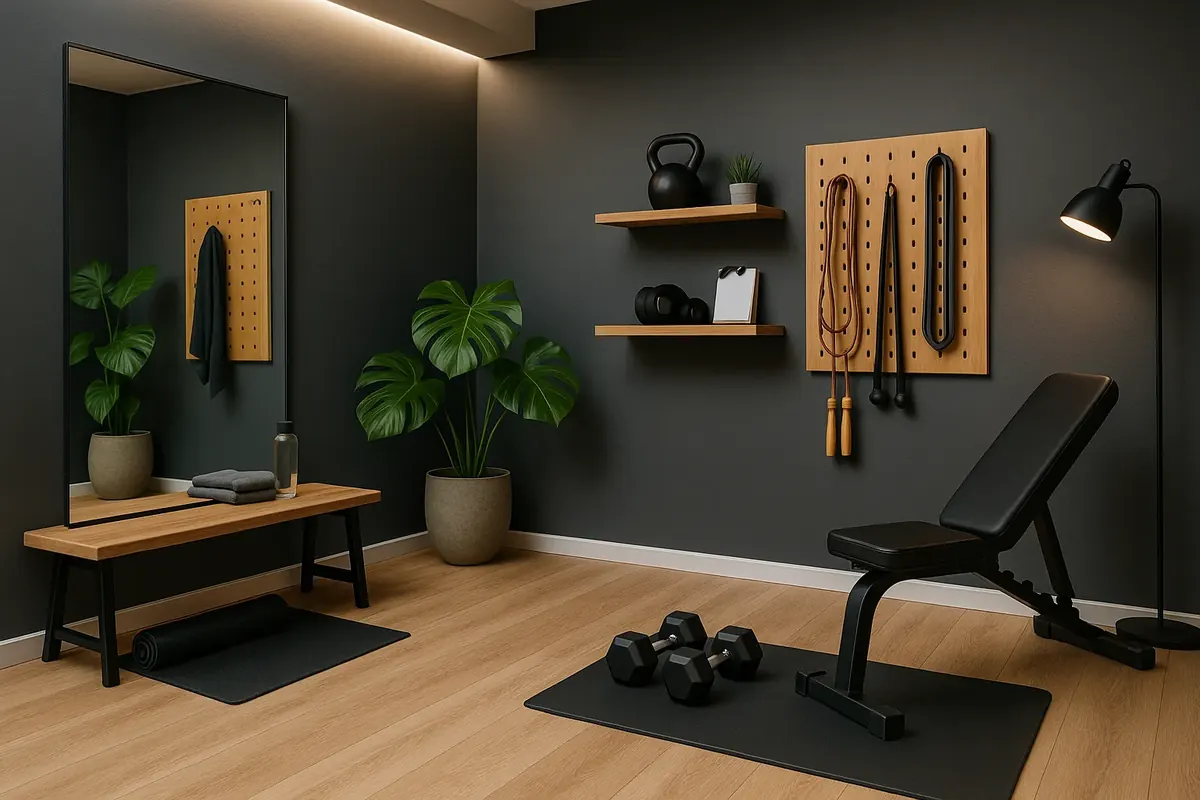
- A large mirror, bright 4000K light, and tidy wall storage make a home gym look intentional.
Good home gym decor does more than make a workout corner look nice. It makes the space somewhere you want to be at 6 a.m., protects your floors, keeps the neighbors downstairs on your side, and stores equipment so the room still feels like part of your home. In an apartment, those practical layers matter as much as the paint color.
This guide covers apartment home gym ideas from the ground up: flooring that absorbs noise and vibration, weight limits worth knowing, compact equipment that fits small spaces, and then the decor itself, including home gym wall decor, mirrors, lighting, and color. Whether you have a whole spare bedroom or a 6 by 8 foot corner of the living room, the same principles apply.
Start with function, finish with style. A beautiful gym on a bare floor will cost you your deposit and your relationship with the tenant below.
Choosing the Right Spot for an Apartment Home Gym
Where you put the gym affects noise, safety, and how often you use it. The best options, in order:
- A spare bedroom: a door you can close, room to leave equipment set up, and walls for storage. See our spare bedroom ideas if the room also has to host guests.
- A living room corner: works well for mat work, a bench, and adjustable dumbbells if storage is attractive enough to stay out.
- A bedroom wall: fine for yoga and light weights; keep it calm so it does not disturb sleep.
- A balcony: good for mobility and bodyweight training in mild weather, but check your lease and keep heavy equipment off it.
Pick a spot near an exterior or load-bearing wall where possible, rather than the middle of a large floor span, which tends to flex and transmit more vibration. Ground-floor units and spaces above garages or lobbies are the friendliest for strength training.
How Much Space Does a Small Home Gym Need?
| Activity | Minimum floor area | Ceiling height needed |
|---|---|---|
| Yoga, stretching, mat Pilates | 6 x 8 ft (1.8 x 2.4 m) | Standard 8 ft is fine |
| Dumbbells and adjustable bench | 6 x 8 ft | Standard |
| Bodyweight and HIIT (low impact in apartments) | 6 x 6 ft clear | Room to raise arms overhead, about 8 ft |
| Folding treadmill | About 3 x 7 ft plus 2 ft behind | Your height plus deck height plus 6 in. |
| Rowing machine | About 2 x 8 ft in use | Standard |
| Squat stand or compact rack | 8 x 8 ft | Check overhead press clearance |
Map equipment footprints and clearances in the room layout planner before you buy. Leave at least 2 feet around benches and machines for safe movement.
Noise and Vibration: Being a Good Downstairs Neighbor
In an apartment, impact noise is the biggest issue. Airborne sound like music travels less than the thud of a dropped dumbbell or repeated jumping, which travels through the structure into the unit below.
Reduce impact noise
- Lay thick rubber flooring. 3/4-inch (19 mm) rubber stall mats or interlocking rubber tiles are the standard for absorbing impact under weights.
- Layer for heavy lifting. A platform of rubber over plywood over rubber, or purpose-made drop pads, spreads impact further.
- Never drop weights. Lower dumbbells to the floor under control, or set them on a padded bench.
- Choose low-impact cardio. Rowing, cycling, and walking pads are much quieter than jump rope, box jumps, or burpees.
- Put isolation pads under machines. Treadmills and bikes transmit motor and footfall vibration; anti-vibration pads under each foot help.
Mind the hours
Check your building's quiet hours and keep louder sessions to the middle of the day. A friendly word with the neighbor below, asking them to tell you if they hear anything, often prevents complaints entirely.
Renter note: Many leases require rugs or floor coverings over a set percentage of hard floors, and some restrict heavy equipment. Read the lease, ask building management before bringing in anything over a few hundred pounds, and document floor condition with photos before you install your gym.
Floor Protection and Weight Limits
Protect the floor itself
Hardwood, laminate, and luxury vinyl scratch and dent under dumbbells and machine feet. Lay a continuous rubber surface over the whole training area rather than small mats you might step off. Put a breathable layer, such as a thin felt or a moisture-safe underlay, under rubber on wood floors if the rubber manufacturer recommends it, since some rubber can discolor finishes. Rubber flooring often has a strong smell when new; air it out on a balcony or in a well-ventilated room for several days before laying it.
Know the weight limits
US residential floors are commonly designed for a live load of around 40 pounds per square foot in living areas (often 30 in sleeping rooms), though older buildings vary. That load is spread over the floor, so a person, a bench, and a set of adjustable dumbbells is ordinary use. Concentrated loads deserve more care:
- A full power rack loaded with plates, heavy cable machines, and commercial treadmills can concentrate several hundred pounds onto a small footprint.
- Place heavy equipment near walls, not in the middle of a room, and spread its load with a plywood and rubber platform.
- For anything beyond ordinary home equipment, ask building management or a structural engineer before installing.
Compact Equipment for Small Home Gym Ideas
Small home gym ideas start with equipment that packs down or does many jobs. The best picks for apartments:
| Equipment | Footprint stored | Noise level | Typical price range |
|---|---|---|---|
| Adjustable dumbbells | About 2 x 1.5 ft for the pair | Low with controlled lowering | $150–$500 |
| Folding adjustable bench | Flat against a wall or under a bed | Low | $100–$350 |
| Resistance bands and suspension trainer | A small basket | Very low | $30–$150 |
| Walking pad (under-desk treadmill) | Slides under a sofa or bed | Low to moderate | $200–$700 |
| Folding rowing machine | Stands upright, about 2 x 2 ft | Low (magnetic or air varies) | $300–$1,200 |
| Kettlebells (one or two) | About 1 x 1 ft each | Low on rubber | $40–$150 each |
| Yoga mat, blocks, foam roller | Rolled in a basket | Silent | $40–$150 |
A set of adjustable dumbbells, a bench, bands, and a mat covers most strength routines in less than 50 square feet.
Designer tip: Choose equipment in finishes that suit your home, such as black steel, natural wood, or leather-look upholstery. Equipment that looks good can stay out, which means you will actually use it.
Home Gym Wall Decor and Mirrors
Home gym wall decor should do a job: motivate, reflect light, or store gear neatly.
- A large mirror helps you check form and doubles the sense of space. A leaning floor mirror at least 65 inches tall is renter-friendly; for a full mirrored wall, use mirror panels with safety backing, mounted with landlord approval.
- Wall storage becomes decor when it is tidy: a wooden ladder for towels and bands, a slim rack for kettlebells, and pegboard or rail systems painted in your accent color.
- Art with energy: large-scale black-and-white photography, abstract prints, or a single typographic poster. Frame it behind acrylic rather than glass in active zones. Use the art hanging calculator to place it at the right height.
- A whiteboard or chalkboard panel for tracking workouts, framed to match your art.
- Plants such as snake plants or pothos add life and tolerate the lower light of many spare rooms.
Lighting and Color for a Home Gym
Lighting
Gyms need brighter light than bedrooms or living rooms. Aim for even, bright ambient light from a ceiling fixture or plug-in track, plus daylight where possible. Cooler white bulbs around 4000K feel energizing for strength and cardio; a dimmable warm lamp around 2700K turns the room calm for yoga and stretching. The room lighting calculator estimates lumens for your room size.
Color
Use color to set the mood you want from your workouts:
- Energizing: deep charcoal or black with one bold accent such as red, orange, or electric blue.
- Calm and focused: sage green, soft clay, or warm white, ideal for yoga and Pilates.
- Clean and bright: crisp white walls with natural wood and black hardware, a look that suits small rooms.
If painting is not allowed, bring color in through rubber flooring tiles, towels, a large rug in a yoga zone, or peel-and-stick wallpaper; our renter friendly upgrades guide lists more reversible options.
The best home gym is the one you walk past and want to use. Make it look like part of your home, not a storage room with weights.
Storage That Keeps a Home Gym Looking Good
- Closed cabinets or lidded baskets for bands, rollers, and small accessories.
- A vertical dumbbell or kettlebell stand instead of weights scattered on the floor.
- Under-bed or under-sofa storage for a walking pad, mat, or flat bench.
- Hooks at 60 to 66 inches for towels, jump ropes, and a gym bag.
- A small cart on locking casters that rolls equipment into a closet after each session.
In multi-use rooms, a folding screen or a curtain on a tension rod hides the gym after hours. More compact storage tricks are in our small apartment ideas guide.
Your Apartment Home Gym Setup Checklist
- Check your lease for flooring and equipment rules.
- Pick a spot near a wall or on the lowest floor available.
- Measure equipment footprints and leave 2 feet of clearance around them.
- Lay 3/4-inch rubber flooring across the whole training area.
- Choose compact, low-noise equipment and add isolation pads under machines.
- Add a large mirror and bright, layered lighting.
- Set a color palette and add one or two pieces of wall decor.
- Give every piece of equipment a home in closed or vertical storage.
- Train during reasonable hours and lower weights under control.
Free interactive tool
Room Lighting Calculator: lumens and a layered lighting plan
Frequently Asked Questions
How do I make my apartment home gym quieter for neighbors?
Lay 3/4-inch rubber mats or tiles across the whole workout area, add drop pads or a layered rubber and plywood platform for weights, and always lower dumbbells under control. Choose rowing, cycling, or a walking pad over jumping cardio, put isolation pads under machines, and train during reasonable hours.
Can apartment floors hold home gym equipment?
Ordinary home gym equipment such as adjustable dumbbells, a bench, a rower, or a walking pad is usually well within normal residential floor loads. Heavy power racks loaded with plates, cable machines, and commercial treadmills concentrate much more weight, so place them near walls and ask building management or a structural engineer first.
What is the best flooring for a home gym in an apartment?
Rubber is the standard choice. 3/4-inch rubber stall mats or interlocking rubber tiles absorb impact, protect hardwood and vinyl from dents, and reduce noise transmitted downstairs. Cover the whole training area rather than using small mats, and air new rubber out for a few days to reduce its smell.
How do you decorate a home gym?
Start with a large mirror for form checks and light, then add bright ambient lighting, a color palette that matches the mood you want, and tidy wall storage for weights and towels. Finish with one or two pieces of bold art framed behind acrylic, a plant, and a whiteboard for tracking workouts.
How much space do you need for a small home gym?
A 6 x 8 foot area is enough for yoga, mat work, adjustable dumbbells, and a folding bench. Add about 3 x 7 feet plus clearance for a folding treadmill or 2 x 8 feet for a rower. Leave at least 2 feet around benches and machines for safe movement.

We research designer standards, measure real rooms and test every recommendation against apartment realities: tight footprints, lease rules and budgets. How we write our guides.