Luxury Small Garden Ideas for Balconies, Terraces, Courtyards and Tiny Gardens
Make a balcony, terrace or tiny garden feel like a boutique hotel: layout, plants, materials, lighting, budgets and the weight limits to check first.
Key takeaways
- Luxury comes from restraint: two or three materials, fewer and larger planters, and one focal point.
- On balconies and roof terraces, confirm the rated load with your building before adding heavy planters.
- Use lightweight potting mix and fiberglass or resin planters, and place heavy items near the building wall.
- Keep a clear 24 to 30 in. path from the door and use walls and railings for vertical planting.
- Layer warm 2700K lighting at three heights to make a small outdoor space glow at night.
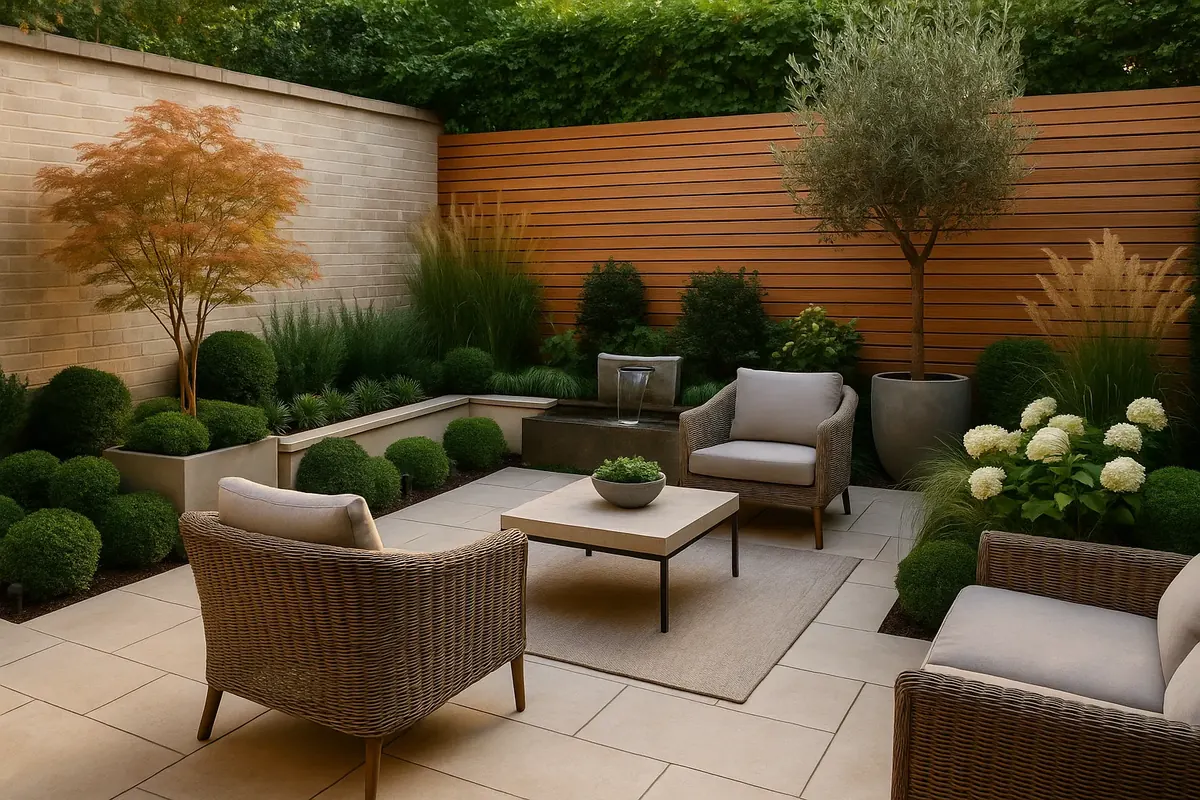
The best luxury small garden ideas are about restraint, not square footage: a tight palette of two or three materials, fewer but larger planters, one generous piece of seating, layered lighting and a single focal point. Those principles work just as well on a 4 x 10 ft apartment balcony, a rooftop terrace or a paved courtyard as they do in a tiny backyard garden.
What makes a small outdoor space feel expensive is that every element looks chosen. Matching planters in a heavy material, plants with sculptural shapes, a weatherproof rug that defines the floor and warm light at night do more than any number of small decorations. The difference between luxurious and cluttered is usually editing.
This guide covers layout, materials, planting, furniture, lighting, privacy and budgets, plus what apartment dwellers need to know about balcony weight limits and building rules before they buy a single pot.
What Makes a Small Garden Look Luxurious?
Luxury in a small space comes from a few repeatable design moves:
- A limited palette. Choose two or three materials (for example, charcoal fiber-cement planters, teak and natural stone) and one or two plant colors, mostly greens with white flowers.
- Scale. Three large planters look more generous than twelve small ones. Oversized pieces make a small space feel intentional.
- Repetition. Repeat the same plant or pot two or three times for rhythm.
- A focal point. A sculptural olive tree, a water bowl, a statement chair or a piece of outdoor art gives the eye somewhere to land.
- Comfort. Real cushions, a throw and a side table say "room," not "storage area."
- Light after dark. Low, warm light makes even a plain balcony look like a boutique hotel terrace.
Designer tip: Treat your outdoor space as an extra room of your apartment. Pull one color and one material from your interior, such as the oak of your dining table or the charcoal of your sofa, and repeat it outside so the view through the door feels continuous.
Check Balcony Weight Limits and Building Rules First
If you live in an apartment, this step matters more than any design choice. Balconies and roof terraces are designed for a specific load, and saturated soil is heavy.
Weight
Design loads vary widely by building age, construction type and local code, so never assume. Ask your building manager or landlord for the balcony's rated load, and consult a structural engineer before adding anything heavy like large stone planters, a water feature or a hot tub. As a rough guide to how quickly weight adds up:
| Item | Typical weight (approx.) | Notes |
|---|---|---|
| Wet garden soil | 80–100 lb per cu ft (1,300–1,600 kg/m³) | Avoid in containers on balconies |
| Wet lightweight potting mix | Roughly half of garden soil | Better choice for elevated spaces |
| 24 in. (60 cm) planter, filled and watered | 150–300 lb or more | Depends on pot material and mix |
| Concrete or stone planter, empty | 50–200+ lb | Fiberglass look-alikes weigh a fraction |
| Teak lounge chair | 40–70 lb | Aluminum frames are much lighter |
To keep loads safe, use lightweight fiberglass, resin or fiber-cement planters, fill the bottom of deep pots with lightweight filler made for containers, and place the heaviest items close to the building wall or over supporting beams rather than at the outer edge.
Rules to check
- Lease or HOA rules on planters, flooring, screens, lighting and anything visible from the street.
- Fire rules: many buildings and local fire codes restrict charcoal grills, propane grills and open flames on balconies.
- Drainage: water running off onto the balcony below is a common source of neighbor complaints, so use saucers or self-watering planters.
- Railing rules: some buildings ban hanging planters over the edge or anything fixed to the railing.
- Wind exposure on high floors: secure lightweight items and avoid tall, top-heavy planters.
Renter note: Get permission in writing before installing anything fixed, like trellis panels, deck tiles over a membrane, or wired lighting. Interlocking deck tiles, freestanding screens and rechargeable lamps are reversible alternatives.
Small Garden Design Ideas: Layout First
Before buying anything, measure the space and sketch it on paper, including doors, drains, outlets and the direction of the sun.
Zone even the smallest space
Most small outdoor areas can hold one main zone and one supporting zone. On a narrow balcony, that might be a bistro set at one end and a cluster of planters at the other. On a 10 x 12 ft terrace or courtyard, you can fit a lounge corner and a small dining area. Keep a clear path of at least 24 to 30 in. (60 to 75 cm) from the door.
Go vertical
Walls and railings are your extra square footage. Freestanding trellis planters with climbing jasmine or ivy, a slim plant ladder or a living wall kit adds green without eating floor space.
Choose the right floor
A defined floor makes a small space look finished. Interlocking wood or porcelain deck tiles cover bare concrete and lift out when you move. An outdoor rug softens the area and frames the furniture. Use our rug size calculator to find a size that leaves a border of floor showing around the edges, and see our guide to patio decorating ideas for more on rugs and layouts.
Luxury Balcony Garden Ideas
A balcony is usually long and narrow, exposed to wind, and seen from inside your living room. Design it as a view.
- Line one side with a planter trough 12 to 16 in. (30 to 40 cm) deep, planted with a single grass or clipped evergreen for a clean hedge effect.
- Choose a slim bench with cushions instead of separate chairs; it seats more people in less depth.
- Use a fold-down wall table or railing bar where permitted, for coffee or a laptop.
- Add one statement tree in the corner: an olive, bay laurel or Japanese maple in a large lightweight pot, chosen for your climate and exposure.
- Keep the palette tonal so it looks serene from indoors: charcoal pots, teak or aluminum furniture and white or green planting.
Small Terrace and Courtyard Garden Ideas
Terraces and courtyards are usually wider and more sheltered, so you can create a true outdoor room.
Small terrace ideas
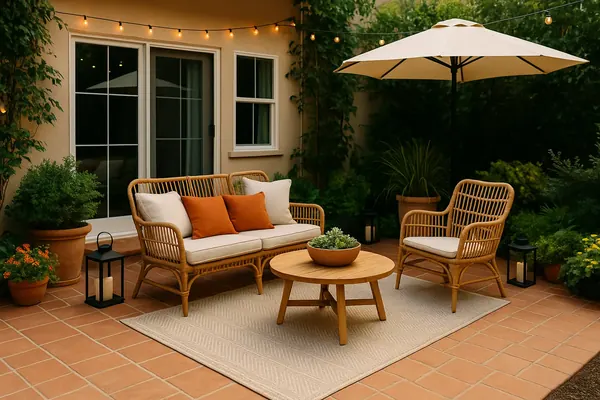
Anchor the space with a compact outdoor sofa or two lounge chairs facing each other over a low table and rug. Add a pergola-style freestanding shade sail or a large cantilever umbrella if the terrace faces south or west. Planters along the perimeter soften parapet walls and add privacy.
Courtyard garden ideas
Courtyards feel enclosed, which is an advantage. Paint walls a warm white or soft gray to bounce light, use gravel or large-format pavers for a European feel, and add a small bubbling water bowl for sound. Raised planters along two walls with layered planting make the space feel like a secret garden. Since courtyards can be shady, choose ferns, hostas, hydrangeas and Japanese forest grass where the climate suits.
Best Plants for a Luxury Small Garden
Choose plants for structure first and flowers second. Always check what suits your climate, hardiness zone and light conditions.
| Role | Plant ideas | Light | Why it looks luxe |
|---|---|---|---|
| Focal tree | Olive, bay laurel, Japanese maple, dwarf citrus | Sun to part shade | Sculptural silhouette |
| Clipped evergreen | Boxwood balls, yew, Japanese holly | Sun to part shade | Formal, year-round structure |
| Grasses | Feather reed grass, fountain grass, sedge | Sun | Movement and softness |
| Climbers | Star jasmine, clematis, climbing hydrangea | Sun to shade | Green walls, fragrance |
| White flowers | Hydrangea, gardenia, white lavender, cosmos | Varies | Elegant and glow at dusk |
| Herbs | Rosemary, thyme, sage, basil | Sun | Useful and fragrant |
For guidance on grouping containers by height and the thriller-filler-spiller method, read our guide on how to arrange potted plants.
Water, Fire and Finishing Touches
The details are what separate a nice outdoor space from a memorable one. Add them last, once the floor, planters and seating are in place.
Water features
The sound of moving water masks traffic noise and feels instantly calming. On a balcony, keep it small: a tabletop fountain or a solar bubbling bowl holds only a few gallons and can be emptied easily. On a ground-level patio or courtyard, a self-contained wall fountain or a wide, shallow stone basin makes a stronger focal point. Remember that water weighs about 8.3 lb per gallon, so check loads before installing anything larger on an elevated space.
Fire
Where your lease and local fire rules allow it, a tabletop fire bowl or a compact gas fire table extends evenings into the cooler months. In many apartment buildings open flames are not permitted, so a cluster of LED candles in hurricane glass gives the same glow without the risk.
Textiles and accessories
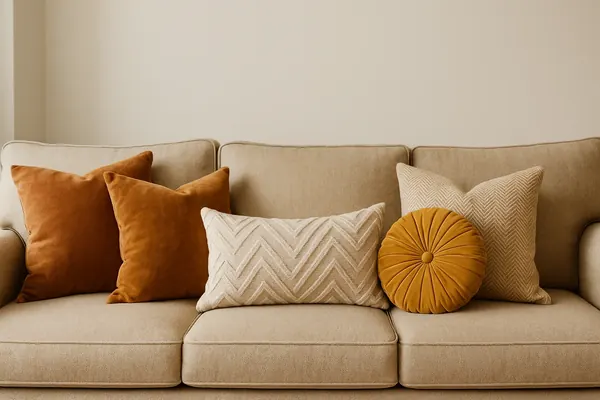
Outdoor cushions, a weatherproof throw and a couple of lumbar pillows make seating feel like a sofa. Add one or two well-chosen accessories, such as a large lantern, a sculptural ceramic stool or an outdoor mirror to bounce light into a shady corner, and stop there. Store textiles inside when they are not in use so they stay looking new.
Scent and seasonal change
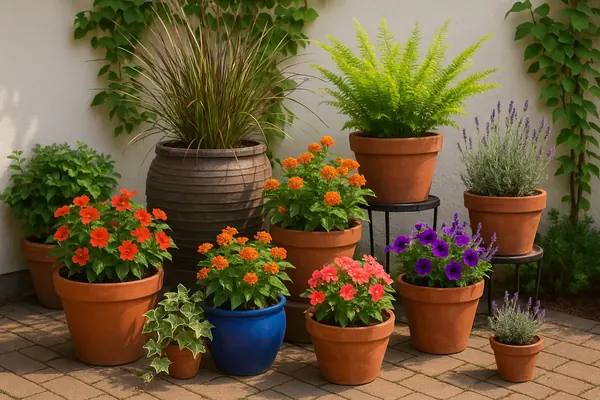
Fragrant plants near the seating area, such as star jasmine, gardenia, rosemary or lavender, add a sensory layer that makes a small garden feel indulgent. Swap a few seasonal containers, like spring bulbs, summer annuals and winter evergreens with lights, to keep the space fresh without redesigning it.
Furniture, Lighting and Privacy
Furniture
Buy fewer, better pieces. Teak weathers to a silvery gray and lasts for years; powder-coated aluminum is light and rust-resistant; all-weather wicker suits a resort look. Choose cushions with solution-dyed outdoor fabric and quick-dry foam, and store them in a deck box when it rains.
Lighting
Layer light just as you would indoors. Use warm 2700K string lights overhead, a rechargeable lantern or table lamp at seating height, and a small solar spotlight pointed up into your focal tree. Avoid bright cool-white floodlights; they flatten everything. Our guide to fairy lights in the living room has hanging ideas that translate well outdoors.
Privacy
Tall planters with bamboo (clumping types in containers), freestanding slatted wood screens, outdoor curtains on a tension rod or a dense climber on a trellis all add privacy without permanent fixings.
One beautiful chair, one large tree and good light will always beat a crowded balcony.
How Much Does a Luxury Small Garden Cost?
Costs vary by region and how much you do yourself. These are typical ranges for a small balcony or terrace of about 40 to 120 sq ft.
| Item | Budget | Mid-range | High-end |
|---|---|---|---|
| Deck tiles | $100–$300 | $300–$800 | $800+ |
| Large planters (3) | $90–$250 | $250–$700 | $700+ |
| Plants | $75–$200 | $200–$600 | $600+ (mature trees) |
| Seating | $150–$400 | $400–$1,200 | $1,200+ |
| Outdoor rug | $40–$120 | $120–$350 | $350+ |
| Lighting | $30–$80 | $80–$250 | $250+ |
To spend wisely, put most of your budget into one statement plant and the seating you use most. Our decorating budget planner can help you split the total.
Putting Your Small Garden Together
Start with the practical: confirm weight limits and building rules, then measure and sketch. Next, lay the floor, place your largest planters and seating, and add a focal tree. Finish with vertical planting, cushions and warm lighting. Keep the palette tight and resist filling every corner. A small outdoor space looks luxurious when it is calm, comfortable and clearly designed, whether it is a courtyard behind a garden apartment or a balcony eight floors up.
Frequently Asked Questions
How do I make a small garden look expensive?
Limit your palette to two or three materials, choose fewer but larger planters in matching finishes, and add one focal point such as a sculptural olive tree or water bowl. Invest in comfortable seating with outdoor cushions, define the floor with deck tiles or a rug, and add warm, layered lighting. Editing out clutter matters as much as anything you buy.
How much weight can an apartment balcony hold?
It depends on the building's age, construction and local code, so there is no single safe number. Ask your building manager or landlord for the rated load and consult a structural engineer before adding heavy planters, water features or hot tubs. Wet soil is very heavy, so use lightweight potting mix and planters and keep heavy items near the wall.
What are the best plants for a small luxury garden?
Choose plants with strong structure: a focal tree like olive, bay laurel or Japanese maple, clipped evergreens such as boxwood, ornamental grasses for movement, and climbers like star jasmine for walls. White flowers such as hydrangea look elegant and glow at dusk. Always pick plants suited to your climate, hardiness zone and light.
How can I add privacy to a small balcony or terrace?
Use tall planters with clumping bamboo or dense shrubs, freestanding slatted wood screens, outdoor curtains on a tension rod, or a climbing plant on a freestanding trellis. These options add privacy without drilling or permanent fixings, which makes them suitable for renters. Check your building rules before installing anything visible from outside.
Can you have a garden on an apartment balcony?
Yes. Container gardens, railing planters where allowed, vertical planters and self-watering troughs all work well on balconies. Check your building's weight limits, drainage and railing rules first, choose plants that suit your sun and wind exposure, and use saucers so water does not drip onto balconies below.

We research designer standards, measure real rooms and test every recommendation against apartment realities: tight footprints, lease rules and budgets. How we write our guides.