Living Room Wall Decor Ideas: 10 Ways to Style Apartment Walls (Renter-Friendly)
Decide what each wall is for, size the decor correctly, then choose from 10 apartment-friendly ideas, from oversized mirrors to picture ledges and woven baskets.
Key takeaways
- Name the job of each wall first: focal point, light, display or quiet space, then choose decor to match.
- Size matters more than style: decor over a sofa is commonly about two-thirds the width of the sofa, centered around 57 inches from the floor.
- Renters can use picture ledges, leaning mirrors, adhesive strips on light pieces and plug-in sconces instead of heavy hardware.
- Pick one hero piece first, repeat one color or material around the room, and leave at least one wall quiet.
- Check your lease and get permission in writing before drilling, painting or using adhesives.
The best living room wall decor ideas start with one rule: decide what the wall is for before you buy anything. A wall behind the sofa wants one large, calm statement, such as an oversized mirror or a single big piece of art. A bare side wall works better with a layered ledge display. A wall beside a window usually wants light, like a mirror or a sconce. When the job is clear, the decor almost picks itself, and the room looks planned instead of collected.
This guide covers how to size and place living room wall decor, 10 ideas that suit apartments, which ones are renter-friendly, and a simple order of operations so you do not put a single hole in the wrong spot. It sticks to what is new here and links out to our deeper guides on hanging wall art and accent walls rather than repeating them.
Start With the Job Each Wall Has to Do
Most living rooms have three or four walls, and each one has a different role. Walking through the room and naming the role of every wall is the fastest way to stop buying decor that does not fit.
The sofa wall
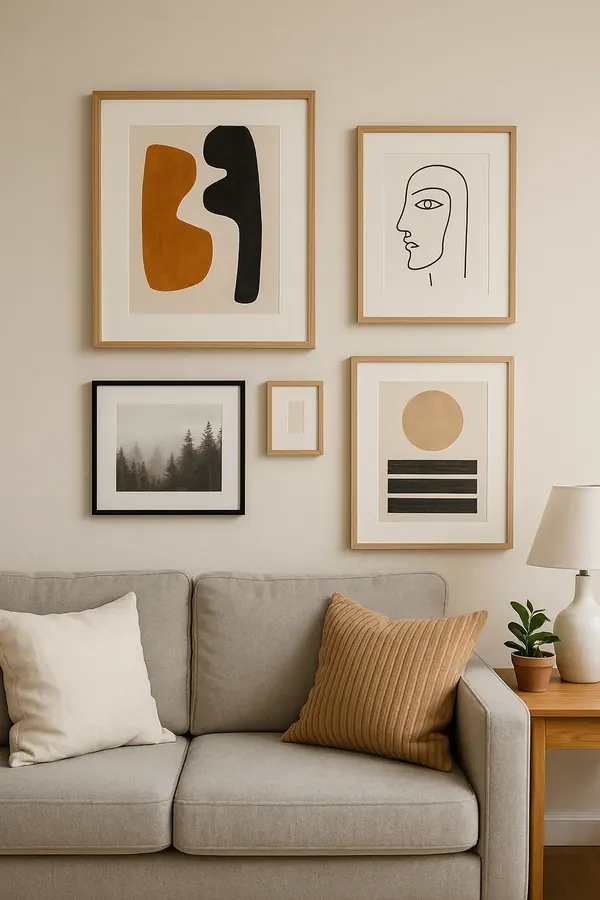
This is usually the largest wall and the one you see from the entry. It should carry the biggest, simplest piece of decor in the room. Designers commonly size art or a mirror above a sofa to roughly two-thirds the width of the sofa, and hang it with the center about 57 inches from the floor. If you want exact numbers for your wall, the art hanging calculator does the math for you.
The window wall
Walls with windows already have a focal point, so keep decor modest. A mirror placed to catch daylight, or a pair of sconces beside the window, usually works better than art competing with the view.
The empty side wall
Side walls, the ones with no furniture against them, are the best place for something playful: a ledge display, a cluster of baskets or a small gallery. They are seen at an angle, so layered and textured arrangements read better than one flat frame.
The TV wall
The wall behind a TV is the hardest. A dark screen is a large black rectangle, so surround it with shelves, framed pieces or lighting instead of leaving it alone. Keep pieces in a similar tone to the TV frame so the screen feels like part of the arrangement.
Designer tip: Stand in the doorway with painter's tape and mark the outline of your planned decor on the wall before drilling or sticking anything. Leave it up for a day. If it still feels right after you have walked past it a few times, commit.
Living Room Wall Decor Ideas That Work in Apartments
These ideas are sorted from the simplest to the most involved. Each one works for a typical apartment living room, and most can be done without leaving permanent damage.
1. One oversized mirror
Affiliate disclosure: Some links in this guide go to Amazon. As an Amazon Associate, Luxury Apartment Design earns from qualifying purchases, at no extra cost to you. Prices and availability are shown on Amazon and can change.
A big mirror does two jobs: it adds a focal point and it bounces light around a small room. A round shape softens the straight lines of furniture and windows. Something like the HARRITPURE Round Mirror 30 Gold Wall Mounted Circle Mirror suits a wall that needs a single, simple accent, while a black frame such as the BEAUTYPEAK 30 Inch Round Mirror, Metal Frame Circle Mirror, Black gives a more graphic, modern look. A mirror hung across from a window usually reflects daylight, while one hung across from clutter reflects the clutter, so check what it will actually show.
2. A picture ledge display
Picture ledges are narrow shelves with a lip that let you lean art instead of hanging it. They are one of the most flexible living room wall decor ideas because you can swap pieces in seconds, mix frame sizes and layer small objects in front. A set like the AZSKY 36 Inch Picture Ledge Shelf Floating Shelves Wall Mounted Set of 2 White gives you two ledges, which is enough for a stacked pair above a sofa or console. Ledges do need to be anchored properly to the wall, so follow the hardware instructions and use wall anchors where you are not hitting a stud.
3. One large piece of art
If you only commit to one thing, make it a single large piece. One big canvas or framed print reads as calm and expensive, whereas several small pieces scattered across the same wall read as busy. Aim for something that fills roughly half to two-thirds of the furniture width below it. If you cannot afford large art, a large framed fabric, a framed wallpaper sample or a framed rug can fill the space just as well.
4. A salon-style or gallery wall
A gallery wall works best when the frames share a theme: a color, a material or a subject. Lay the pieces on the floor first, keep spacing between frames consistent (two to three inches is common) and anchor the arrangement to a piece of furniture below it. We cover spacing and layout in detail in our guide to how to hang wall art, so use that for the measurements.
5. Woven baskets and textured wall plates
Texture is the easiest way to warm up a wall without color. A cluster of woven baskets in graduated sizes adds depth, and because they are lightweight they are easy to hang. A set such as the CHI AN HOME Wicker 23 Inch Jute Wall Decor Baskets, Set of 6 comes in a range of sizes, which makes it simple to build a loose circular or cloud-shaped arrangement. Keep the cluster tight, with the gaps between baskets smaller than the smallest basket, so it reads as one composition.
6. Plug-in or hardwired sconces
Wall lights add a layer that art cannot: they make a wall glow in the evening. In apartments, plug-in sconces with a cord cover are the practical option, and we show how to use them in our accent wall ideas guide. Hang them at about eye level when standing, or slightly above, and keep the bulb warm so the room does not feel like an office.
7. Floating shelves for a curated display
Shelves turn a wall into storage and decor at once. Keep the display simple: a stack of books, one plant, one object with a strong shape. Group items in odd numbers, vary heights and leave empty space.
8. Paint or a painted shape
If your lease allows painting, a painted arch, half-wall or color block behind a sofa creates a focal point without any hanging hardware. A large arch shape behind a console or sofa works well because it echoes a window or doorway. If you rent, confirm in writing before painting, and ask whether you need to repaint when you leave.
9. Leaning art and floor mirrors
Not everything has to be hung. A tall floor mirror or a large framed print leaned against the wall adds scale without a nail, and it is the easiest option for renters who want zero wall damage. Anchor tall pieces to the wall or add a wedge underneath if there are kids or pets in the home.
10. A mixed arrangement over a console
Instead of putting everything on the wall, combine a console or narrow table with a mirror above it and a lamp, tray and plant on top. The wall and the surface read as one vignette, which is a quick way to make an entry wall in an open-plan living room feel finished.
How Big Should Living Room Wall Decor Be?
The most common mistake is going too small. Small pieces on a big wall look lost. Use the table below as a starting point, and adjust for your furniture and ceiling height.
| Wall situation | Rule of thumb | Typical height from floor |
|---|---|---|
| Above a sofa | Decor about two-thirds the width of the sofa | Center at about 57 inches; bottom edge 6-10 inches above the sofa back |
| Above a console | Decor about two-thirds the console width | Bottom edge 6-8 inches above the console |
| Open wall, no furniture | Fill roughly half to two-thirds of the wall width | Center around eye level, about 57 inches |
| Tall, narrow wall | One vertical piece or a stacked pair | Center about 57 inches, or slightly higher with high ceilings |
| Beside a window | Small mirror, sconce or a vertical frame | Align with the window top or sit at eye level |
These are common designer rules of thumb, not strict laws. If a wall feels low on the first try, lift the piece a few inches. If it feels disconnected from the furniture, bring it down.
The Renter-Friendly Way to Decorate Living Room Walls
Most apartment leases allow small nail holes, but many do not allow large anchors, paint or adhesive that peels paint. The safest approach is to choose the lightest option that still holds your piece, and to read your lease before you start.
Renter note: Check your lease and ask your landlord or property manager what is allowed before drilling, painting or using adhesives. Some buildings allow small nails but not anchors, and some charge for wall repairs at move-out. Get any permission in writing and take photos of the walls before you start.
Adhesive strips for lighter pieces
Adhesive picture hanging strips are a common choice for renters because they are meant to come off without nails. A pack like the Large (15 lb) Picture Hanging Strips, 14 Pairs (28 Strips) lists a 15 lb rating per pair on the listing, but you should always check the weight guidance on the package, clean the wall first and let the strips set as directed. Do not use adhesive on mirrors or frames that would be dangerous if they fell, and avoid textured or freshly painted walls, where the strips may not hold or may pull paint.
Leaning and layering instead of hanging
Ledges, floor mirrors and furniture-top arrangements put the weight on the floor or furniture instead of the wall. They are also easy to rearrange, which helps if you move often.
Lighting
Plug-in sconces use only one or two small fasteners and change the feel of a room more than many people expect. Our renter-friendly upgrades guide has more removable ideas.
Choosing Colors, Materials and Style
A living room wall looks best when the decor repeats something already in the room. Pick one of three strategies and stick with it.
Match the metal
If your lamp, side table or curtain rod is brass, use a brass or gold mirror frame. If they are black, use black. Mixing two metals is fine, but one should clearly lead.
Repeat one color three times
Pull a color from a throw pillow, rug or artwork and repeat it in the decor. Three repeats around the room, such as in art, a vase and a pillow, make a palette look intentional. If you are unsure of your palette, the room color palette generator can suggest combinations.
Mix textures, not patterns
Wood, jute, metal, glass and linen all work together because they are different textures in a similar tone. Too many patterns, on the other hand, compete for attention. If you use a bold pattern on one wall, keep the decor in front of it plain.
A quick style cheat sheet
| Style | Wall decor that fits | What to avoid |
|---|---|---|
| Modern | Large abstract art, black-framed mirrors, simple ledges | Ornate frames and busy gallery walls |
| Warm minimal | Woven baskets, framed linen, light wood ledges | High-gloss, bright colors |
| Classic | Gold-framed mirrors, symmetrical prints, sconces | Mismatched metals |
| Eclectic | Mixed frames, vintage pieces, a gallery wall | Spacing that varies wildly |
If you are not sure which of these suits you, the interior design style quiz is a quick way to narrow it down.
A Simple Order of Operations
Hanging in the wrong order is how people end up with extra holes. Follow this sequence for any living room wall.
- Place your furniture first, because decor is sized and centered to the furniture, not the wall.
- Decide the job of each wall: focal point, light, display or quiet space.
- Choose one hero piece, such as the mirror, the large art or the ledge, and place it first.
- Mark the layout with painter's tape or paper templates and live with it for a day.
- Add supporting pieces only after the hero feels right, and stop when the wall has some empty space left.
- Check the lease and choose hardware that matches the weight of each piece.
- Hang, step back, and adjust height before you fill unused holes or remove tape.
Common Mistakes With Living Room Wall Decor
- Hanging too high. The center of a piece should be near eye level, not near the ceiling. Art that floats too high disconnects from furniture.
- Going too small. A single small frame on a large wall looks accidental. Go bigger or group pieces together.
- Filling every wall. Leave at least one wall quiet. Empty wall space gives the eye somewhere to rest.
- Ignoring the light. Glossy glass reflects lamps and windows. Check the angle before you commit to glass-front frames opposite a window.
- Skipping anchors. Heavy mirrors and shelves need hardware rated for their weight and the wall type. When in doubt, ask a professional or your property manager.
One strong piece beats five weak ones. Start with the hero, then edit.
Putting It All Together
The best living room wall decor ideas share one trait: they respect the size and purpose of the wall. Decide what each wall is for, choose a hero piece at the right scale, repeat one color or material, and leave breathing room. For renters, ledges, leaning pieces, light textiles and adhesive strips on lightweight items make it easy to change your mind and still get your deposit back, but always check your lease first.
If you only do one thing this weekend, tape out the outline of a large mirror or a big piece of art above your sofa and live with it for a day. That single move fixes more living rooms than any amount of small decor. When you are ready to hang, use the art hanging calculator to get the height and spacing right the first time.
Free interactive tool
Art Hanging Calculator: exact nail height and spacing
Frequently Asked Questions
What should I put on the wall above my sofa?
Most designers go for one large piece, such as an oversized mirror or a single big artwork, or a pair of matching pieces. A common guideline is to make the decor about two-thirds the width of the sofa and to hang it a few inches above the sofa back.
How high should I hang living room wall decor?
A widely used rule is to center the piece about 57 inches from the floor, roughly eye level. Over furniture, leave about 6 to 10 inches between the furniture and the bottom of the frame so the two read as one group.
How do I decorate living room walls without damaging them?
Lean art on picture ledges or the floor, use a floor mirror, add plug-in sconces and use adhesive strips only for lightweight pieces on smooth, clean walls. Always check the weight rating on the package and your lease before you start.
How many pieces of wall decor are too many?
There is no fixed number, but if the wall feels busy it probably is. Start with one hero piece, add supporting pieces only if the wall still feels empty, and leave at least one wall in the room fairly quiet.
Can I use mirrors as living room wall decor?
Yes. A large mirror adds a focal point and reflects light, which helps in small rooms. Place it where it reflects a window or an attractive part of the room rather than clutter, and make sure it is hung with hardware rated for its weight.
What is the cheapest way to decorate a bare living room wall?
Using art or objects you already own is the cheapest route. Leaning a large frame on a ledge or floor, grouping items you already have in a single arrangement, or hanging a framed piece of fabric can all fill a wall at little cost.

We research materials, products and design guidance so every recommendation is practical for real apartments. How we write our guides.